CO-Horts

CO-Horts Blog

Showing posts with label soil structure. Show all posts

Monday, May 8, 2023

From Dirt to Soil

 If you're ever in a room of soil scientists, I would recommend that you think twice before using the word "dirt". Dirt and soil are not the same thing (i.e., dirt is devoid of any life, while soil is teeming with life), and some people will get quite upset if you interchange the two words (for the record, I am not one of these people). Case in point: I happened to meet someone who had gone on a first date with one of my colleagues. He told me that the date was going well, but as soon as he used the word "dirt", my colleague's mood completely changed, the date quickly came to an end, and he never heard from my colleague again. So, if you want to make it to a second date with a soil scientist, make sure you're using the word "dirt" correctly...or maybe just don't use that word at all.
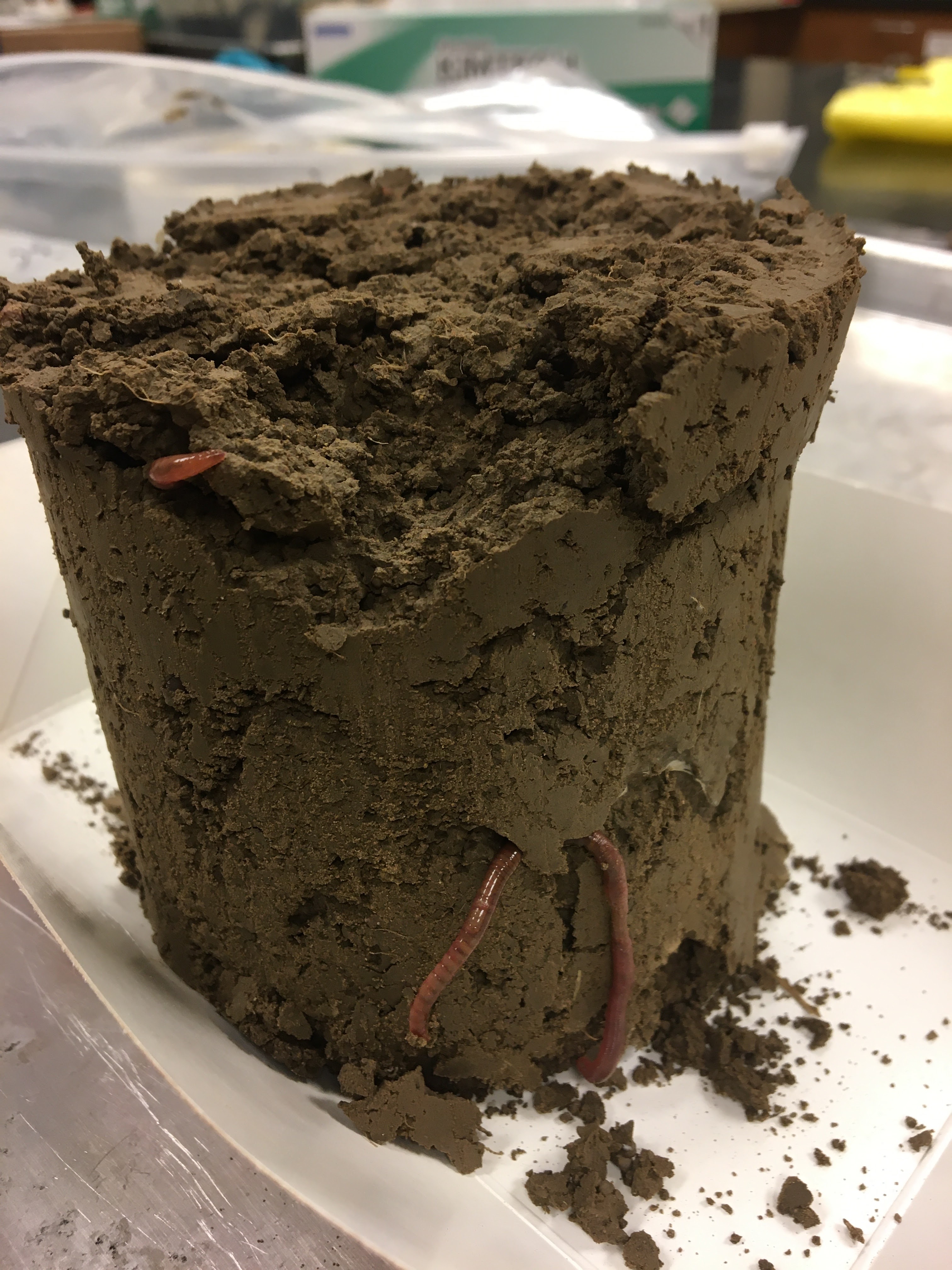
Anyways, perhaps you have a garden that is, quite literally, made of crummy, old dirt. Or, more likely, it's made of poor quality soil. Do you abandon all hope in having a healthy and fruitful garden? Do you scrap your life here and move to the Midwest in pursuit of more fertile soil??? No! There is another way to attain a thriving, productive garden, and that is through the regeneration of your soil. 

Soils can generally be characterized by two things: soil texture and soil structure. Soil texture refers to the proportion of sand, silt, and clay within a soil. This proportion governs the characteristics of a soil, such as its nutrient-holding capacity, drainage rates, and affinity for compaction. I'm sure many of you will resonate with the challenges of highly clayey soils, which are prone to slow water drainage, limited oxygen availability, and compaction.

Unfortunately, there is no practical way to change a soil's texture at scale. The good news, however, is that a soil's innate behaviors can be adjusted by altering the soil structure, which refers to the arrangement of soil particles. Specifically, you want to promote the arrangement of your soil particles into aggregates.

Basically, aggregates are clumps of soil particles that are bound together by organic matter, fungal hyphae, and roots. Not only do they increase the resiliency of soils to disturbance and create microhabitats that support diverse microbial life, but they also help increase water-holding capacity in sandy soils (organic matter acts like a sponge) and increase water/air infiltration in clayey soils (by increasing pore space). 

Conceptual Diagram of a Macroaggregate; Source: Soil Processes and the Carbon Cycle by Jastrow and Miller, 1998.

To increase aggregation in your garden, and thus improve your soil structure, there are several tactics you can take:
  1. Incorporate organic matter into your soils using amendments such as manure, biosolids, plant-based compost, and/or coconut coir. The goal is to reach a soil organic matter content of 5% in your soils (contrary to popular belief, you don't want more than 5%). Take caution if applying organic matter amendments that are high in salts, such as manure and biosolids, as high salts can damage plants and soil structure. Before applying any organic matter amendment, it's best to do a soil test on your garden soils to understand the current levels of organic matter and salts present, which will inform how much amendment to apply.
  2. Grow cover crops when soils are bare (e.g., during the off-season). Cover crops will add organic matter into the soil through their roots, and they can be an additional source of organic matter if the cover crops, upon dying, are left on the ground or incorporated into the soil. Cover crops will also protect the soil from erosion and can add nitrogen into the soil if the cover crop is a legume.
  3. Mulch around your plants. Mulch will conserve soil moisture, help control weeds, and ultimately add organic matter into the soil as the mulch breaks down over time. Organic sources of mulch include wood chips, straw, or grass clippings. If using straw or grass clippings, take into consideration whether any herbicides have been used or if weed seeds might be present.
  4. Reduce disturbance of your soils. While some disturbance may be necessary when incorporating organic matter amendments, frequent or intense disturbances can ultimately degrade soil structure. As a result, consider using less invasive ways of amending (i.e., a broad fork instead of rototilling) and avoid tilling unless you're adding organic matter.
Whether you attempt one of these tactics or all four, remember that it takes time for soil structure to improve. Be patient and diligent in your commitment to regenerating your soils, and over the years you will reap the benefits! 

Have questions about soil regeneration? Ask them below!


Tuesday, May 13, 2014

Soil Microbes: Your Silent Partner in the Garden

Eric Hammond- Adams County Extension

When most people think of bacteria, fungi and amebas they think of ear infections, sniffley noses, antibiotics and brain-eating single celled organisms contracted from improper use of a “neti pot” (maybe that last one is just me).  However, the soil in your yard in garden is full of these microscopic organisms as well as many others like nematodes, algae and actinomycetes (a word which I have not once pronounced correctly in my entire public life).  As the soil warms this spring they are starting to become more active and for the most part they are doing great things for your lawn and garden. 


Actinomycetes

Nutrient Cycling (Mineralization)-

Soil microbes feed on organic material decomposing it.  As they do this nutrients are taken from complex forms which plants can’t adsorb (or at least do not commonly absorb) to simpler forms that they can.  For example, in plant material nitrogen is incorporated into the molecules making up the plant’s DNA, cell walls and other structures.  As soil microbes digest this material some of this nitrogen is released into the soil solution as ammonium or nitrate, the two forms of nitrogen commonly absorbed by plants.  Without soil microbes plant nutrients in organic matter would remain tied up in unavailable forms.

Mineralization nitrogen from organic forms to nitrate- diagram by Ray Daugherty


Soil Structure-

Both soil microbes and larger soil fauna help build structure in soils.  There are several mechanisms through which this happens.   Some soil life such as earthworms create large continuous pores through the soil allowing for increased and deeper infiltration of air and water into soil.  Soil microbes affect soil structure by producing compounds that act as binding agents.  These compounds help the various elements of the soil (groups of clay platelets, chunks of organic matter, granules of sand and etc) aggregate, forming structures with a good mix of smaller pores that the can hold water against gravity and larger pores which drain rapidly and are commonly filled with air.
Desirable soil structure has a variety of pore sizes

Plant Symbiotic Microbes-

Some microbes have symbiotic relationships with plants.  Generally these relationships involve the exchange of carbohydrates from the plants in return for nutrients or water from the soil microbes.  The two most common examples of these types of soil microorganisms are Mycorrhizal fungi and Rhizobia.   Mycorrhizae are a group of symbiotic fungi that grow in association with plant roots.  They receive carbohydrates from the plant and in return supply the plant with water and nutrients- most commonly micronutrients and phosphorus.  The fungi are better able to extract tightly held soil water and less soluble forms of some of these nutrients than the plant.  It should also be noted that these relationships are species specific.  A given species of Mycorrhizae form symbiotic relationships with specific groups of plants.  Rhizobia are a group of bacteria which colonize the roots of the legume family.  They are capable of fixing gaseous atmospheric nitrogen into a form that the host plant can use.  In return the plant supplies them with carbohydrates.
The white hairs are Mycorrhizal fungi

Encouraging Beneficial Soil Life

There are a few simple things that we can do as gardeners to encourage these beneficial soil organisms.  Happily, many of them are things we already do to encourage good health in our plants (what a coincidence). 

1) Provide a good habitat-

Soil microbes need both food (organic material) and oxygen to complete their life cycles.  In natural systems, organic matter is added each year through natural cycles (think of leaves dropping in the fall in a forest).  In some portions of urban landscapes we can adopt practices that mimic this.  For example, we can leave grass clippings on the lawn or mulch leaves into the turf in the fall instead of raking them up.  In other areas, like a vegetable garden, organic matter must be added to replace that consumed by soil microbes.  Generally 2”-3” of plant based compost or 1” of manure tilled in at least 8” deep is the recommended application rate for vegetable gardens or annual flower beds (more information here). 

Potential soil organic matter is often removed from landscapes

Soil microbes need oxygen to perform respiration (the process which turns carbohydrates into energy).  So taking steps to alleviate and\or avoid soil compaction (which reduces the amount and size of large air-holding pores) such as regular aeration of lawns, raised bed gardening and using wood mulch around perennial beds, trees and shrubs may also encourage beneficial microbes.

Basic formula for respiration
2) Avoid excessive tilling or other disturbances when possible especially if the soil is very wet-

Such practices can have a number of negative effects on soil microbial populations.  They can destroy aggregates, degrading the soil’s structure, which in turn can create issues with aeration and drainage.  This is especially true if a more aggressive form of tilling such as rototilling is used at a time when soil aggregates are already fragile, such as when they are very wet.  Such practices also increase the rate of decomposition of soil organic matter by exposing it to the oxygen in the atmosphere.   Excessive tilling can also harm soil microbes by physically damaging them.  Fungi and actinomycetes are particularly at risk because of their larger thread-like bodies.

This is the great paradox of organic amendments and soil life.   There are situations where we need to add them to the soil regularly to replenish soil organic matter.  However, in doing so we are disturbing soil life and degrading its habitat.  We can minimize the damage by using less destructive methods to amend.  For example, instead of using a rototiller to mix in annual amendments, consider an old fashioned shovel or a broadfork (there are several informative videos about the use of broadforks that can he found here -no endorsement or criticism of these specific products is implied).
Broadfork

There is a lot of discussion about whether or not inoculating your soil with microbes is helpful.  I won’t rehash it here, but you can find a bunch of discussion about it on the garden professors blog.  Here is my attempt to sum up the topic in few sentences:  If the soil has conditions favorable to beneficial soil life (well aerated, moist and has adequate organic matter) you probably already have a healthy population of soil microbes or will develop one over time.  If a soil is low in organic matter and\or is poorly aerated any soil microbes which you add are unlikely to thrive anyway.    

There are some proven benefits to specific inoculations.  For example in a first time garden inoculating the soil with Rhizobia maybe beneficial if you are growing beans peas or other legumes.  Likewise specific species of Mycorrhizae may be used to aid in the production of specific plants, however, research on their wider use is mixed.

More information on soil life can be found in Colorado Master Gardener Garden Note #212 

Monday, April 7, 2014

Patience Is a Virtue When It Comes to Wet Soil

Posted by: Micaela Truslove
CSU Extension, Broomfield County


Longer, warmer days - check. Incredibly large seed order that will require some creative planning in order to get it all shoehorned into the garden - check. Gardening tools cleaned, sharpened and ready for the gardening season - check. Making sure the soil isn't too wet to work before you dig in? Uh oh.

Being an exuberant gardener is a good thing, but when it comes to soil, patience is certainly a virtue. It takes years to improve garden soil, and one wrong move may undo all of the hard work and hours spent loosening, turning and amending. That wrong move is often working the soil while it is too wet.

Ideally soil is made up of four different components: about 45% mineral content from degraded rocks, about 25% water and 25% air, and about 5% organic matter. Notice that the ideal soil has water and air in equal measures. Roots require oxygen to survive and thrive, and they will only grow where oxygen is present in sufficient quantities.

Photo credit: http://www.emc.maricopa.edu/faculty/
farabee/biobk/biobookplanthorm.html
Along with water, air is held in a soil's pore space; this is the space between soil particles and within soil aggregates (small clumps of soil glued together by chemical and biological processes). When we add organic matter and loosen the soil, we make more room for water, air and roots.

When wet soil is worked, whether it is walking on the soil surface, digging a hole to plant some seeds or tilling in organic matter, the air is pushed out as those pore spaces are pressed together and compacted, damaging the soil's structure. If you've ever tried to dig in clay soil that has become compacted and baked solid, you know that it is not unlike trying to dig into your concrete driveway.

To avoid this, wait until the soil has dried sufficiently before you begin to work in the garden this spring. There is a simple way to test whether or not the soil has dried down enough to work: take a small handful of soil from a depth of about 3". Squeeze the soil into a ball. If water runs between your fingers when you do this, it is definitely too wet. If the soil forms a ball, drop the ball on the sidewalk, or if you are more coordinated than I am, throw it up in the air and let it land on your palm. If the ball shatters, the soil is dry enough to work; if it doesn't, give it a few more days of dry weather and test it again.

Read more about soil texture, structure and pore space here, and remember to protect those pores by waiting until the soil is dry enough to work this spring!