CO-Horts

CO-Horts Blog

Showing posts with label Alison O'Connor. Show all posts

Tuesday, January 24, 2023

Repotting an Heirloom Houseplant

 Posted by: Alison O'Connor

Sometimes horticulture can be stressful. That anxious feeling you get when you splurge on a plant that you know probably won't survive in your landscape...or when you sow your seeds, but forget to turn on the heat mat...or when you don't water your houseplants for a month. Or is it just me? A couple weeks ago I experienced the most horticultural anxiety when I repotted a 50+ year old rope hoya that belonged to my Grandma Mae. Grandma Mae passed away right before I moved to Colorado and this hoya lived in her house for decades. It was always dark green and beautiful.

Horticultural anxiety!

This plant means the world to me, and when I moved across the country, it had a prime location in the car, nestled between blankets. Since then, it's happily lived on the hutch in our kitchen, facing east. Well, mostly happily. It needed repotting, something I was happy to ignore for years. Like YEARS. It was growing (kind of)! It was thriving (mostly)! It was green (pale)! But the time came when I couldn't ignore it any longer.

My rope hoya was not a happy camper, but I couldn't bear to repot it. 

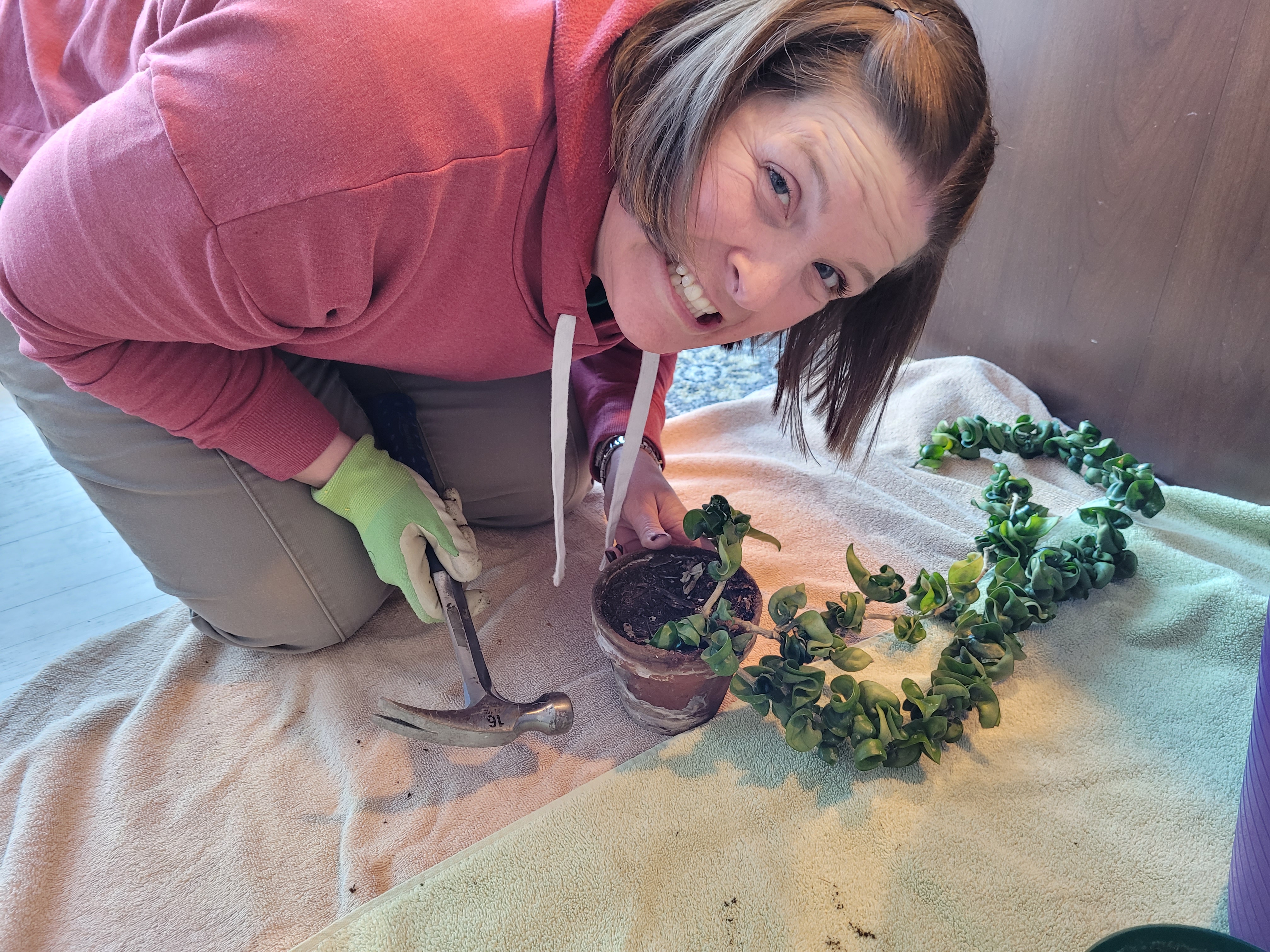
With dread in my stomach, I bought new cacti/succulent potting mix, a new pot, and set to work. It was in a tiny clay pot and there wasn't a way to pull it out, so I broke the pot apart with a hammer - gently. It was almost like the plant breathed a sigh of relief when the pot came off. I held the plant in my hands, a matted mess of roots, and cursed myself for not repotting it years ago. 

The root ball is so small! Why did I wait so long?!?

I gently brought it to the sink, hydrated the roots (which seemed to shrink), and prepared the hoya for its new home. A little potting mix in the bottom, tuck the plant in, a little more potting mix, gently press around the plant. I'm fairly certain that my pulse was racing and I barely breathed during the process. Then I returned it to the sink and gave it a good watering. I'll fertilize it in a couple weeks once it gets more settled. 

Happy in its new home. Grandma Mae would be proud.

As of now it's doing fine. I'm hopeful it will bloom again and live another 50+ years!

Wednesday, January 18, 2023

Peppers for your Palate: 2022 Larimer County Pepper Trials

 Posted by: Alison O'Connor and Jon Weiss, Larimer County Extension

Peppers are hot! But also sweet. And the interest in growing peppers has increased in recent years. As most people know, it's tough to garden in Colorado - and having a short list of vegetables that perform well is helpful for all gardeners. In 2022 the Larimer County Master Gardeners, led by Jon Weiss, conducted an extensive research trial to evaluate bell peppers and sweet lunchbox types. Jon and "Team Pepper" grew 15 different types in a replicated, randomized trial.

Larimer County Master Gardeners: Team Pepper! 

Hybrid and open-pollinated pepper varieties known to be early to earlier mid-season in maturity were selected. Twelve varieties were sweet bell peppers and three were “lunchbox” type. The peppers were started from seed in the CSU Horticulture Greenhouses and transplanted in early June at the CSU ARDEC-South (Fort Collins, Colo.) research farm. Seedlings were planted into ground beds covered with black plastic and irrigated with drip irrigation. 

Planting peppers on June 9, 2022 at ARDEC-South.

Fun fact: even research plants aren't immune from rabbit munching. Boo. Something to work on for next year.

There were three harvests during the growing season, just as the fruit on the plants started to color. Fruit was counted, weighed, and the number of lobes on each fruit determined - for those who want to grow peppers for stuffing. At the end of the growing season, fruit was tasted by a brave group of 16, ranking each pepper from 1 (meh) to 5 (super tasty) based on sweetness, texture, and overall flavor.

Weighing and counting 'Eros' peppers.

While 'Purple Beauty' set fruit and colored first, the flavor was poor. 'Olympus' and 'Ace', both bell peppers, yielded the greatest number of fruits ('Ace' had an average of 26 fruits per plant; 'Olympus' had 16 fruits per plant). 'Olympus' also yielded the greatest number of four-lobed fruits for stuffing. 'King Arthur' ruled supreme with huge fruits, averaging about one-half pound each! 

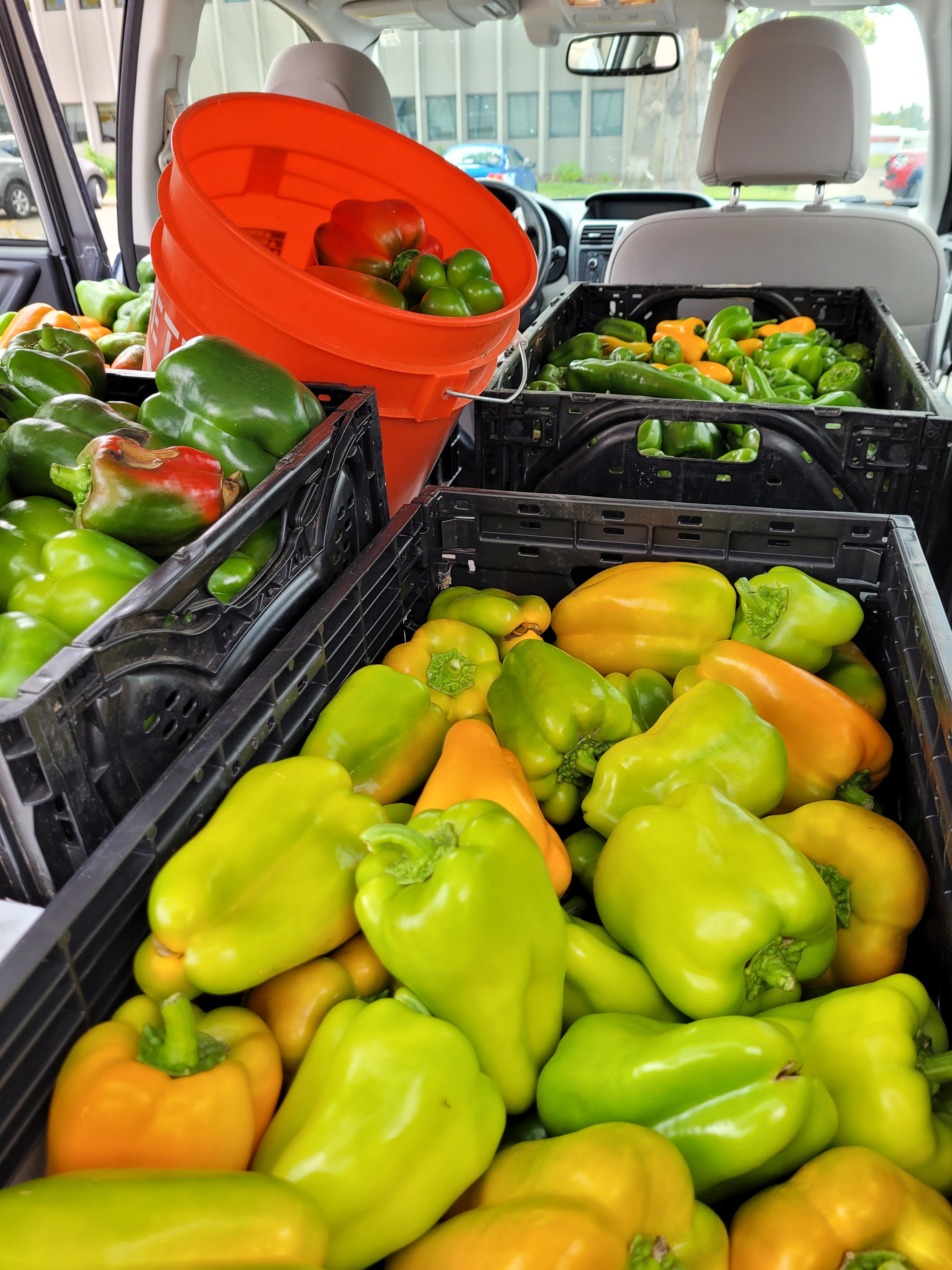
For flavor, yield, and slightly larger fruits, 'Just Sweet' ranked at the top of the lunchbox types. 'Cajun Belle', toted to have a "slightly spicy flavor" was hotter than expected - and it was not included in the taste test. If you just want a lunchbox pepper with loads of fruit (an average of 74 per plant), grow 'Eros'. You'll pick for days. All the fruit in the trial was donated to local food pantries, about 500 pounds.

Peppers headed to local food pantries.

Full results can be found on the Larimer County Extension website. You may also download or print the PDF here. The website also has results from the 2019-2021 tomato trials. The pepper trial will be replicated in 2023.

Wednesday, November 2, 2022

Deadly Plants: The Castor Bean

 Posted by: Alison O'Connor, Larimer County Extension

Castor bean (Ricinus communis) is a tropical beauty native to east Africa that is extremely showy, but also incredibly poisonous. It’s commonly planted in the landscape as an annual to provide structure, color, and texture. I first met castor bean during a family vacation in northern Minnesota as a young teenager – more on this later.

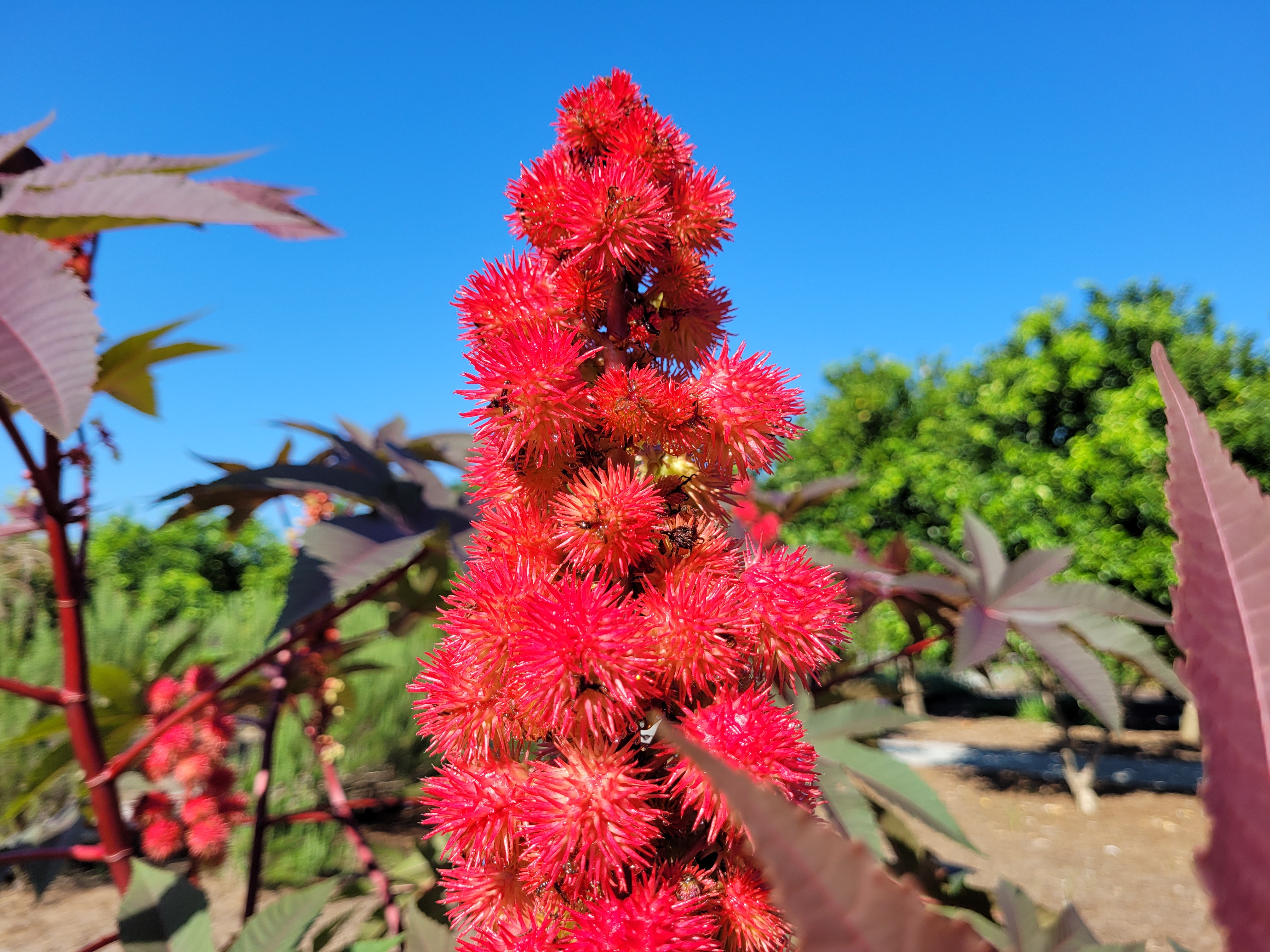
Castor bean leaves and seedpods

In frost-free climates, this semi-woody plant can grow up to 40 feet tall, but in Colorado, you can expect annual growth of up to 10 feet. It won’t survive temperatures below 32 degrees. It’s an absolute garden showstopper with vibrant red, pink, or green seedpods that are spikey and persistent in late summer. Leaves are star-shaped and up to 18 inches across on long petioles. The Latin Ricinus translates to “tick”, as the seedpods are said to resemble blood-filled ticks. The seeds are small and look a little like black-eyed peas.

Large, showy leaves of the castor bean (no, it's not THAT plant)

The plant is in the Euphorbiaceae family (think poinsettias and spurge), so there will be milky sap with any broken plant part. Those with allergies to latex may have reactions to the sap, so wash your hands and wear gloves when handling the plant.

But the sap really is a minor issue when it comes to poisonous nature of this plant. The seeds are filled with ricin, one of the world’s deadliest natural poisons, a blood-coagulating protein. Ricin is an estimated 6,000 times more poisonous than cyanide!

Castor bean seeds [photo from ebay.com]

Back to northern Minnesota…

My brother was a budding horticulturalist (and still is!) and he came across this plant during our trip. Some kids collect rocks, but Jeffrey collected plant parts and seeds. Not knowing what it was, he picked off a few of the seeds, put them in a black plastic film canister (remember those?!), and brought them home.

We had a beagle mix named Bosley growing up. He was a great dog but an absolute food hound. What Bosley consumed was legendary – entire loaves of bread, charcoal from the grill, two pounds of Starlite mints, mouse traps baited with peanut butter, an entire jar of peanuts – he ate anything and everything. He was a counter surfer and was known to steal boiling hot French fries off the oven tray.

Sweet Bosley - look at that face! His obsession for food was legendary.

A few months after our trip “up north”, the film canister was knocked off Jeffrey’s dresser, ended up on the floor, and sweet hungry Bosley ate some of the seeds. And he got really, really sick. Our family vet, Dr. Fred, suspected that he ingested something poisonous and eventually we figured out the puzzle, but only after we had the seeds identified. None of us realized how poisonous the seeds were (4-8 seeds can kill an adult human). Boz was in tough shape in ICU and we were all nervous wrecks.

Fortunately, with the help of the University of Minnesota Veterinary Medical Center and their toxicology lab, Bosley survived. His legend lives on since Dr. Fred wrote up a scientific publication about his treatment for him – Boz has a refereed publication! I remember picking up Bosley from the vet. He was a bit sluggish and a little worse for wear but recovered in time…and continued his quest to eat anything and everything his entire life. Fortunately, there are now antidotes available for any accidental poisonings that occur.

Interestingly, the poison ricin is being investigated as an anti-cancer agent – another common name for castor bean is “Palm of Christ”. And maybe you took castor oil to help you with heart burn or constipation? Don’t worry about being poisoned. Ricin is water soluble and is not released during the pressing process.

Castor bean really is beautiful!

The plant grows easily from seed (just limit how many you purchase online to avoid the watching eyes of the FBI) and needs regular water in the summer. But just heed caution when it flowers and produces seed. If you have young kids or hungry dogs in the landscape, it’s best to admire it in photos instead.

Friday, July 15, 2022

The Ups and Downs of Backyard Chickens

 Posted by: Alison O'Connor, Larimer County Extension

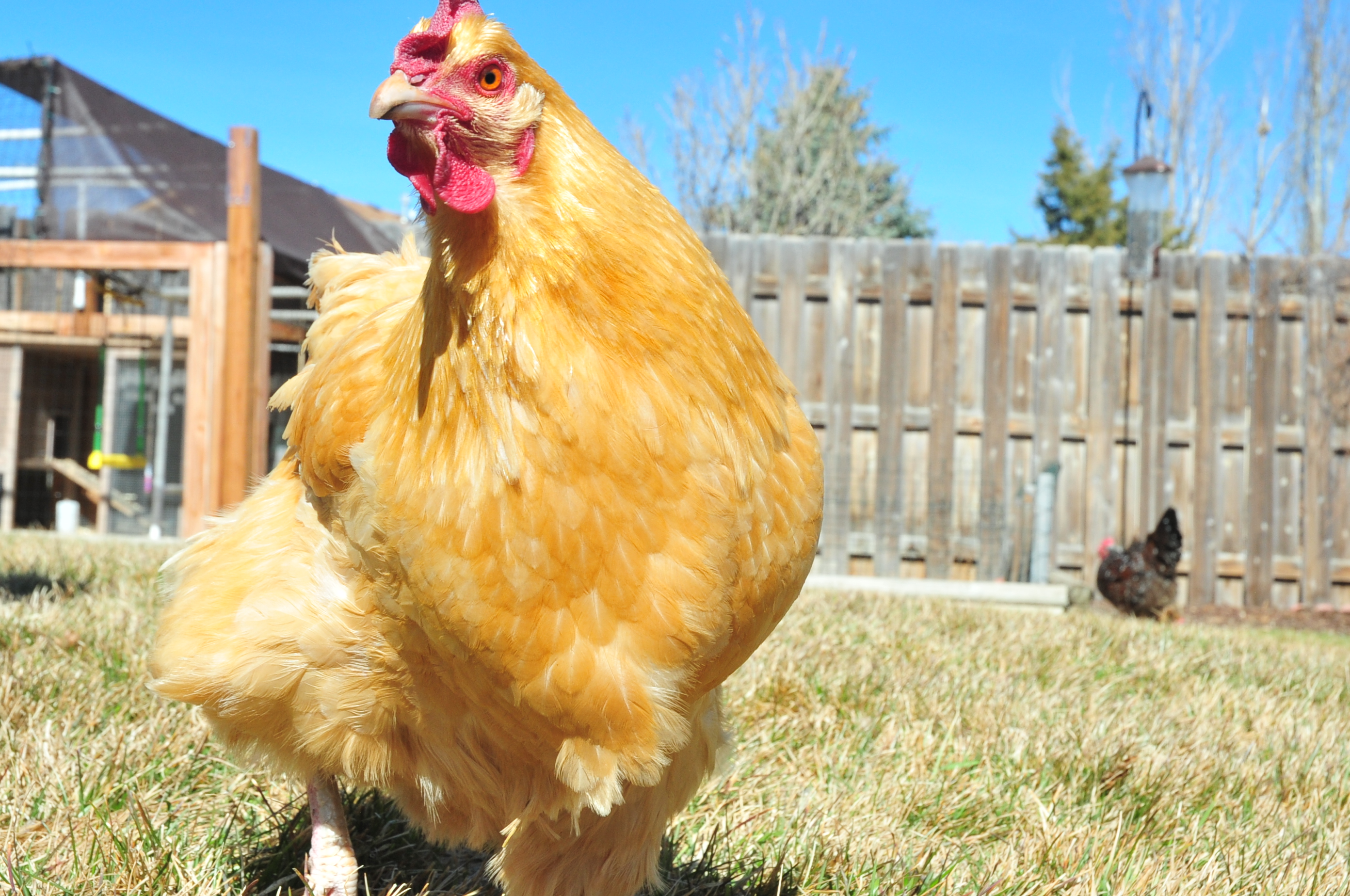
I have been a proud chicken owner since 2014. It was a dream of mine to have feathered friends happily clucking in my backyard for awhile and finally made the decision to invite them into my life. It took quite a bit of planning and infrastructure, but I have really enjoyed my ladies. Last week I lost one of my oldest hens, Dizzy Miss Lizzy, and it hit me harder than I expected. She was a beautiful buff orpington, with golden yellow feathers, and was very proudly "fluffy but not fat". (Note, all of my girls are named after women in Beatles songs - and our henhouse is Henny Lane.)  

Lizzy in her fluffy glory. (Photo by Fred McClanahan)

Like having any pets, there are ups and downs. Losing chickens is definitely a downer. But there's so much good!

Fresh Eggs

It sounds romantic, doesn't it? To wander outside and gather your own breakfast? The eggs are a wonderful perk and there are times when I have so many eggs that the thought of eggs makes me turn up my nose. If you want to be a hero, give someone fresh eggs. And the colored eggs are really spectacular. Egg laying isn't consistent - the first couple years are the best, but laying can stop with really hot weather or stress. Chickens are lay best when days are long. Unless you provide light in the coop, they usually will stop laying during winter months, but resume in the spring. 
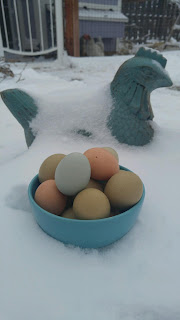
Eggs, glorious eggs!

Chickens are free entertainment

Chickens have personality - and you get to know your girls really well. Rita? She's the chatterbox of the flock. Martha? Fastest chicken in the coop. Prudence? A beautiful dusty lavender and will stare down Maple the Beagle all day. But throw a few worms or a head of lettuce in the run, and watch the show! They are great at "keep away" and Lizzy was always the quickest and the best at stealing treats from the others. I love hearing them chatter and often find myself asking them questions about the neighborhood gossip. Sadly, I only get a lot of clucking. But you can make incredible videos of them running! This was a promo for the Chicken Olympics event we had at the farmers' market last summer.

I think they know their names

Or at least they know my voice. And my voice usually means I have treats for them (sparingly, of course). But they usually come running when I tell them hello or good morning. I am pretty convinced that Rita knows her name though, because I've shouted it from the upstairs window and she always chirps back at me. 

Pest control at its finest

Boy howdy - chickens love eating bugs. They are experts at eating beetles, moths, larvae, grasshoppers, and anything else that might cross their paths (including mice). Earlier this spring I had someone drop off a cup (!!!) of bumble flower beetle grubs to identify and the ladies thoroughly enjoyed them. I was a bit squeamish, since the grubs were huge and juicy. But they loved it.
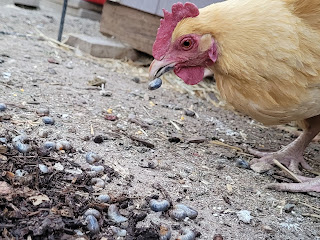
Lizzy working her way through the bumble flower beetle grubs.

Chickens aren't without their challenges, and one of the biggest is:

The pecking order is real

You've heard of the pecking order and it's a fierce and competitive ladder. I had two hens, whom I called the "Mean Girls" that I had to rehome because they were ruthless with one of my older hens. Chickens will seek out and attempt to destroy those they feel are weaker. There are always nips and pecks, but it can turn deadly. With Lizzy gone, my hens are currently reshuffling and it's interesting to watch. 
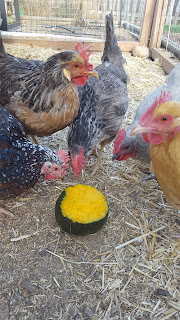
Harmony for a moment eating acorn squash...

They can get mites

Yes, chicken will get northern fowl mites and it doesn't mean you're an unclean or bad chicken owner. I just had a mite infestation and it's enough to give you the heebie-jeebies. Mites are commonly found on all birds, but when populations are high, it can cause major health issues to the chickens. My first sign was what looked like a poopy rear end. Upon closer inspection, it was a significant mite infestation. After treatment with spinosad (yes! the same stuff you use on plants, but labeled for chickens), and many plucked feathers (the tweezers were thrown in the trash), the girls are all much happier. Older chickens are more likely to have mite issues, because they may not work as hard at dusting to keep themselves clean. If one chicken has mites, it's best to treat all of them.

Losing your feathered friends

It's never easy to lose any pet, and my chickens are very much part of the family. Lizzy was over eight years old, which is an amazing life, but she's greatly missed. I am very fortunate that I've never lost any to fox or skunks - every backyard chicken owner has heard those horror stories. You take a lot of precautions to keep your hens safe, with lots of fencing and security measures - I joke that my entire coop is held together with zip ties. We've added extra netting to protect against the avian flu and made adjustments for better sanitation. 

So is it worth it? Without hesitation: YES. I adore them. I love talking to other chicken owners. I love following Instagram accounts of people who are as crazy about their hens as me. I love buying them treats at the grocery store (spinach is their favorite, followed by sweet corn). I love seeing them run on their clumsy legs. I love seeing Loretta stretching her long neck to reach the pumpkin leaves in the garden. I love Molly's aloofness, but her attempts to be friendly. They are amazing. 10/10 highly recommend. (So...do you know all the Beatles songs their names came from?!)


The ladies of Henny Lane

Friday, April 15, 2022

The Magical South (and Scenes from a Cemetery!)

 Posted by: Alison O'Connor, Larimer County Extension

Earlier this month, I spent the best weekend with my mom in South Carolina and Georgia. It was a trip for the ages, because we attended the Augusta National Women's Amateur golf tournament at Augusta National (more on that!), but we also crammed in a lot of other things to fully experience the south in spring.

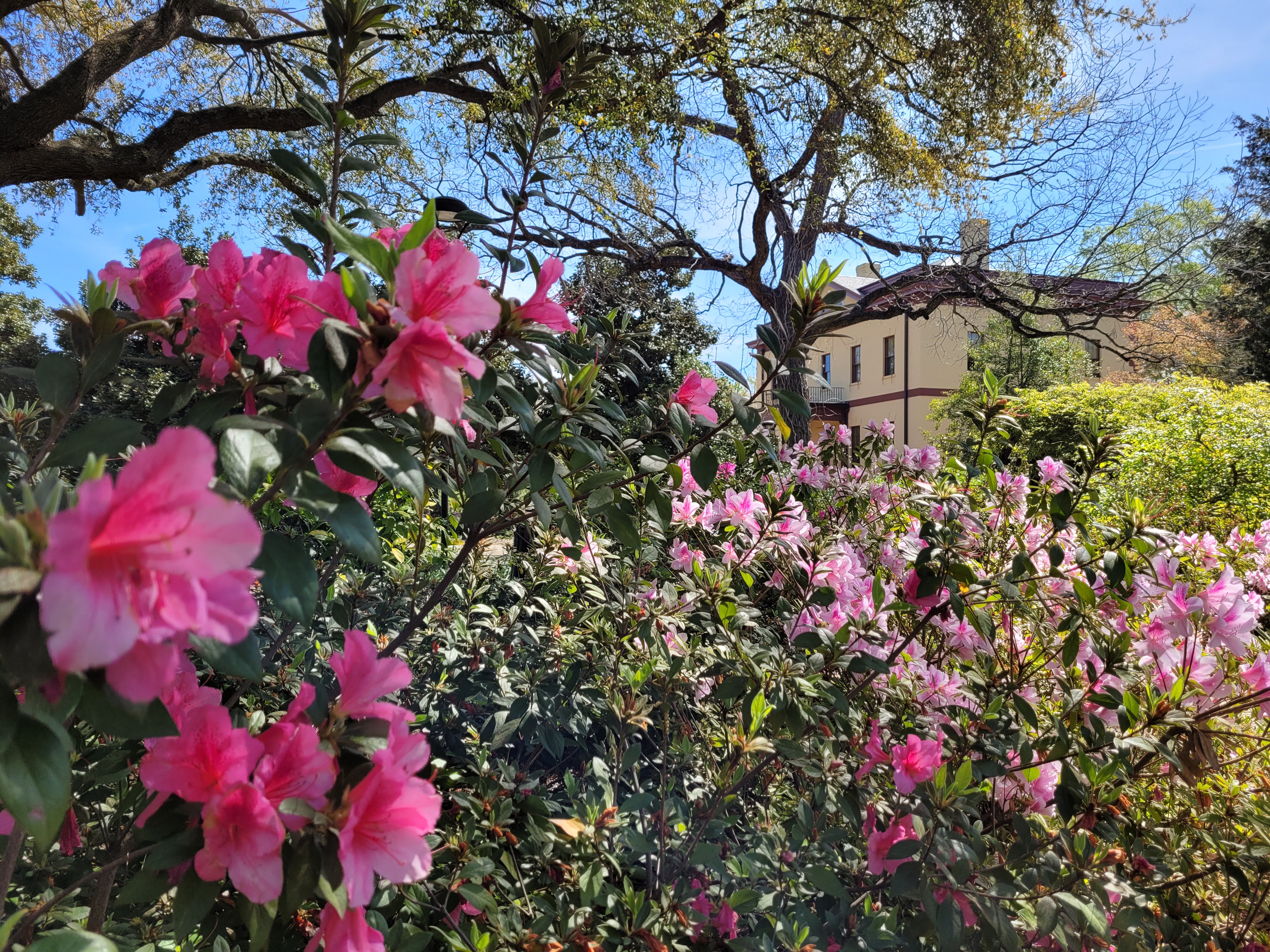
Azaleas in full bloom in Columbia, SC.

Fortunately for me, my mom loves cemeteries as much as I do and we kicked off our trip by visiting the First Presbyterian Church and Cemetery. The church was organized in 1795 (!) and is the oldest congregation in Columbia. Buried in the cemetery are Woodrow Wilson's parents and a couple of University of South Carolina presidents. Soldiers from the Revolutionary and Civil Wars are among those also buried here.

Aside from the rich history of the cemetery's interred were the amazing plants! Swaths of lilyturf (Liriope), flowering dogwoods (Cornus florida), and majestic live oaks (Quercus virginiana) wove through the cemetery grounds. Other friends included crepe myrtle (Lagerstroemia indica), camellias, and azaleas.

A live oak spanning across many gravesites at the First Presbyterian Cemetery in Columbia, South Carolina. 

For someone who learned their plant materials in the Midwest, it was fun to pull out the cobwebs to try to identify many of these species - plus, having a group of horties accessible via text helps too!

I blogged about the magic of Augusta National a few years ago and had previously visited the course in May after the tournament. But let me tell you - seeing it in April, in its prime, was a near-religious experience. As mom and I drove from Columbia to Augusta, Georgia early Saturday morning, I was emotional just thinking about it. Mom teased me and told me to hold it together. As we walked up the main gates to enter the grounds, I was overcome with emotion and had tears streaming down my face. [Side note: my family took bets on how many times I would cry; the final count was eight!]

The course was impeccable. The perennial ryegrass was like green carpet. The pine straw was neatly manicured, and the grounds were absolutely beautiful. The course was once a nursery, so hundreds of plant species line the fairways. And hilly! If you watch the Masters, don't be fooled. Hole 18 is straight uphill. Mom and I walked the entire course, adding 22,000 steps to our sneakers. It was a dream to watch some of the most talented amateur female golfers in the world and celebrate 16-year-old Anna Davis's win. We also saw Annika Sorenstam, Nancy Lopez, and Dr. Condoleezza Rice (who is a member). 

Phones are prohibited on the grounds during the tournament, so mom and I stood in line for our complementary photo in the front of the clubhouse. Southern hospitality was at its finest, as everyone on the grounds, from patrons, to staff, to the groundkeepers were so incredibly friendly. The city of Augusta loves hosting the Masters and the women's amateur and they are so good at it.


Mom and me at Augusta National in April 2022. We practiced our pose, but mom forgot the leg bend! Phones weren't allowed on the grounds during the tournament, so this is the only photo we have. 

The next day we drove to Charleston, which simply oozed southern charm and history. A walking tour through the city combined aspects of architecture, history, and more great plant life. Boston ferns (Nephrolepis exaltata) and cast iron plant (Aspidistra elatior) were used as filler landscape plants.
 
This porch in Charleston begs for lazy afternoons reading and drinking sweet tea.

It was such a great trip! The weather was perfect, the humidity was low, and it was fantastic to spend quality time with my mom. We both agreed we'd go back in a second if given the opportunity. Two thumbs up!


Monday, February 7, 2022

Think Tomatoes!

Posted by: Alison O'Connor, Larimer County Extension

It’s official. Punxsutawney Phil saw his shadow and there’s more winter ahead. For those who’ve lived in Colorado for a few years, you know our snowiest months are usually February and March, but gardeners can use these days to dream of spring. Since 2019, the Larimer County Master Gardeners, under the supervision of fellow CMG Jon Weiss, have conducted tomato trials, trying to determine some of the most fruitful (and tasty) tomatoes for northern Colorado.

Jon Weiss, Master Gardener 'Celebrity', and mastermind of the tomato trials

Jon and his cadre of volunteer cohorts designed and managed two trials: the first was an in-ground study conducted in 2019 and 2021 at the ARDEC-South Experiment Station in Fort Collins; the other was a container study at the CSU Annual Trial Gardens on Remington Street.

Field Trials

With a pause in field research in 2020 due to Covid, this study started in 2019 and was replicated in 2021. Jon selected 12 tomato varieties, both hybrid and open-pollinated selections. There were three replications with five plants per replication of each variety. In working with the elements and challenges of an outdoor field study, the crops experienced all types of weather (including hail) and varying lengths of growing seasons. In addition to collecting data on when the tomatoes started maturing, average size of fruit and total yield was documented. New Girl was the earliest maturing variety and had the highest fruit yield for 2019 and 2021. While fruit size for this variety is small, those looking for high yields and large fruit may want to consider Carbon and/or Big Beef.

But how do they taste? Jon conducted taste-test studies with all 12 of the tomato varieties (thank you taste-testers!) and New Girl had an average flavor of 3.3 (out of 5) for the average of the two growing seasons.

All field-grown tomatoes were blind taste-tested. Participants tasted all 12 varieties and rated them for several flavor profiles. 

Master Gardener Anne Wuerslin jots down notes during the taste test.

Container Trials

In thinking about gardeners with smaller spaces, Jon also selected tomatoes to grow in containers. Tomatoes were not staked and left to grow in their natural habit, which was variable among the three varieties. Cherry Falls was an early maturing variety with a compact, somewhat open growth habit. Totem had a dense growth habit and was the latest maturing of the three. Patio Choice Yellow was as early as Cherry Falls, with larger fruit, and higher yield.

So if you like yellow tomatoes with big yield (an average of eight pounds of fruit per plant), Patio Choice Yellow might be a good one to add to your garden this summer.

It should be noted that all harvested fruit was donated to the Larimer County Food Bank, with several hundred pounds donated in 2021. For more results, check out the summaries here.

Going forward, Jon is planning to move on from tomatoes and will be conducting a sweet pepper trial in 2022, including bell peppers and “lunch box” types. Our thanks and appreciation to the staff at ARDEC-South and the CSU Annual Trials Gardens: Drs. Mark Uchanski and Jim Klett, Jane Davey, and David Staats for their support of these trials.

Thursday, December 30, 2021

Colorado Golf is a BIG DEAL

 Posted by: Alison O'Connor, Larimer County Extension

Yes, I'm back, blogging again about golf. And maybe this is the post where you'll find appreciation for this sport that provides so much entertainment and so much frustration (often in the same round! Sometimes on the same hole!), even though you may not play. The Colorado Golf Coalition released its 2021 Colorado Golf Economic and Environmental Impact Report, a report that hadn't been conducted in 19 years. Based on data from 2019, the 76 page report is chock-full of golf facts, impacts, and information about how the industry benefits Colorado.

A gorgeous view at the Boulder County Club (photo by Alison O'Connor)
Did you know that of the approximately 260 golf courses in Colorado, 75% of them are publicly accessible? That means you could play a round at the Broadmoor (treat yo'self!), soak up the scenery at Mariana Butte in Loveland, or play a round with a caddie at CommonGround. Colorado also has some incredible private courses that would knock your ankle socks off. Like Ballyneal in Holyoke, which is ranked #44 on Golf Digest's list of top 100 courses in America. Located in a tiny town of 2,400 people, Ballyneal is links golf at its finest.

And while golf courses are often chastised for being water hogs, all the courses in Colorado account for less than 1% of the total water used in the state. And superintendents are finding ways to water more efficiently. According to the report, "To help put things into perspective, if Colorado’s total annual water usage equaled your typical 16.9-ounce bottled drink, the amount used by Colorado golf would be less than one teaspoonful. And more than a quarter of that is reclaimed water." The vast majority of all superintendents (97%) are also using more than three water-saving techniques and have extensive water management plans. 

Golf courses also promote wildlife, pollinators, and provide so many environmental benefits (abating the heat island effect, mitigating runoff, sequestering carbon). Of the 33,061 total acreage of golf courses, about one-third is designated wetlands, water areas, and native rough. Several golf courses in Colorado are also Audubon Cooperative Sanctuary Certified, taking extra steps to protect land and environment through rigorous management plans.

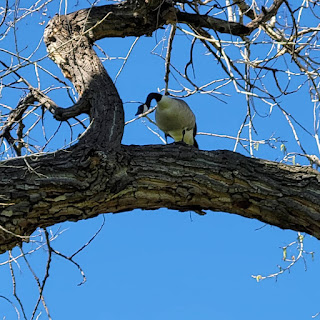
Ok, maybe not the most exciting wildlife, but how often do you see a Canada goose perched in a tree? (photo by Alison O'Connor)
If you were one of the many who started playing (or reignited a passion for) golf during Covid, you weren't alone. Golf is essentially the perfect social distancing activity. Walking 18 holes can provide you with over 10,000 steps (more if you stray from the fairway). The number of golf rounds in Colorado increased approximately 20% in the last couple of years. (For those who play frequently, you quickly found out how hard it was to book a round on a weekend at your local muni!) Colorado golf is a $1.3 billion (yes, with a B!) industry and accounts for nearly 20,000 jobs. 

So if you're not one of the 487,300 golfers in Colorado, maybe you could put it on your list of things to try in 2022? I'll tee it up with you anytime! Full disclosure, I'm a dewsweeper (morning golfer)!

Early morning golf at Collindale Golf Course in Fort Collins (photo by Alison O'Connor)

Saturday, September 4, 2021

What's in season at your farmers' market?

Posted by: Alison O'Connor, Larimer County Extension

For 24 weeks every year, I spend my Saturdays at the Larimer County Farmers' Market in Old Town Fort Collins. The market is powered by Master Gardener volunteers who support daily operations and part of my job is market management. It's been a Fort Collins staple for 45 seasons and we're proud to have over 100 vendors sell with us during the season and connect Extension to the community. 

So when it comes to growing produce in my own gardens, I'm not super motivated, because I have weekly access to beautiful fruits and veggies grown by experts (as well as meat, baked goods, dog treats, and more!). I know many of you are growing your own, but consider stopping by your local market to see what else you might need! Everything is in season right now. Thanks to Master Gardener Karen Collins for taking these photos.

Who else has made sweet corn a meal? Yep, it's that good.

PEACHES! I'm on a two-peaches-a-day meal plan.


If you're a "tomato head" you probably grow lots of different varieties already. But market vendors might have one that you just have to try.

Fresh flowers make the perfect gift...or addition to your home or office. The sunflowers, dahlias, and zinnias are in full glorious bloom right now. (On the left is Mitzi, Master Gardener and market vendor!)

I had never heard of roasted chiles until I moved to Colorado (I'm from Minnesota!). And now I freeze green chiles for fall and winter meals. Are you a spicy or mild pepper fan?

When I did grow summer squash, I never harvested frequently enough to avoid the baseball bats that lurked in the garden. It's nice to buy zucchini that is a reasonable size. My favorite way to eat it is to sauté with toasted slivered almonds and parmesan.

The diversity of eggplant is wonderful! And it's one of the most beautiful fruits.

Farmers' Markets support local agriculture and small businesses. Plus, they are fun to visit! Many have special events, live music, and feature local non-profit organizations. If you're in Fort Collins on September 11, stop by for the first annual Chicken Olympics. Backyard athletes from my flock will be competing for the glory...and the gold medal!


Tuesday, June 1, 2021

Be Gone, Grass (in landscape beds)!

 Posted by: Alison O'Connor, Larimer County Extension

Do you battle grass creeping into your landscape beds? Me too. And it isn't fun dealing with it. I've tried all the recommendations--pulling, mowing, digging, and herbicides. Now, before you label me as a "spray head", I'm not. I pull a lot of weeds in my landscape, mostly because I find it therapeutic. I love listening to music, filling up a bucket of weeds, and appreciating my landscape on a micro-level. However, I also have my limits, and trying to dig out bluegrass around my delicate plants isn't fun.

Kentucky bluegrass creeping in my Heuchera (coral bells).

Fortunately, the herbicides available for this problem are extremely effective and readily available. If you choose not to use herbicides, then keep on keepin' on with pulling, digging, and using mulch. These efforts can be successful, but persistence is key. Do it regularly.

If you want to consider herbicides, then look for products that contain either fluazifop or sethoxydim. There's a third, clethodim, but it tends to be more expensive. These herbicides are sold in products like Ortho Grass B Gon, Fertilome Over the Top II, Bonide Grass Beater, Monterey Grass Getter, etc.  

One of many options you can use to selectively remove grass from landscape beds.
This is not an endorsement of any particular product.
 

[Side note: I absolutely LOVE saying "fluazifop" and find it to be the most fun chemical name to use in everyday conversation. Flew-as-uh-fop. Fabulous.]

These are selective herbicides, meaning they will remove grass selectively from other plants. Namely, they will kill grasses, but leave your broadleaf plants unharmed. But they can injure/kill other grasses (ornamental grasses), iris, and other monocots. So read the label and use carefully.

But they do work! And usually in one application.

Use of fluazifop in my front landscape bed on bluegrass;
nearby plants included sedum and spring bulbs.

Don't worry, sedum, help is on the way!

Hang tight, little sedum, you'll be free from that bluegrass soon.

Monday, January 4, 2021

Outdoor Dining: Greenhouse Style

Posted by: Alison O'Connor, Larimer County Extension

There's no question that local restaurants are getting creative to allow more people to dine indoors and out. While walking around Old Town Fort Collins, I saw miniature greenhouses outside Rare, a local eatery.

Using miniature greenhouses to provide a socially-distanced dining space. Each greenhouse has a table large enough for four people to eat and be comfortable in winter. 

I sent the photo to my brother, who works for a large wholesale nursery in Oregon and his response was, "That's great! And it's no wonder we can't find any greenhouse supplies!"

So is this yet another positive for the Green Industry? Will this help "grow" more gardeners? Or will we see a glut of gently used greenhouses on Craig's List in a few months?

I bet it's toasty warm inside those greenhouses, especially when the sun is out. I also suspect they are heated in the evening.

Regardless of what happens, I have to hand it to our ingenious restaurant owners who are truly modifying their practices to keep their doors open. I'd personally love to dine in a greenhouse. Even better if it smells like warmed soil and vegetation. Happy New Year!

Sunday, December 27, 2020

Reuse (or Recycle!) that Christmas Tree

Posted by: Alison O'Connor, Larimer County Extension

I feel like yelling, "We made it!" since 2020 is coming to a close and the holidays are (mostly) over. As I type this, I'm glancing around at the remnants of Christmas...leftover cookies, stray gifts, and drooping poinsettias. While we don't have a real Christmas tree (finding needles into June drove me crazy), about 20% of you do. And while many towns and cities offer Christmas tree recycling, there are some other things you can consider doing with your tannenbaum...

Cut it up!

Remove the branches and use them around your landscape. Branches can be used to line sidewalks as a special touch. They can be placed around fall-planted perennials and shrubs for added protection (and to capture snow). You can also let the wood dry and use the tree for firewood in a few months.

Using Christmas tree branches as mulch for young plants
(photo courtesy of Garden Gate Magazine)

Entertain the birds!

Placing branches on the ground will provide habitat and protection to ground-nesting birds. Standing your whole (undecorated) tree in the backyard can provide shelter to smaller birds who frequent your landscape. I have a very large (and slightly invasive) silver lace vine that encompasses the corner of my fence. Do you know how many birds live in the vine!? Hundreds! Maple the beagle loves to see them fly as she runs, full speed, towards it multiple times per day. I bet the chickens would enjoy the evergreen branches too...something new to peck and investigate.

A large silver lace vine that has eaten the fence. It's wonderful habitat for small birds.
Using this idea, place your Christmas tree in the landscape to provide additional shelter.

Control your soil!

Cut branches placed on top of your vegetable garden beds will help prevent soil erosion during windy winter days. If you have placed mulched leaves or grass on top of your beds, the branches will help keep those in place.

Make your own plant tags!

This takes a bit more work, but consider cutting up the tree to create flat wooden plant markers. You can then use these in seed starting flats, marking spring-planted bulbs, or even vegetables in your garden. 

Create a fort!

The Town of Windsor created an incredible fort last year with recycled Christmas trees called the "Magical Forest". Staff positioned trees to make tunnels and hiding spaces for kids to play. Keeping in mind social distancing requirements, maybe you can create a smaller version in your backyard?

Windsor's "Magical Forest" (photo courtesy of the Town of Windsor)

Get your mulch on!

Once you bring your tree to recycle, it's often chipped into mulch. Many towns and cities offer residents the free mulch in the spring. This mulch is as good as any! Plus it might have some fun flecks of color from leftover tinsel that made it through the chipper. If you're not digging the look, then top it off with some colored mulch of your choice. Check with your local authorities to find out when and where Christmas tree recycling is taking place. Please don't send your tree to the landfill, as there are so many other great options. 

Christmas trees are often chipped into mulch, which is often available
for free to the public. Check with your local municipality for information.

Did I miss a great idea? If so, let me know in the comments. Happy New Year to all!

Thursday, November 26, 2020

Feeling Thankful in 2020

 Posted by: Alison O'Connor, Larimer County Extension

Don't get me wrong--it's been a hard year. There have been many challenges, new stresses, obstacles, and uncertainty. "Be flexible" has been a good mantra. Despite the bad, there's also been a lot of good. So let's take a moment to reflect on the positives...

People started gardening.

We were stuck at home, looking outside at our landscapes, so people picked up a shovel and got busy. This meant record-breaking seed salesBaker Creek, a supplier of heirloom seeds, reported over 10,000 orders on one day in late March. In some cases, this meant packing and shipping delays. It also meant that some seeds were completely sold out. For those of us in horticulture, the news was exciting! New gardeners! (And truth be told, it also provided us Extension folk a bit of job security, since we knew these new gardeners would have questions.) The record seed sales also extended to nurseries and greenhouses, who struggled to keep plants in stock due to demand. 

Shoppers at Fort Collins Nursery (photo courtesy of the Coloradoan)
Shoppers at Fort Collins Nursery (Fort Collins, Colo.) (photo courtesy of The Coloradoan)

Several garden centers reported higher-than-normal Mother's Day sales, with customers swarming to buy hanging baskets, annuals, and summer-blooming bulbs. Signs were posted that said, "New shipments are on their way!" Garden centers responded with curbside pick-up and online ordering. For months, one of the nurseries in Fort Collins had long lines lining the frontage road in front of their store the moment they opened each day. A warm welcome to all of our new gardeners!

Gardeners gave back to their community.

The CSU Extension Grow & Give project provided resources for people to grow produce with the intent of donating some of it back to their communities. Wildly successful (and award-winning!), this project was adopted by 37 Colorado counties. Gardeners donated more than 46,000 pounds of fruits and veggies to local food banks and pantries, as well as churches, community groups, and neighbors. 

Farmers' markets were successful

Nationally, farmers' markets were deemed as "essential business", meaning that they were allowed to operate as per health department regulations. The Larimer County Farmers' Market, operated by CSU Extension in Larimer County, scrambled to open their doors in May. Despite numerous regulations and mandates, the market operated successfully for 24 weeks. It even had the highest sales day in its 45-year history in August. Masked customers lined up obediently, six feet apart, to purchase their favorites from dedicated vendors. Hand sanitizer, wash stations, gloves, and masks all became part of the market culture. 

Styria Bakery II at the Larimer County Farmers' Market in Fort Collins (photo by Karen Collins)
Styria Bakery II at the Larimer County Farmers' Market (photo courtesy of Karen Collins)

Selling plants to get a home

I recently read this heart-warming story that brought tears to my eyes and provided the hope that we're so desperate for. Aaron Moreno, a California first grader whose family was homeless, sold plants to help his family get an apartment. His mom gave him her last $12, which he invested in succulents and sold them for a profit of $4. He took that money and reinvested it into buying more plants. Setting up his table outside a shed, where the family was living, people bought the plants--in droves. Aaron's Garden raised enough money (with the help of GoFundMe) to move his family out of the shed into an apartment. Aaron now has money in the bank and a place to do homework. While he may not stay in horticulture (he wants to be a judge), it's clear that gardening changed his family's life. 

Aaron Moreno of Aaron's Garden (photo courtesy of Instagram @aaronsgarden)
Aaron Moreno of Aaron's Garden (photo courtesy of @aaronsgarden on Instagram)

Yep. It's been a tough year. But there's still so much good. And if tough times have proven anything before, it's that we'll get through this. Together. Happy Thanksgiving to you all.