CO-Horts

CO-Horts Blog

Thursday, January 28, 2021

Teach a Child to Garden

                           By CSU Horticulture Agent, Linda Langelo


            Photo credit: Linda Langelo, Sherry Brandt with Kylie & Carlie

If for some reason you were not able to teach your child how to start gardening, then maybe in 2021 growing season you can.  Here are some very simple ways to engage your child:


  • Ask if they are interested in learning about gardening.
  • Share with them every step in the process.
  • Start at the beginning of looking through catalogues and selecting seeds.
  • Show them how to grow squash, watermelon, and cantaloupe in a container.
  • Provide a calendar that is separate for gardening tasks.
  • Mark dates on the calendar for starting certain seeds, frost free dates and so on.

Above all, give them responsibility. Naturally, the responsibility you assign each child will differ with their age. Responsibility to do certain small tasks you know they can handle such as watering the newly planted squash seeds and marking the calendar when they have watered them.  That way everyone knows. 

Make clear and simple explanations for why you are doing certain tasks when you are doing them. Children are inquisitive and imaginative.  Encourage these qualities by helping them explore.  What happens when you do not plant the onion bulb in deep enough or with the basil end facing the soil surface. Let them plant one onion bulb incorrectly and use a stake to mark it. Watching and wondering what will happen is half the fun.  When the onion sprouts along with the others is when you explain geotropism to them.

Giving them the opportunity to explore and encourage their curiosity which can engage them further with gardening. By doing these things you are giving your children a hand in every aspect of the family garden.  When I was only eight years old, my grandmother told me about the importance of working in fertilizer and sometimes coffee grounds around her roses.  She showed me how and then gave me the responsibility to get it done.  Your child may not grow up to have a career in horticulture like I have had, but they may have gardening as a hobby for the rest of their life.  When times get tough, they know how to grow their own food.

For more information to help assist you in this endeavor, here is a link to a CSU article by a CSU Master Garden in Larimer titled “Growing Food and Growing Gardeners” : https://extension.colostate.edu/topic-areas/yard-garden/growing-food-and-growing-gardeners/

At the bottom of the article posted above are CSU Fact Sheets to help you with growing vegetables.  In 2021 growing season, Grow and Give will continue.  Consider taking part if you did not in 2020. For more information go to the following link: https://cmg.extension.colostate.edu/grow-give/

Also, get in contact with your local Extension Office or Master Gardeners in your area.

 If you need more assistance with gardening activities here is a short list of links for different age levels:

 https://kidsgardening.org/garden-activities/

https://garden.org/


Thursday, January 21, 2021

The Colorado Tree Coalition

 BY CSUE Tri River Area Master Gardener Linda McIntosh

Have you ever heard of the Colorado Tree Coalition?  CTC.

There are so many great things happening with this coalition, you should check it out.  For example, did you know that there's such a thing as Champion Trees?  Thanks to CTC, Colorado can boast having seven trees on the American Forests Register of Big Trees.  That's a big honor for a big tree!  Every year they accept nominations for champion tree status from rural and urban areas all over the state.  The deadline for this is December 1st but don't worry if you missed it.  They begin a new search for even bigger trees every year.

This Champion Narrowleaf Cottonwood with a circumference of 198 inches, standing 94 feet tall, can be seen growing right in front on the main street in Lake City.  It was given the honor of becoming a National Champion Tree and was placed on the American Forests Registry of Big Trees at a ceremony on May 20, 2017.

If you would like to nominate a tree, or check out the winning trees, their website is http://coloradotrees.org/programs/?#notable  There, they'll explain how you can nominate a tree that you think might qualify.  While you are there, be sure to check and see if there are champion trees growing near you.

CTC also has a category for remarkable Notable Trees. These trees win the award because they're related to a famous or historical person, place or event.  They can be accepted if the surrounding community agrees that it's special because of its species, uniqueness, or contribution to the community.


The University of Denver Arboretum is home to one of the largest known Yellow Buckeyes in the State of Colorado.

So who is the CTC?  This great organization actually began with a group of metro foresters in 1990, calling themselves the Colorado Tree Coalition.  Within 5 years, they became a statewide non-profit serving not only Colorado but nearby states as well.  Today, the Colorado Tree Coalition's mission is "leading statewide efforts to preserve, renew, and enhance community forests."  They've teamed up with the Colorado Chapter of the American Society of Landscape Architecture, Colorado Nursery and Greenhouse Association, Colorado State Forest Service and Colorado State University Extension to help accomplish their goals.

One of my favorite things on the CTC Site is their tree list!  They have a fantastic list of trees that will do well in the area.


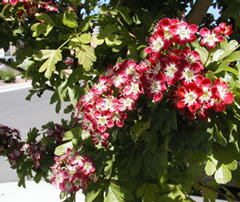
This Crimson Cloud Hawthorn is a sample of one of the great trees on their list.  Just click on 'Find the right tree' at http://coloradotrees.org/find/  There you will find a long list of recommended trees to choose from for a specific area.  If you see a tree species that you might be interested in, simply click on the name of the tree and a colored picture and information about the tree will pop up.  It will even tell you what insects might cause problems for the tree you have chosen.

The CTC programs has programs to help reforest cities.  They provide scholarships to eligible members of CTC to promote its mission of preserving, renewing and enhancing community forests.  Have you heard about their program that provides funds and grants to help plant trees in Communities across Colorado?  Over 74,110 trees have been planted throughout the state as a result of these grants.

CTC also teamed up with the Arbor Day Foundation to create a program for a5th graders throughout the state.  They not only teach children about trees and the important role trees play, but have an annual Arbor Day Poster challenge.


This poster by Adelaide Krabbenhoeft, a fifth grader at Creativity Challenge Community School in Denver, was selected as the winner of the 2018 Colorado Arbor Day Poster Contest.  Adelaide's poster depicted the importance of trees and the variety of ways they benefit our communities.  She was recognized by the CTC and a State Senator at the Capitol and also in the State House of Representatives.  What claim to fame for a 5th grader!

There's so much more that's going on with this great organization.  You'll have to treat yourself to a visit to their website to check out all the happenings.  You'll be glad you did.

Linda McIntosh
Colorado Master Gardener, ISA Certified Arborist, Licensed Commercial Pesticide Applicator

Monday, January 18, 2021

New Year, New Garden

 Posted by: Charleen Barr, Master Gardener in Larimer County

A new year in the garden promises and delivers a fresh start, a chance to fix all errors I have made in the garden and improve or transform those spaces that need extra attention. Now is the time of the year when I have plenty of days to think about what changes to make. The failures of last year have faded and it is time to gather ideas, and make some garden resolutions.

[courtesy of Creative Fabrica]


Continuing education is high on my priority of resolutions for 2021. I am excited to learn through our Extension Continuing Education classes. Although Zoom is not my favorite way to learn, I appreciate the expertise, preparation and I pay attention to the ideas presented. If you haven't looked, there are dozens of recorded classes posted on this blog--the page also includes those coming up. In 2021, I am hopeful that we may be able to enjoy the sharing of ideas and resources of our fellow Master Gardeners with the public.

Simplifying garden tasks as I get older requires some planning. I want to keep flower and vegetable gardens small, so they are easier to manage. A smaller garden helps with weed control.

I will not buy plants without a plan. I have dozens of seed packets that looked enticing in the catalog or store, but never got planted – not enough time or space! I also have had pretty plants that die in their pots without being transplanted.

Everyone loves the bright, showy cultivars of butterfly bush, petunias and daylilies, but these introduced species can be high maintenance. This year, I resolve to plant additional native species for a more sustainable garden that is easy to maintain. Native plants are adapted to our local climate, weather, and pests. They can handle periods of drought and sudden freezes, and require little, if any, fertilizer to thrive. Native plants also help sustain the backyard pollinators that return to my yard year-after-year.

Rocky Mountain penstemon (Penstemon strictus), one of many native plants that do well in Colorado gardens. Photo courtesy of durangoplants.com.

Garden resolutions require determination or they will not happen. Plus, sometimes we need someone to help make gardening ideas come true, like a partner in crime so to speak. This is when I enjoy using my grandchildren. They are totally stimulated by earth worms, crawling insects, and up close and personal inspections of plants. Gardening should not be all work. The more time we spend enjoying and sharing our gardens the more rewarding they will be.