CO-Horts

CO-Horts Blog

Showing posts with label Russian sage. Show all posts

Monday, July 25, 2016

When Plants Go (somewhat) Rogue

Posted by: Alison O'Connor, Larimer County Extension

I really enjoy weeding my landscape. Call me crazy, but I enjoy plugging my ears with my iPod, making things tidy and dumping five-gallon buckets of weeds in the trash. It's a real sense of accomplishment. I also enjoy seeing what's new in the garden...did my newly planted perennials survive? Do the shrubs need water? And seeing what's gone rogue.

Uh oh. Plants gone rogue. The potential to be invasive. Plants you want to avoid with a ten foot pole (mint, anyone?). But is "going rogue" a bad thing? In some cases, no....I actually enjoy plants that gently go rogue. Those that randomly pop up and say "Hello! Here I am! Aren't I cute?!" And those that are easily to pull out and remove.

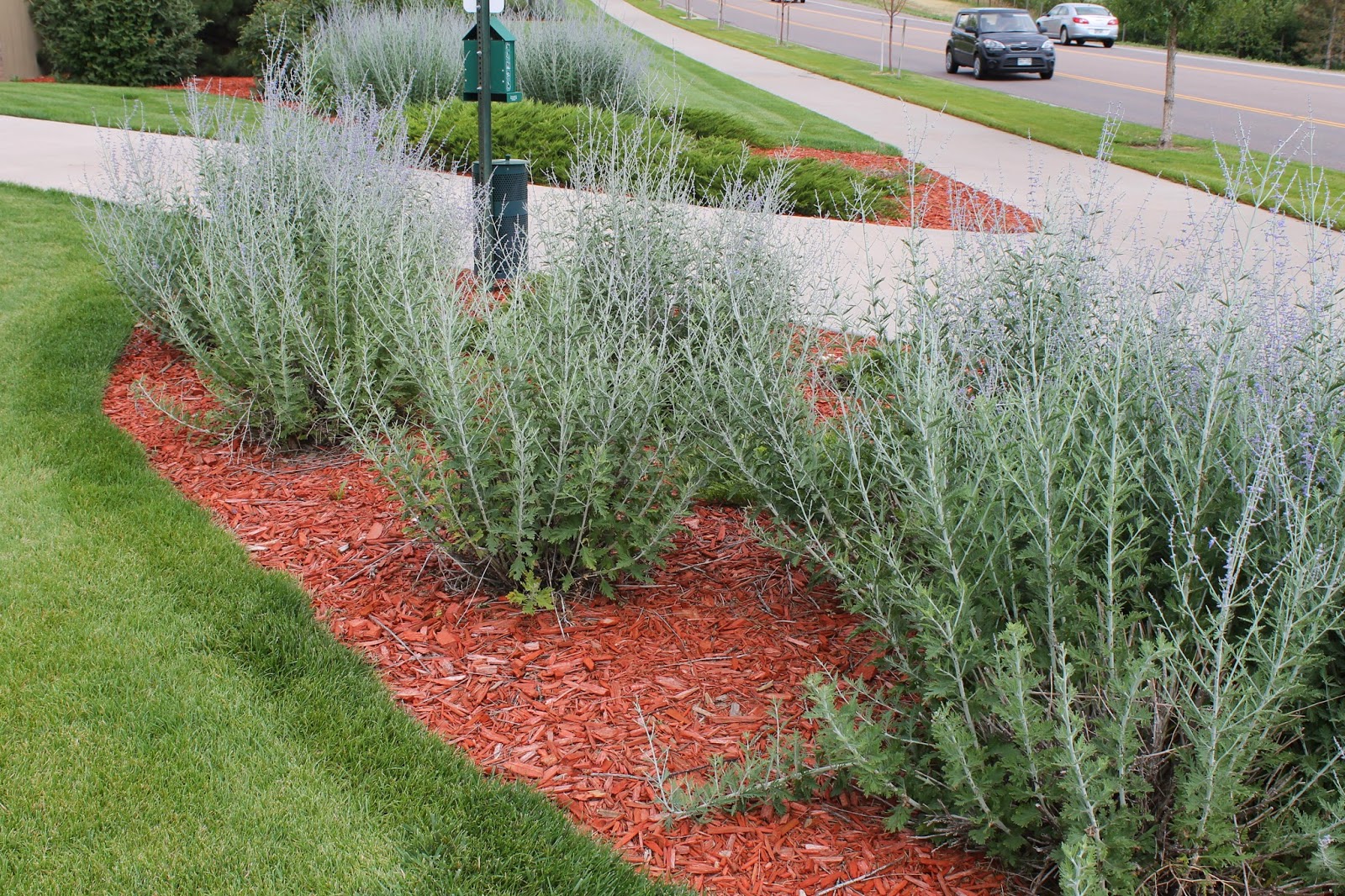
An example of a plant that's gone rogue and is NOT easy to mitigate is Russian sage. Yet I have it in my landscape. CO-Hort blogger Eric discussed this topic a couple years ago (and offers great suggestions to alternatives). But as big of a pain as this plant is, it does have a place...and in my yard, it is a border between my landscape and our neighbor's gravel driveway. It adds some nice separation. It's also a honey bee magnet. But sadly, Russian sage doesn't care about property lines, so I'm constantly pulling it from their gravel. Ugh. Russian sage--a bad rogue plant.
Russian sage growing in my neighbor's gravel pad. You can also see where I whacked it back to stay on our side of the property.
But some examples of gentle roguers (a new word?) include:

Petunia! Maybe this is common for you, but I've never had a petunia reseed. This one took up residence in my flagstone path, which is a great spot. What I'm trying to remember is if the petunia hanging basket I had last year was white? This petunia is so cute!
White petunia that found a home in the flagstone path.
Portulaca! Another annual, and one that commonly reseeds. I planted a few plugs a number of years ago and every year since, the portulaca fills in gaps in the flagstone and nearby beds. Fine by me! It's easy to pull and has great flowers that only are open during the day.
Portulaca that reseeds every year in the flagstone. The only problem is it's hard to distinguish from purslane (they are in the same genus).
Lamb's ear! I feel this may be controversial for some, since lamb's ear is a love it-hate it plant. Personally, I love lamb's ear, and while it's in the mint family and can be invasive, I find it easy to control by ripping it back whenever necessary. But what I find absolutely adorable about this lamb's ear is that this one is in my vegetable garden, a good 20+ feet from where the lamb's ear is planted. I can't bear to remove it, so I'll leave it for awhile and admire its perniciousness.
Lamb's ear roguing it in the veggie garden. So cute! And my garlic (on right) is nearly ready for harvest.
Angelina sedum! I have blogged about how much I love this sedum in past posts, so I won't belabor the point, but this sedum is lime green in summer and copper in fall. And it creeps and fills in. I started with a very small 4" perennial and it's grown to fill in a pretty big spot. I've also found it near my shed, rooted in a path and happily growing wherever it sees fit. Don't like where it's moving? Pull it and replant the roguers.

Maple was so excited to be in this photo with the Angelina sedum.
Coneflower! I feel like this one blindsided me. I guess I should have known, seeing as how coneflower is a native, but wow. Talk about prolific. I'm going to label this one a "medium roguer" since it's not as easy to relocate or remove. I originally planted coneflower in a sunny spot near a path and some other perennials. They quickly grew to be five feet tall and reseeded everywhere. In the path, across the yard and a few other spots. But can you really dislike coneflower? It's sturdy, a great bloomer and a friend to bees. So I deal with it.
The original coneflowers.

This coneflower was not planted, but found a home by the lavender. I like it! 
Sunflowers! And other bird seed! The birds in my yard go crazy for black oilers. So do my beagles for that matter. And if you feed the birds, you'll get some of the seed germinating below or nearby the feeder. It's inevitable. I have sunflowers. You might get corn. Or millet. All of these are annuals that may or may not be your cup of tea. I remove a lot of the sunflowers, but also let a few grow because they are nice.
Why not let these grow? The mulch path is for the dogs, and they provide some obstacles to run around.
Another that just came to mind is columbine...but mine all are tired and sickly-looking, so I'll spare you a photo. So tell me...what in your garden is a gentle roguer? Or even an aggressive roguer that you happen to love? I'm all (lamb's) ears!

Thursday, December 3, 2015

CSU Perennial Trials 2015

Posted by: Jim Klett, Professor and Landscape Horticulture Extension Specialist

The herbaceous perennial trials continued in 2015 at Colorado State University. The trials are located at 1400 Remington Street adjacent to Annual Trial Gardens and University Center for the Arts.  These plants are trialed for three growing seasons and two winters. Twelve different companies from around the world entered 103 taxa in 2015.  There were a total of 211 different taxa of herbaceous perennials in the trial. The 2013 entries were evaluated for three years twice a month during the growing season and photographs taken at each evaluation.  Photographs from all dates were reviewed at the end of 2015 season to determine these “Top Performers”.

2015 CSU “Top Performers”

Electric Avenue Coreopsis from Creek Hill/Eason (Coreopsis verticillata 'Mayo Clinic Flower of Hope'PPAF or ‘Electric Avenue’)
Bright yellow flowers covered the plants over a very long bloom period . Plants were sturdy, compact and uniform from spring to fall. Fine textured foliage and a nice flower shape contributed to a very pleasing overall affect. Overwintering survival was impressive both years compared to many other Coreopsis in trial.  This was designated as a winner of the “Too Good To Wait” award in 2014 and did not disappoint in 2015 either. 
Electric Avenue coreopsis in landscape
Flowers of Electric Avenue coreopsis
Beyond Blue Fescue from Skagit Gardens (Festuca glauca 'Casca11' PP #23307 )
This fescue was considered to have the best “blue” color out there! Plants maintained a nice “ball” shape and did not open in the middle. Plants were very uniform even after two hard winters and three growing seasons.  Flower stems were very few in 2015 and faded into foliage for a superior appearance. This is an improved variety over older ones for foliage color.  This was designated as a winner of the “Too Good To Wait” award in 2014 and did not disappoint in 2015 either.
 
Beyond Blue fescue
Gold Collection® Maestro Hellebore from Skagit Gardens (Helleborus x ballardiae  ‘COSEH 890')
Shiny, dark green foliage appeared almost black at times towards the end of the season.  Flowers petals emerge a deep pink with white and mature to a creamy white with shades of dusty rose on the back side.   Flowers covered the plant from side to side and were very prolific.  Plants were compact and with good vigor. 
Maestro hellebore flowers
Gold Collection® Merlin Hellebore from Skagit Gardens (Helleborus x ballardiae  ‘COSEH 810’USPP #22350 )
Flowers emerged with pink color that is brighter than most and then matured to shades of dusty rose.  Blooms were held above foliage creating an impressive display.  Plants were more compact with long lasting dark green foliage and very low maintenance.
Merlin hellebore flowers

Merlin hellebore plant
Gold Collection® Snow Fever Hellebore from Skagit Gardens (Helleborus x argutifolius ‘COSEH900’PPAF )
The speckled green and white foliage makes this a great foliage plant that will add sparkle in shady areas even when not in flower.  Sturdy plants have proven hardy over two winters that have been too severe for other variegated varieties of Hellebore. 
Snow Fever hellebore
Little Lace™ Russian Sage from Star Roses and Plants/The Conard-Pyle Co. (Perovskia 'Novaperlac')
Growth habit is unique as it combined a shorter plant with great uniformity.  Purple flower spikes were long lasting and created a lot of flower power.  The tidy, compact plants were a significant improvement over typical sprawling Russian sage in general.  It makes a good choice for xeric areas. 
Little Lace Russian sage
Little Lace Russian sage, a compact version of the straight species
Sunrosa™ Red Rose from Suntory® Flowers (Rosa x hybrid Sunrosa™ Red)
Constant red flowers and impressive growth habit made this plant attractive all season. Glossy dark green foliage had no signs of chlorosis or disease. Red flowers did not fade and bloomed steadily from mid-June through October. Small foliage and a dwarf compact growth habit made this a good choice for the smaller or mid-size landscapes. The compact growth habit is maintained without any pruning.  This was designated as a winner of the “Too Good To Wait” award in 2014 and did not disappoint in 2015 either. 
Sunrosa red rose
Dark Blue Moody Blues™ Veronica from Star Roses and Plants/The Conard-Pyle Co. (Veronica ‘Novaverblu’)
Long bloom period and the abundant spikes of dark blue flowers made this a standout.  Plants were very uniform and had excellent winter hardiness.  Additionally, plants had good resistance to disease and there was no signs of powdery mildew.  The entire Moody Blues™ series was noted for superior performance. 
Dark Blue Moody Blues veronica
Pink Moody Blues™ Veronica from Star Roses and Plants/The Conard-Pyle Co. (Veronica ‘Novaverpin’)
Flowers were noted for having exceptionally uniform, perfect spikes of light pink flowers that helped create an impressive overall display.  Growth habit and flowering were very uniform.  The overall height was taller than others in the Moody Blues™ series but still maintained a nice compact habit.  The entire Moody Blues™ series was noted for superior performance. 
Pink Moody Blues veronica
Class of 2014 - “Too Good to Wait”
The Perennial Trial Committee likes to award ‘Top Performer’ to plants that have been in the ground 2 winters and 3 growing seasons. This category is to acknowledge an upcoming plant that has been in the ground one winter and two growing seasons and has shown excellent performance thus far in the trial. The following two plants impressed the Perennial Trial Committee so much that they designated the category name: “Too Good to Wait Performer”.
 Alexanders Great Brunnera from Terra Nova Nurseries, Inc. (Brunnera macrophylla ‘Alexanders Great’ PP25,789)

This is a unique Brunnera of “monster” growth proportions which is an excellent choice to add structure to the garden.  The large size also helped show off the heavily silvered leaves resulting in a dramatic statement for the garden.  It makes a great foliage plant for shady areas but also had a good display of blue flowers that created a light, airy appearance. 
Alexanders Great brunnera
Forever Purple Coral Bells from Terra Nova Nurseries (Heuchera 'Forever Purple'PPAF)
Leaves had an intense purple color with a shade of red was maintained all season.  The glossy foliage seemed to make the color “bounce” off the leaf.  It is grown mostly for attractive foliage which also has fluted edges.   Plants had good vigor and a uniform growth habit.
Forever Purple coral bells
Forever Purple coral bell leaf

Thursday, July 10, 2014

Plant This Not That: Russian Sage Edition


Eric Hammond Adams County
 
Russian sage (Perovskia atriplicifolia)

Let me start by saying that I’m sure there are places for Russian sage in the landscape.   They are tough plants and I’m told they are very unappetizing to deer.  It’s just that I’m sick of seeing their leggy, sprawling and spreading forms in every hell strip, median, shrub border and foundation planting along the Front Range.   Plus, my neighbor has one along our shared fence and it’s continually trying to colonize my yard- oh the indignity. 

 
Russian sage suckering its way under my fence


So I thought I might try and encourage a little diversity by highlighting some similar plants that are a little better behaved and, at least to my eyes, more attractive.   There are actually quite a few smallish shrubs or shrub-like plants that have similar ornamental attributes to Russian Sage.

 
Blue mist spirea (Caryopteris incana and Caryopteris × clandonensis)-

 
Blue Mist Spirea Flower

Blue mist spirea has very similar flower color and timing to Russian Sage.   However, it lacks its sprawling and uneven habit and though it will occasionally come up from seed it does not spread nearly as aggressively.  The remnants of its fruit also add texture to a landscape in the winter months. They are fairly common and easy to find.
Blue Mist Spirea Winter Texture
Mojave sage (Salvia pachyphylla)-


This sage develops showy purple flowers mid-summer.  The foliage is fragrant and semi-evergreen remaining silvery-green late in the fall and early winter.   Once established, plants require little water and in our demonstration garden tend to struggle during wet winters.
Inflorescence of Mojave sage late in the summer


Lead Plant (Amorpha canescens and A. fruiticosa)-

 
 Lead plant

There are two species of lead plant commonly grown along the Front Range, A. fruiticosa and A. canescens.  Both are attractive landscape plants which develop purple flowers midsummer and have blue green foliage.  A. fruiticosa is the taller of the two species.  They are low water use once established and are tolerant of infertile soils.  They are native to the plains and in my opinion seem to fit more naturally into western landscapes.    


Lead plant flower
Newly planted lead plant

Catmint- (Nepeta sp.)-

Catmint

There are a number of different species, hybrids and clones of catmint.  They come in a variety of different heights and several flower colors, but most of those which are common to Front Range landscapes have purple flowers which provide color throughout late spring and summer, especially when deadheaded.   Catmint also attracts a variety of pollinators and butterflies to the garden.
Pollinators are often attracted to catmint