CO-Horts

CO-Horts Blog

Showing posts with label organic. Show all posts

Monday, May 4, 2020

Annual Weeds


Posted by Kara Harders, Regional Small Acreage Management Specialist, Peaks and Plains Region

Cheat grass, gone to seed
 Getting rid of weeds sounds like a simple idea but most of us know it is easier said than done. This post talks about controlling annual weeds, not perennials. Always try to identify the weeds you are dealing with so you can plan the most effective attack plan.

As I take my socially distanced walks around the neighborhood I am always disheartened at the sheer volume of annual weeds I see taking over peoples yards, gardens, rocked areas, and flower beds. It isn’t that I think my neighbors don’t care, I think many of them do, it is just such a hard problem to cure.

The annual weeds are some of the worst because they come up in the spring when we are all dying to see green. They give us hope that the dead patch in the back alley or next to the driveway is finally filling in with the grass we want, and just a few months later we are irritated by the nasty seed heads stuck in our socks and pet’s fur or the dead brown patch they become.

Often times killing the annual weeds (be it Blue Mustard, Yellow Mustard, Cheat grass, Green Foxtail, Henbit, Kochia, Russian Thistle, or others) won’t do anything in the overall control of the weeds. Annuals are the quick and dirty plants of the world because they go to seed so quickly, often before we really have the chance to find and identify them all.
Foxtail, gone to seed
Instead of having it in your mind to kill annual weeds, have it in your mind to keep them from spreading seed. Since an annual weed only lives for a year and then dies, it’s entire specie depends on producing enough seeds to repopulate next year. This can be achieved (or at least attempted) in several ways.

Weed Early: If you can pull or otherwise root up the weeds when they are very small (less than 3 inches, and no sign of seed heads) they will likely die without reproducing (win!). If you don’t mind the look of little weed bodies all over, you can even leave them on the ground. No bagging for you! Herbicides are also an effective choice at this point (always read the label on herbicides! The Label is the Law).

Weed Often: Sometimes with cold and warm weeks and spring rains we will have “flushes” of new weeds coming up. So take a walk around your yard or property fairly frequently, it’s good for your health and also lets you keep on top of what is sprouting up.

You say you see weeds with seeds? It is easy to fall behind on weed watching. I know it happened to me this year. If you start seeing taller weeds or weeds with seed heads you know you have missed the easy window. I really am sorry for you because things get a little more labor intensive now.

Herbicides: If you were all for using herbicides, that window has closed, put down the sprayer. If you kill a happy green weed with seeds you will have the satisfaction of seeing it get sad and brown and die, but the seeds will survive your chemical assault and next year you will be back where you started.

Don't leave a pile of weeds with seeds!
Pulling: Pulling is a solid option. Annual weeds are usually easy to pull up and can be bagged and thrown away. Since the seeds exist try not to shake the pulled plants too much. You have to bag and throw them away at this point.

Mowing with a bag: If you just can’t possibly pull all the weeds consider using a lawn mower with a bag to collect your cuttings (and throw the mowed contents away). This method is sloppier than hand pulling and bagging but will collect more weed seeds than doing nothing. This works from some weeds but less on others, Kochia for example will just grow lower to the ground and form a mat of seed producing weeds.

Keep Weeding: You will likely need to do some level of weed control every year. Seeds from deeper underground will start to grow, wind will bring seeds from your neighbors, a rogue Kochia tumble weed will make its home in a corner of your fence and rain seeds on the ground, the possibilities are endless. But keep your head up, after the first year or two of keeping the seeds at bay you will probably see a good reduction in the weeds that come up, and after that hopefully you can work proper weed management into your schedule.


Blue Mustard with seeds
Young Kochia, not seeded yet
Young Cheatgrass, not seeded yet

Tansey or Yellow Mustard with seeds

Prickly lettuce, no seeds


Thursday, October 10, 2019

Fall cheatgrass


Posted by: Kara Harders - Regional Small Acreage Management Specialist, Peaks and Plains

With the first cold snap of the year upon us, we Coloradans tend to have differing opinions of the coming weather and what it means. Some of us are singing “hip-hip-hooray!” for the cool weather, while others are lamenting the shortening days and end of shorts and flip flop season. However, most people who deal with weeds are probably feeling relief as the growing season comes to a dramatic halt.

As with most things in life, there is usually a grey area and an “it depends” answer for everything. The problem plants that seem to fill in this grey area of weed growth in the cooler months are the winter annuals. In my opinion, the biggest offender of the winter annual group is Cheatgrass/Downy brome/ Drooping brome/Bromus tectorum (it makes sense that something so evil has so many names, right?).

(Identifying Cheat grass without the seed head)

This annual noxious weed (which hails from the mythical land of Eurasia) depends entirely on its seed to reproduce year to year, but what makes it sort of unique is that it usually germinates in the fall, not the spring. This allows the plant to get started, lie in wait all winter establishing roots, and then bombard us first thing in the spring and “cheat” the other plants out of space and resources. Cheatgrass germination depends on environmental conditions, especially precipitation. Summer and fall rains cause rapid germination, but the plants need about 2” of rainfall to really get going. Another impressive factor to consider is the seeds can also germinate in the spring if they do not get enough moisture to get a fall start. Due to this flexibility, it is common to have plants of various ages in a Cheatgrass stand. Which is a real get-ya-downer.

So, what can we do?

If you have not seen any of the soft, delicate, lovely, green patches spring up yet, you can apply a pre-emergent to keep the seeds from germinating at all (woo-hoo). If you are seeing young Cheatgrasses you can spray them with an herbicide that effects grasses or simply pull them up. Really, any method of weed control (besides mowing) should be effective at this point. When killing Cheatgrass at this age always consider you are simply trying to kill the roots of this plant. Grazing at this stage is fine for animals but will probably leave viable roots for overwintering and spring growth, for this reason I would avoid relying only on grazing management to control the plant. The biggest benefit to treating Cheatgrass in the fall is they will not have seed heads yet, so you don’t need to worry about disposing of the seeds to prevent a problem next year!

If you would like more information on Cheatgrass in general check out this fact sheet: https://extension.colostate.edu/docs/pubs/natres/06310.pdf

Best of luck and happy fall everyone!!

Monday, March 18, 2019

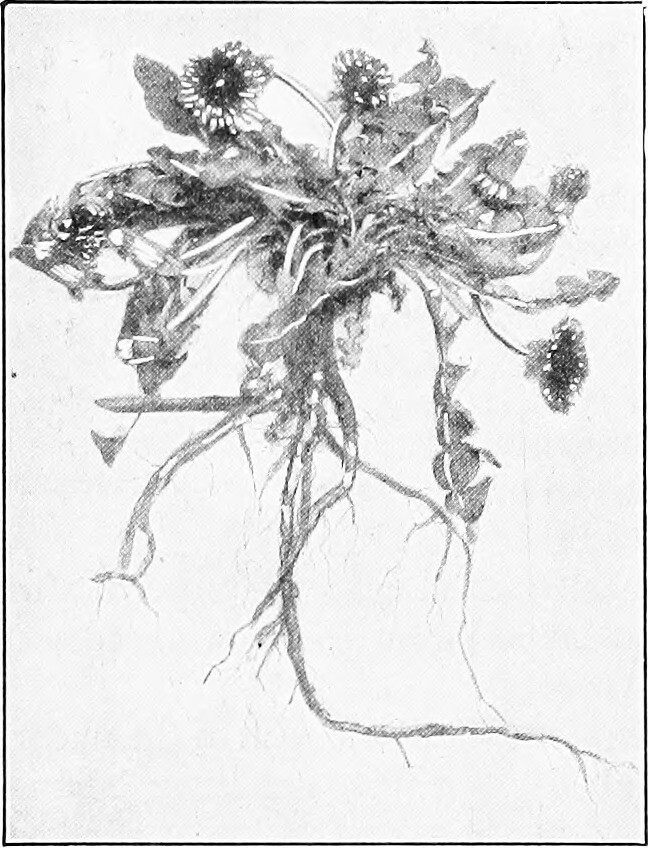
Organically Controlling Weeds with Taproots on a Small Plot


Image result for dandelion taproot


Posted by: Kara Harders, Small Acreage Management Specialist for the Peaks and Plains Region - CSU Extension/NRCS

Weed control is a constant battle but some are easier (in theory) than others. Some of the more difficult weeds to control are those which have a taproot. These weeds readily come back after being mowed, pulled, or eaten because they have enough nutrients stored in their roots to regenerate! There are several tools to consider for controlling weeds organically. No matter what tools are used, it is important to recognize weeds as a symptom of land management. You may control the weeds one season, but if the ground is left uncovered, over grazed, or reintroduced to weeds, your problems will likely return quickly.

Obviously, life would be much easier if the weeds weren’t there to start with. When it comes to organically controlling weeds, proactive strategies will save you far more time and labor than reacting to the weeds once they are present and established. Proactive approaches to weed management include mulching, crop rotations, or cover cropping. These methods all make it difficult for plants to get enough sunlight to grow or become comfortable in their surroundings. They also increase soil health, decrease erosion, and even help with pest problems. Consider adding these methods to your land to help prevent the problem!

If you only have a few of the pesky plants, using a spade to dig out the whole root can be a reasonable approach, especially if the ground is relatively soft. Getting the plants out before they go to seed helps prevent new ones from establishing too. Hand pulling is generally not effective on plants with taproots since they tend to break off leaving the roots safely underground ready to re-grow. This is why goats are less effective on taproot type weeds. If you want to use animals to control weeds, pigs are a more effective choice. Since they plow and root up the soil, they do a better job killing the roots of these weeds.

Occultation is a less known method which helps germinate and kill weeds early in the season. By anchoring heavy tarps (UV-stabilized silage tarps work well) or dark landscape fabric over land you wish to farm, you can increase the temperature of the soil earlier in the spring and cause seeds to germinate earlier. When the plants under the tarp sprout, they have no sunlight and die off. After three to four weeks the weeds should have grown and died, leaving behind a bed of soil ready for planting. If well cared for, the tarps or fabric can be reused many times! A barrier to this method is the tarps can be too heavy, difficult to move, or hard to store depending on your situation.

Flame weeding is another method that can kill weeds from a seed bed after they have germinated. Flame weeding works by burning young plants when their root systems may not be established enough to allow them to recover. It also can knock back a weed population allowing desirable plants seeded shortly after to better compete for sunlight, moisture, and nutrients.

Herbicides can also be a choice in organic agriculture (although are often less effective on established weeds with taproots). In order for an herbicide to be approved for organic use, the active ingredients need to be approved for use by the National Organic Program (NOP). The timing of the application is highly important and multiple applications are often required. One of the more frustrating aspects of organic herbicides is they have broad spectrum effects, essentially, they kill everything they touch. And remember, always read and follow directions on herbicide labels!

Here are some of the more common active ingredients to look for in organic herbicides:

* Vinegar (Acetic Acid) – 5%-30% acetic acid as post-emergent herbicide. It is a post-emergent herbicide used to burn off top growth. Acetic acid is most effective on small annual weeds and less effective on grasses than it is on broadleaf weeds. The more potent horticultural vinegars (above 11%) can cause burns on human skin when exposed to it.

* Herbicidal soaps – fast-acting, broad spectrum herbicides made from fatty acids. They are used as post-emergent and are most effective on annual broadleaf weeds and grasses.

* Clove oil – an active ingredient in post-emergent, non-selective organic herbicides. Research has shown that is can be as effective as acetic acid in controlling broadleaf weeds but at a lower application rate.

* Chelated Iron – These iron products are similar to the iron you would use to fertilize a lawn. However, the iron is bound to a chelating agent making it more available for plant uptake. Broadleaf plants absorb the iron more easily and when the high levels are oxidized it causes the broadleaf weeds to dry up and die quickly. Multiple applications are needed throughout the year and is most effective in lawns. See this document for more information. https://extension.umd.edu/sites/extension.umd.edu/files/_docs/programs/ipmnet/Iron%20Herbicide%20Info-UMD-IPMnet.pdf

If you are looking for more weed management strategies, check out this page. It is a ATTRA publication about proactive and reactive methods which provide an alternative to conventional tillage systems. (https://attra.ncat.org/attra-pub-summaries/?pub=479)

Wednesday, January 24, 2018

Spanish Greenhouse Tour

By: Sherie Caffey, Horticulture Agent, CSU Extension-Pueblo County


A sea of green...houses
Late last year, I was lucky enough to help facilitate an educational tour of the agriculture industry in Spain. On this tour, we visited many interesting facilities ranging from stud farms, to feed lots, to wineries. For me, one of the most impressive facilities that we visited was operated by a company called Bio Procam. This company cultivates, packages, and markets organic vegetables and subtropical fruits. They crank out over 15,000 tons of produce every year, using farmers that belong to the cooperative, and 25 acres of company owned greenhouse land. They have 26 full time workers that keep their greenhouses going. White plastic greenhouses stretch as far as the eye can see in the area where their operations are located.

Organic produce
43% of the company’s production is cucumbers, tomatoes and avocados each account for 20%, zucchini is 9%, and subtropical fruits are 8% of their total production. 28% of what they grow gets exported to Germany. This is followed by France getting 22%, 21% stays home in Spain, the UK gets 8% and the other 21% is spread throughout the rest of Europe. The success of this company is even more astonishing when you consider that they only grow and distribute produce during the fall and winter months. They have found a niche growing all winter long until April or May, when competition becomes too much.

Bio Procam is committed to being 100% organic. For this reason, everything is grown in the soil, no hydroponic production is done. There cannot be any kind of organic contaminants presented into the system, so the workers cannot live on the site. To keep things clean and working well, they replace the plastic on all of the greenhouses every three years. They have a company that recycles the used plastic for them.

Food for beneficial insects
Bumblebee box
 In front of the vegetable crops, they grow wheat and barley to feed beneficial insects that will feed on aphids and other pests in the event that they arrive in the greenhouse. In the summer, the greenhouses are taking a break from vegetable production, but they grow radish and mustard seed for bio fumigation. These plants will help to rid the greenhouse of things like nematodes and fusarium wilt. They also use sticky traps to control whiteflies, and sulfur dust to keep spiders at bay.


This one is ready to pick
             To pollinate the vegetables, the company buys bumblebees. They live in a box in the greenhouse, and come out during the day to do buzz pollination. Our guide described to us how they harvest the tomatoes when the ends just start to turn red. He showed us how at this point, the inside is already red, as they ripen from the inside out. They use moisture meters to know when the tomatoes need watered. After February, the humidity will be lower and they can prune the tomato plants without the concern of disease. They clean up the bottom of the plant up until the first large branch. The company practices crop rotation, after the tomatoes are all harvested they will plant dutch cucumbers. They purchase all of their seedlings from another great company we toured, Saliplant, but that is another blog…

Friday, February 15, 2013

Demystifying the Organic Food Controversy

Posted by: Alexis Alvey, CSU Denver Extension

Back a couple months ago, there was a big hoopla about a scientific article that reviewed the safety and nutrition of organic foods.  This eighteen page article was published in the esteemed journal, Annals of Internal Medicine by Stanford University* and concluded that, “the published literature lacks strong evidence that organic foods are significantly more nutritious than conventional foods.”  Wow, I thought.  Well that is a huge blow to organic producers, food activists, environmental leaders, and anyone else who gives a damn about where their food comes from!  My sentiments were felt even more strongly by others.  For weeks, my Facebook newsfeed was littered with status updates from various people and organizations proclaiming all sorts of things like, “Stanford is a pawn of big ag industry!”, “Academia should DIE!” and “Scientists don’t care about organic growers!!”.  Well, these emotional reactions kind of pissed me off a bit, because, one, I work in academia; two, I consider myself to be a scientist; and three, I went to an Ivy-League school (which isn’t a pawn of big ag industry, as least as far as I know).

In 2012, the CSU Denver Extension Vegetable Demonstration Garden at Harvard Gulch Park produced 750 lbs of organic food, which was donated to the St. Francis Homeless Shelter

So, like the good scientist that I am, I figured I would actually read the article before I made any judgments about the academic integrity of our higher education system.  Most of the eighteen page article was filled-up with nearly three hundred different citations and references, so it didn’t take me too long to read it.  I quickly realized that the authors were not presenting anything new; instead, they were merely reviewing existing studies, synthesizing the information, and trying to draw some sort of conclusion from 240 published studies on organic vs. conventional.  After reading the paper, the biggest conclusion I came to was that more studies are needed on this topic.  As the authors state, many of the studies they examined were “heterogeneous,” and from a statistical perspective, they were difficult to compare.  Furthermore, the authors admit that there have been no long-term studies comparing the health of populations consuming organic food versus populations consuming conventional food (controlling for socioeconomic factors of course).  These types of studies would be extremely difficult and costly to conduct, but are most certainly needed.  Nevertheless, the authors did find some really interesting results –
  • The levels of the nutrient phosphorus are significantly higher in organically-grown produce compared to conventionally-grown produce;
  • Organic produce has a 30% lower risk for contamination with any detectable pesticide residue than conventional produce;
  • E. coli contamination risk does not differ between organic and conventional produce;
  • And, the risk for isolating bacteria resistant to three or more antibiotics was 33% higher among conventional chicken and pork than organic alternatives.

I was also shocked to learn that bacterial contamination is really common in animal food products.  About 65% of both conventionally-raised and organically-raised chicken samples were contaminated with Campylobacter and about 35% of both were contaminated with Salmonella.  49 – 65% of pork samples were contaminated with E. coli for both conventional and organic.  Ewww.  How disgusting.  I will now be even more vigilant about cooking my meat, and will be more empathetic towards my vegetarian sisters.

Veggies growing at the CSU Extension - Jefferson County office

As I sat that night in my quite apartment munching on some hummus and baby carrots (and yes, the carrots were organic, but the hummus was not), I began wondering why people get so upset and so angry when they are presented with new scientific evidence that challenges their views and beliefs?  Perhaps the organic vs. conventional debate, like so many other issues in horticulture, can’t be boiled down to mere facts.  It is the passion, emotions, and values that underlie an issue that really motivate and move people.  There are so many disparate reasons why people buy or grow organic or conventional food that knowing the amount of phosphorus in an apple isn’t going to change people’s actions.  What about the apple grower who decides to use only organic pesticides because he is worried about chronic exposure to organophosphate pesticides?  What about the single mother on food stamps who is relieved to find conventional apples on sale for fifty cents a pound?  Is one person right and one person wrong?  There are many reasons why an individual may buy or grow organic or conventional food, and we should find it in our hearts to be nonjudgmental and open to all different viewpoints and choose what is best for us as individuals.


*Smith-Spangler et. al. Are organic foods safer or healthier than conventional alternatives? A systemic review. Ann Intern Med. 2012; 157:348-366