CO-Horts

CO-Horts Blog

Showing posts with label garden tour. Show all posts

Thursday, August 25, 2022

A Trip to the Lavender Farm

Posted by: Lisa Mason, Arapahoe County Extension

I traveled to the State of Washington last week to visit Olympic National Park and drove through Sequim, WA (pronounced “Squim”). Located along the northern coast of the Olympic Peninsula, this town is famous for the Sequim Lavender Experience, an agritourist co-op of small, family-owned lavender farms.

I toured one of the lavender farms, and as soon as I stepped out of the car, the first thing I noticed was the light, fresh scent of lavender in the air. The farm had approximately 12 acres of lavender fields comprising of varieties of purple and white. When looking at the flowers up close, we heard the constant sound of buzzing from honey bees and bumble bees hard at work pollinating the flowers. 
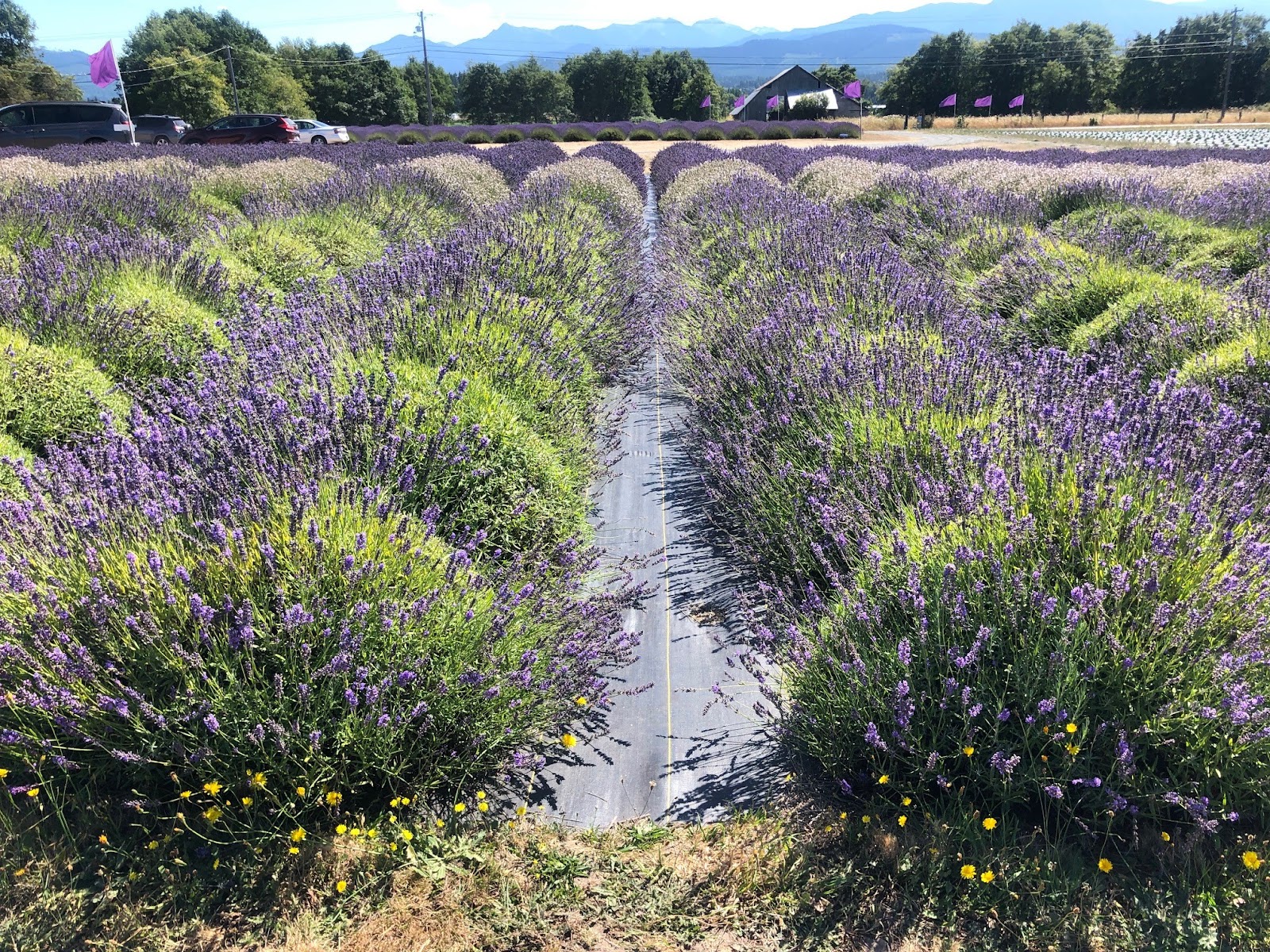
Lavender fields in Sequim, WA. 
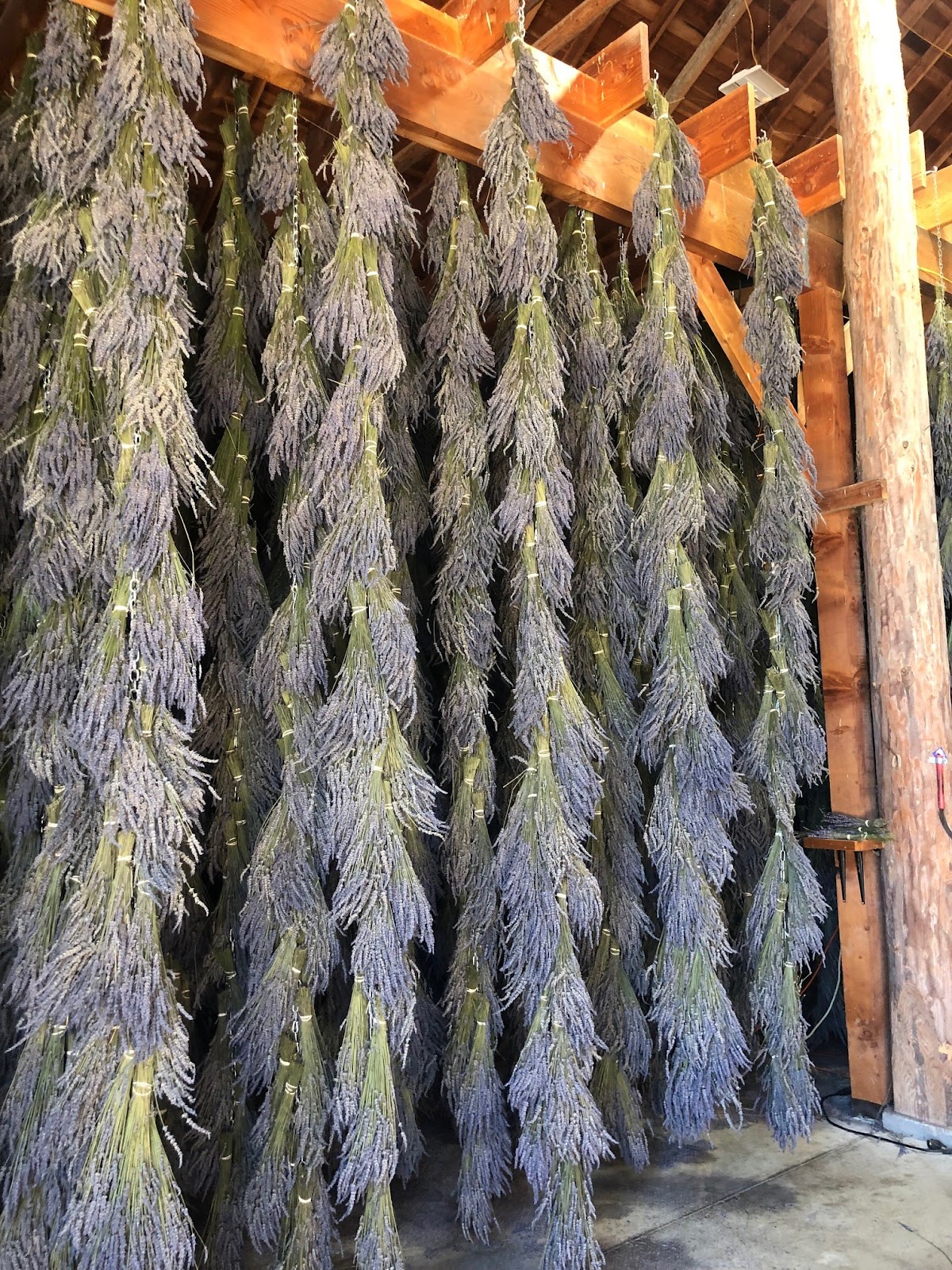
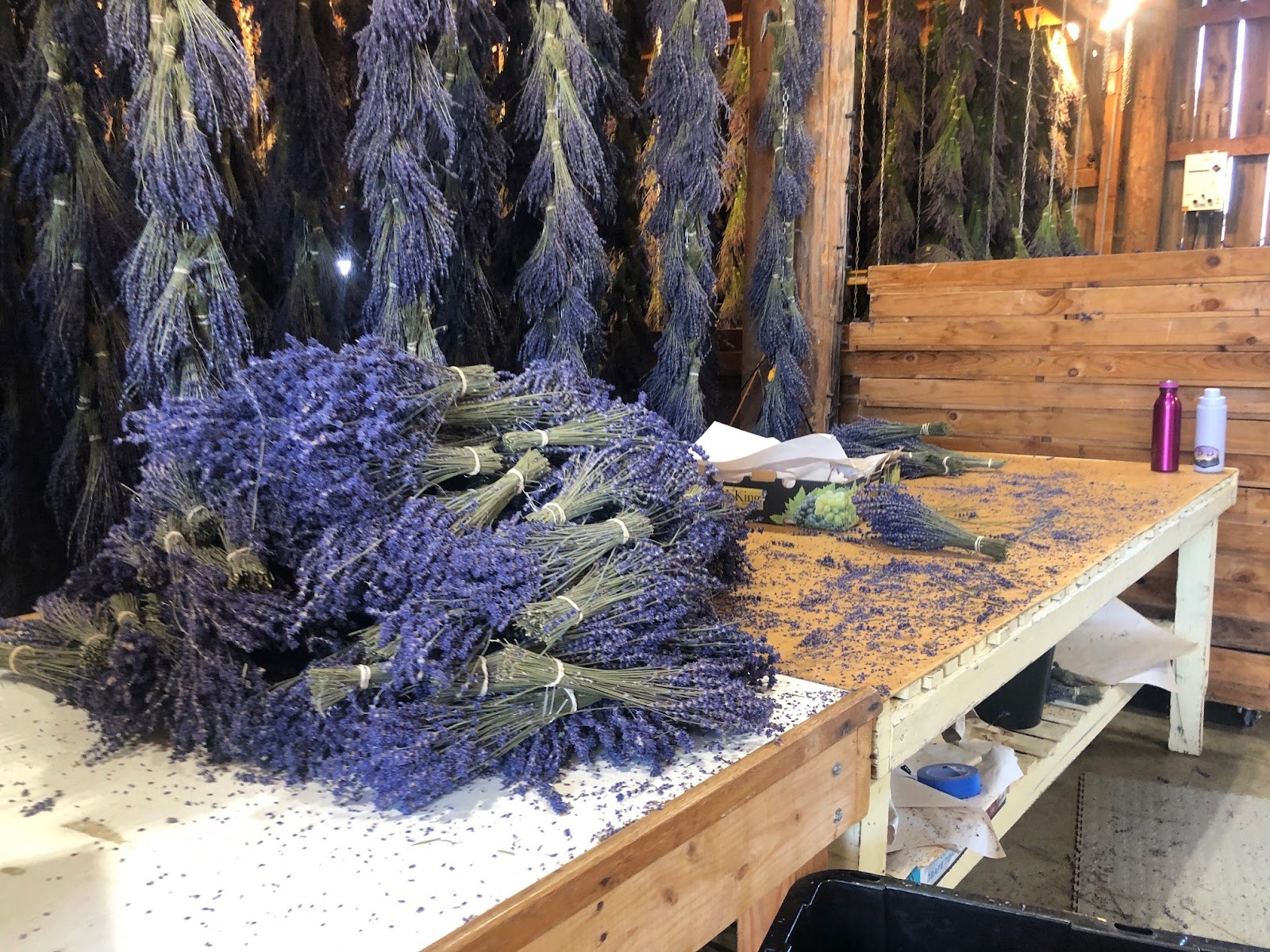
After visiting the fields, we toured inside the barn where they harvest, dry, and process the lavender. The barn consisted of bundles hanging to dry from the floor to the ceiling. They were also steam distilling lavender to make essential oil and creating bundles of dried lavender to sell. On this farm, they use 20-25 lbs. of lavender to fill a 60-liter still which produces 225-300 milliliters of essential oil from “Grosso,” a variety of lavender that produces more oil than other varieties (B&B Family Lavender Farm, 2021).

Drying lavender.

Harvesting lavender.
Visiting the farm provided me an entirely new appreciation for this multi-use plant and served as a great reminder that lavender is an excellent perennial plant to grow in Colorado!

Lavender is a plant in the Lavendula genus in the Lamiaceae plant family, also known as the mint family. Lamiaceae plants are easily identified because most have square stems. Many of the plants are herbaceous, have opposite leaves, and whorled spikes. Leaves and flowers tend to be fragrant. The genus Lavendula has about 45 plant species and more than 450 varieties (UT Institute of Agriculture, 2022). Lavender is native to Europe, specifically the Mediterranean area.

English lavender (Lavandula angustifolia) is an excellent species to grow in Colorado. A wide variety of cultivars are available that differ in size and shades of violet and white. Lavandin plants are another excellent option for Colorado. Lavandins are a hybrid between two lavender species: Lavandula angustifolia and Lavandula latifolia. Essential oils can be extracted from any lavender plant, but lavandin plants tend to yield higher amounts of oil.
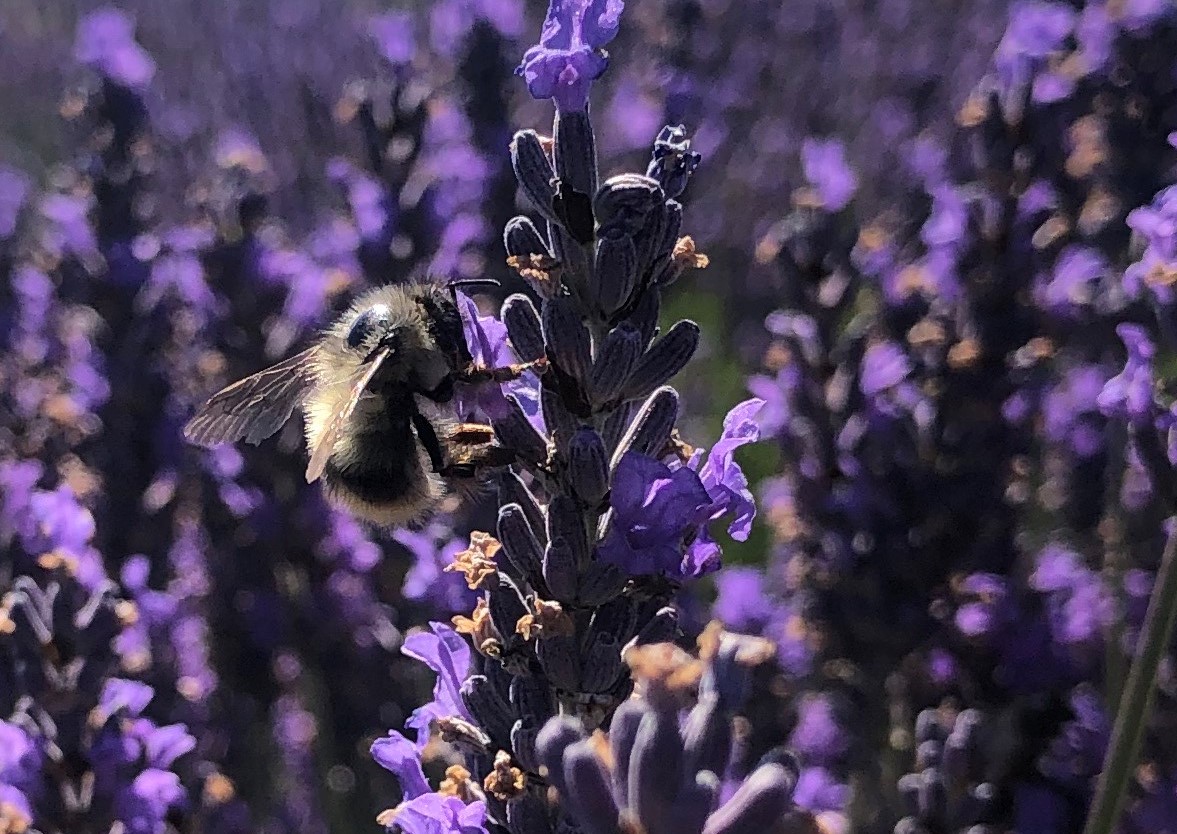
A bumble bee (Bombus sp.) pollinating a lavender plant. 

Lavandins and English lavender grow well in USDA Hardiness Zones 5-7. They grow best in full sun and in alkaline and well-draining soils. Once established, lavender can be a great drought-tolerant, and pollinator friendly plant attracting bumble bees and honey bees. Generally, they do not have any pest problems. Refer to Table 1 to learn more about cultivars.

To learn more about planting, growing, and harvesting lavender, check out the following links: 

All photos were taken by Lisa Mason at the B&B Family Lavender Farm. 

Monday, July 5, 2021

So you want to be on a garden tour...

 Guest post by: Khursheed Mama, CSU Extension Master Gardener in Larimer County

Khursheed's landscape in its fully glory the day of the tour.

So you said yes to being on the Junior League of Fort Collins garden tour, got your husband to agree, and even recruited neighbors to do it. After all, it’s a fundraiser for a cause you believe in. You’ve been on the tour before (12 years ago) and it seemed fine, so why not again. Especially this year when the tour had to be cancelled in 2020 because of COVID. It seemed like a good plan in November. Ah, but you forgot what it takes to prepare and how Colorado weather doesn’t always cooperate.

Spring in Colorado is unpredictable!

Now it’s late winter and trees and non-spring flowering shrubs need to be pruned. Some are too tall to do with pole pruners and loppers but you decide it will have to do. You decide to remove an oak that isn’t thriving, but a second one, only slightly healthier, gets to stay. A 15-year-old arborvitae that was impacted in the 2020 freeze event got a breather in the hopes that it would re-vitalize (sadly, it’s not looking promising). Then two feet of snow came, and with it, broken branches, but you told yourself that the moisture is good.

Spring brought life back to the garden with bulbs, early perennials, and shrubs, putting on a beautiful show and you wondered why the tour couldn’t be during their blooms. The copious spring rain resulted in oh-so-many weeds and ‘tree babies’. If you are ever considering a golden raintree—don’t! As pretty as they are, they are also prolific seeders. Then you battle your lawn encroaching your landscape beds, and groundcovers encroaching your lawn. You pull more weeds. Rabbits decide to take up residence in the middle of the lawn. Then you focus on deadheading early perennials and bulb foliage as it fades.

A plant-filled path leading to the shed.

The heat wave hits and now time is devoted to watering the lawn and garden beds, focusing on new and replacement plantings. The garden bursts into bloom with peonies and spirea, and evergreens put out their new growth. If you can look past the chaos, the garden is lovely and it seems birds are enjoying it too. Now we just hope the hail stays away and mother nature does not deal another blow. While the ‘tasks’ vary with the seasons, the focus is on keeping plants healthy and creating a landscape that you can enjoy all year.

Tour-goers enjoying Khursheed's diverse landscape.

Now it’s the week of the tour and weeding, watering, and deadheading continue with record heat, and then…hooray!...rain and cooler temperatures in the forecast. Excitement for the moisture, tempered by fear of hail, the steady rain was so beneficial and freshened things. A mix of sun and clouds was a perfect way to start the day of the tour and around 8:40 a.m., tour-goers were on site enjoying the garden and asking questions. The catalpa, bear's breeches, and alliums seemed to draw the most attention. Luckily, Master Gardeners and Fort Collins Nursery personnel were on hand to help with gardening questions, and the Junior League team helped with logistics. This allowed us to visit with friends and colleagues that stopped by to support this great cause. Yes, in sum total, we would do it again!

Khursheed Mama (right) with Master Gardener Roger Heins,
who helped answer questions the day of the tour.

Wednesday, June 25, 2014

Pueblo's Annual Xeriscape Tour

Posted by Linda McMulkin, CSU Extension-Pueblo County

A fun and educational event happened recently in Pueblo and Pueblo West.  Ten gardens were open to the public, with name tags on plants and information about design and maintenance in the garden biographies and plant lists, and homeowners and experienced gardeners onhand to answer questions.  Why, I can hear you thinking, did you miss the Xeriscape Garden Tours of Pueblo and Pueblo West? 
This garden is surrounded by lawns, making this unique front yard
a reason to slow down for a look on a busy Pueblo street.

The xeritour is a collaborative event, planned and supported by CSU Extension-Pueblo County, the Southeast Colorado Water Conservancy District (SECWCD), and the Pueblo West Community Xeriscape Gardeners. Gardens are chosen based on beauty, but must conform to water-wise gardening principles. The goal is to provide inspiration and to demonstrate that even in the harsh conditions of Pueblo and Pueblo West, homeowners can have sustainable, colorful landscapes that are long on beauty but short on water bills and maintenance. 
After fighting to keep a lawn healthy on a steep slope,
the homeowner  terraced  the front yard and created a
show stopping water-wise landscape.


This large garden is designed to feed the bees! 


This was the 9th year for the tour, which is held the first weekend of June and attracts about 200 people to each garden.  Gardens in Pueblo are open on Saturday and the event is organized by SECWCD staff and Colorado Master Gardener volunteers.  The 2014 event featured the public gardens at the Sangre de Cristo Art Center and 4 private gardens in older neighborhoods that had been remodeled from turf  to colorful, waterwise landscapes surrounded by mature trees.  

 
Sometimes it's not about the plants,
but about  the fun.  The homeowner saw
 this idea online and decided to give
the courtyard vegetable
garden some extra color.
On Sunday, the tour featured gardens in Pueblo West, showcasing young landscapes that support native arthropods, provide water for birds, and include edibles for the homeowners.  The public garden at Cattail Crossing looked the best it has in years, showing that when nature provides some spring rainfall, a low-water garden can truly shine.  This garden was awarded the Plant Select Showcase Garden Award last June and is managed by the all-volunteer Pueblo West Community Xeriscape Gardeners.
 
Why not add a putting green in your patch of turf?
Especially if you can make it look this good.
The foreground shows the bare soil that
most Pueblo West gardeners start with.  The
homeowner is a Colorado Master Gardener
and a member of the Pueblo West Community
Xeriscape Gardeners.


At Cattail Crossing, a large turtle was spotted  laying eggs among
the perennials.  Pea gravel must make a nice nesting site.
On the left, the same garden from the human view. 
The garden is open year round, near the intersection
of McCulloch and Joe Martinez in Pueblo West.
 
 
All photos by CSU Extension-
Pueblo County staff. 


Mark your calendars for the 2015 Xeriscape Garden Tour in Pueblo on June 6 and Pueblo West on June 7.  The tour is free and maps will be available on the CSU Extension website in May next year.