CO-Horts

CO-Horts Blog

Showing posts with label Lisa Mason. Show all posts

Wednesday, January 4, 2023

Meant to Bee: Overwintering Strategies for Bees

Posted by: Lisa Mason, Arapahoe County Extension

Where do the bees go in the winter? With over 900 species of bees found in Colorado, it is an interesting question. How do they survive the snow and cold temperatures? Can we support bees during the winter? Bees and other insects have special adaptations so their species survives from year to year. Here is a look at bee adaptations and life cycles in the winter time.

Honey bees

Honey bees (Apis mellifera) are one of the 900+ species of bee in Colorado. They have a eusocial structure meaning the colony has: 1) overlapping generations, 2) a reproductive division of labor, and 3) cooperative care of the developing larvae. The female worker bees forage all summer and into fall bringing in food reserves to last them the winter. When temperatures start to drop, honey bees huddle together to make a cluster and shiver their wings. Shivering provides warmth for the hive. Their main goal is to keep the queen warm so the colony can survive. The core temperature in the hive can be as high as approximately 91 degrees Fahrenheit. A healthy hive with adequate food storage is more likely to survive, which reinforces the importance of best beekeeping practices by the beekeeper all year. Read how to prep a hive for winter here. When a beekeeper harvests honey, they have to be careful not to harvest too much. Beekeepers should leave 80-100 pounds of honey in the hive for the bees to feed on throughout the winter. Honey bees are often seen outside the hive warm winter days. Anytime temperatures rise above 55 degrees Fahrenheit, honey bees may take a cleansing flight which provides them the opportunity to relieve themselves. Honey bees may also forage for whatever they can find including tiny bits of protein at bird feeders.

The worker bees in the hive cluster around the queen during the winter to keep her warm and safe. Credit: Lisa Mason

Bumble bees

Colorado has 23 species of bumble bees (Bombus spp.). They live underground or in large cavities. They have a one-year life cycle, like solitary bees. They have a social structure within their colonies that include a reproductive queen and workers. Like other social insects, they have overlapping generations and cooperative brood care in the colony.

Newly mated queens are the only bumble bee survivors during the winter. The hardy queens find a place to hibernate in a protected place like leaf litter, a wood pile, or underground. When spring arrives, the queens will emerge, begin to forage, build a new nest, and lay eggs. The eggs will mostly be female worker bees at the beginning of the season. The queen will continue to lay eggs throughout the season. In late summer, new queens and male bumble bees will hatch and leave the colony to find mate. As temperatures drop, the colony from the current season will end except for the mated queens that will hibernate. Queen bumble bees are capable of living alone, unlike honey bee queens.

A queen bumble bee (Bombus nevadensis) foraging on Rocky Mountain bee plant. Photo: Lisa Mason 

Solitary bees

Solitary bees comprise of the the vast majority of bee species diversity. They live a one-year life cycle. During the life cycle, a female bee builds a nest underground or in a cavity. A cavity usually consists of a pre-existing tunnel. Some tunnels might be in a dead log, nooks and crannies in stone or brick, a human-made bee hotel, or hollow stems. The female bees collect pollen and nectar to bring back to the nest. All the collected pollen and nectar is made into a ball called “bee bread” which is all the food needed for one bee to grow from a larva to an adult. The female lays an egg on the bee bread and seals up the nest. After the egg hatches, the larva will go through full metamorphosis from a larva, to a pupa, and on to an adult before emerging from the nest the following season. The lives ended for the female and male solitary bees we saw flying around the previous summer, but their brood is warm for the winter deep underground or in a cavity. 

An underground, solitary bee nest (Agapostemon sp.). Photo: Rachelle Stoddard

Does “leaving the leaves” support the overwintering bees?

Leaf litter supports hibernating bumble bees by providing them a sheltered area for the winter. Solitary bees are well-protected in their underground or cavity nest but leaf litter may provide some insulation for their ground nest. Since honey bees live in hives, they don’t rely on leaf litter but they have been observed drinking water from damp leaf piles. Leaf litter also supports a wide diversity of arthropods by providing shelter during the winter. Wooly bear caterpillars are a great example of a moth that relies on leaf litter. They overwinter in the caterpillar stage by hibernating in leaf litter. They have an impressive adaptations to survive the winter. When summer arrives, they complete metamorphosis and transform to an adult Isabella tiger moth. Overall, leaf litter can provide a shelter for a diversity of overwinter arthropods. Leaf litter is also a great mulch for perennial and vegetable gardens. The leaves also return critical nutrients back to the soil. While leaf litter is a valuable component to the landscape, it is important to remove leaves from the lawn to prevent mold and disease growth, and to avoid smothering the turf.

When should spring garden clean-up begin to best support the overwintering bees?

Different bee species emerge at different times, so it is a challenge to find a perfect date for spring garden clean-up that supports bees. Here are some general considerations for supporting overwinter bees:

  • Bumble bees typically emerge from hibernation between mid-April and mid-May depending on weather and elevation. Bumble bees could be impacted if leaf litter is disturbed before they emerge.
  • Some solitary bees nest in hollow or pithy stems such as Rubus spp. (raspberries, blackberries, etc.), joe-pye weed, bee balm, etc. They will emerge in the spring. If hollow stems appear to be plugged, perhaps consider leaving them stems until they emerge, or stems could be carefully moved to a protected location where they won’t be disturbed.
  • Leafcutter bees are often some of the latest emerging bees. They nest in a wide variety of cavity locations from natural spaces to human infrastructure (e.g. patio stones, and occasionally even inside gardening gloves). Since they emerge later in the season, it is likely best not to postpone garden work for leafcutter bees unless specific locations of nests are known that could be protected.
  • Squash bees may nest in underground areas where squash and pumpkin plants are typically planted. Consider not tilling the vegetable garden to support these important pollinators.

  • All bees need early-season flowers that offer pollen and nectar. Consider adding plants that flower as early as April and May. Some options include golden currant, chokecherry, crocus, and pasque flowers.
A leafcutter bee (Megachile sp.) nest found inside a garden glove. Credit: Nicole Didero

More information

For more information on bee lifecycles, check out the Native Bee Watch Citizen Science Field Guide. Learn more about the 900+ native bee species in Colorado by checking out A Beginner’s Field Guide to Identifying Bees

For more information on what happens to other insects in the winter, refer to this CO-Horts Blog post written by Jessica Wong

Monday, November 28, 2022

Plant and Insect Diagnostics: Always Something New to Learn

Post by: Lisa Mason, Arapahoe County Extension

My colleagues and I hosted a plant and insect diagnostic workshop in October, a collaboration with CSU Extension and the Plant Diagnostic Clinic at the CSU Spur campus in Denver. About 45 Extension staff and Master Gardener volunteers gathered to build relationships, and learn more about plant pathology and insects. Even though I taught a portion of the workshop, I am always humbled to remember the more I learn, the more I realize I don’t know. For instance, I learned that we have a weedy species of bluegrass (Poa trivialis, rough bluegrass) that can be fairly common in lawns. When the weather heats up, this type of bluegrass goes dormant. The grass turns a slightly purple color before turning brown. This is a great reminder that it is so important to know the plant identification before solving the problem. Brown spots in lawns often are caused by gaps in the irrigation systems, but it’s worth identifying the grass species to see if it could be rough bluegrass. The solutions for irrigation gaps and removing a weedy species in the lawn are entirely different. Overall, the biggest take-home message from the workshop was a reminder to understand the big picture of the plant in the landscape before making any judgements or diagnoses.

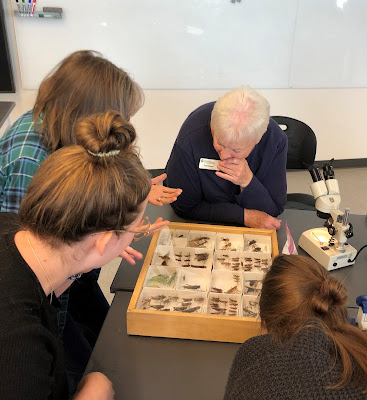
Diagnostic workshop participants examine insects in the Orthoptera order (grasshoppers, crickets, and katydids). Credit: Lisa Mason

What exactly are plant and insect diagnostics?

Extension offices around the state receive a broad spectrum of questions at the Extension office varying in topic, need, and complexity. Some examples of common questions include: How do I get a soil test? Is emerald ash borer in my county? What plants do you recommend for low-water/xeriscape garden? Why do I have brown spots in my lawn? Which disease does my tomato plant have? Why is my tree struggling? Are insects harming my plant?

Plant and insect diagnostics differ from many other questions because the plant needs a diagnosis which requires understanding environmental context clues in addition to the signs and symptoms present on the plant. While this might sound easy, the process of diagnosing a plant issue can be very complicated! Consider when you go to the doctor for a medical diagnosis for a persistent fever. A wide variety of bacterial and viral infections, and other ailments could cause a fever. A doctor will ask you questions to understand the bigger picture and look for clues. Depending on the answers, the doctor may choose to run some tests. Test results will further inform a diagnosis. Plant diagnostics is similar. Perhaps you have a plant with brown leaves. Those brown leaves could be a symptom from a number of environmental factors like drought stress or root damage. Perhaps a bacterial, viral, or fungal pathogen is causing brown-colored leaves. In some cases, maybe insects could be causing the damage to the plant.

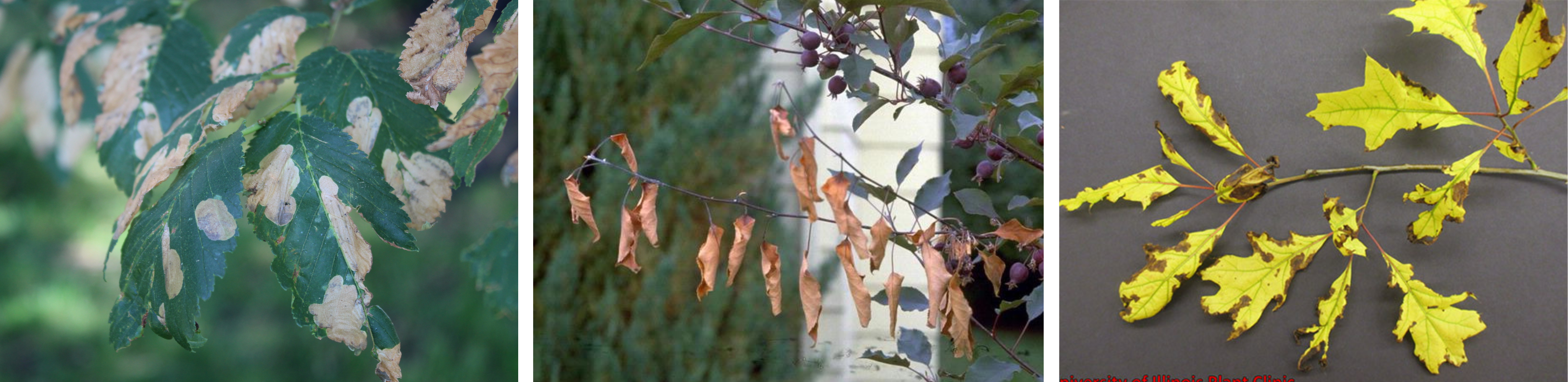
Three different causes of “brown leaves.” Left: Elm leafminer, a sawfly that feeds within elm leaves creating brown patches. Center: fire blight, a contagious bacterial disease affecting plants in the Rosaceae family. Right: Severe iron chlorosis, an abotic or environmental condition where the plant can’t uptake iron from the soil. Photos: Lisa Mason, William Jacobi, CSU, Bugwood.org, and University of Illinois Plant Clinic.

When you submit a plant or insect sample for diagnosis, be prepared to answer questions! Here are some of the most common questions you’ll be asked after you submit a plant sample:

  1. What do you need answered?
    • Identification
    • Diagnosis and management recommendations
    • Identification and control advice
    • Other
  2. Do you have photos of the plant? Please submit photos up close of the damage and also far away from the plant to see the entire plant in the landscape?
  3. Do you know the identification of the plant?
  4. Where is the plant growing? (e.g. raised bed, next to the house, in the lawn, etc.)
  5. How much water does the plant receive? How is the plant watered?
  6. Do you apply any products (fertilizer, pesticides, etc.) to the plant? What products and how often?
  7. Describe the issues and any observations you’ve noticed.
  8. What part of the plant is affected? (e.g. leaves, trunk, branches, fruit, etc.)
  9. When did you first notice the issue? Are nearby plants affected?
  10. Has anything changed in the environment recently?

A Master Gardener, CSU Extension staff, or Plant Clinic staff will likely have additional questions depending on if the plant sample is a tree, lawn, vegetable, other plant, or insect. All these questions help inform the next steps for diagnosis and management recommendations.

Where do I submit my plant sample?

You have options! CSU Extension and the Plant Diagnostic Clinic partner together to ensure you get an accurate identification and/or diagnosis. When you have a question, or when you bring in a plant or insect sample to your local county Extension office, we make sure to find the right expert to identify and/or diagnose the issue. Depending on the nature of your question or sample, your question may be answered by Master Gardeners, Extension staff or specialists, or experts at the CSU Plant Diagnostic Clinic. Please note some local counties may have a fee and the CSU Plant Diagnostic Clinic has sample fee. Ask your local county office if there is a fee. Click here for the CSU Plant Diagnostic Clinic fees.

Learn more about plant and insects

Land grant universities like Colorado State University have a long history working on plant diagnostics (Iles et al., 2021). If you are interested in learning more about nationwide plant diagnostic efforts, check out the National Plant Diagnostic Network.

Challenges with plants can often be avoided with the right care practices. Learn more by taking classes through CSU Extension on variety of topics related to plants, insects, gardening, and more! Check your local county office, the free webinars on the CO-Horts Blog, or Green School which includes the Colorado Master Gardener program.

What is CSU Spur?

Have you heard of the brand new CSU Spur campus? If not, you’ll want to learn more! Spur is a brand new campus located within the National Western Center in Denver. This campus is open to the public and is worth the visit to see the state-of-the-art research and education facility from art installations, to veterinary care, equine therapy, and more.

The CSU Plant Diagnostic Clinic is now open at Spur! This is the Colorado state lab in the National Plant Diagnostic Network. They offer services such as plant disease diagnosis, insect identification, plant identification, and recommendations.

The Soil, Water, and Plant Testing Laboratory will also be opening at the Spur campus. Stay tuned for their opening date. 

Thursday, August 25, 2022

A Trip to the Lavender Farm

Posted by: Lisa Mason, Arapahoe County Extension

I traveled to the State of Washington last week to visit Olympic National Park and drove through Sequim, WA (pronounced “Squim”). Located along the northern coast of the Olympic Peninsula, this town is famous for the Sequim Lavender Experience, an agritourist co-op of small, family-owned lavender farms.

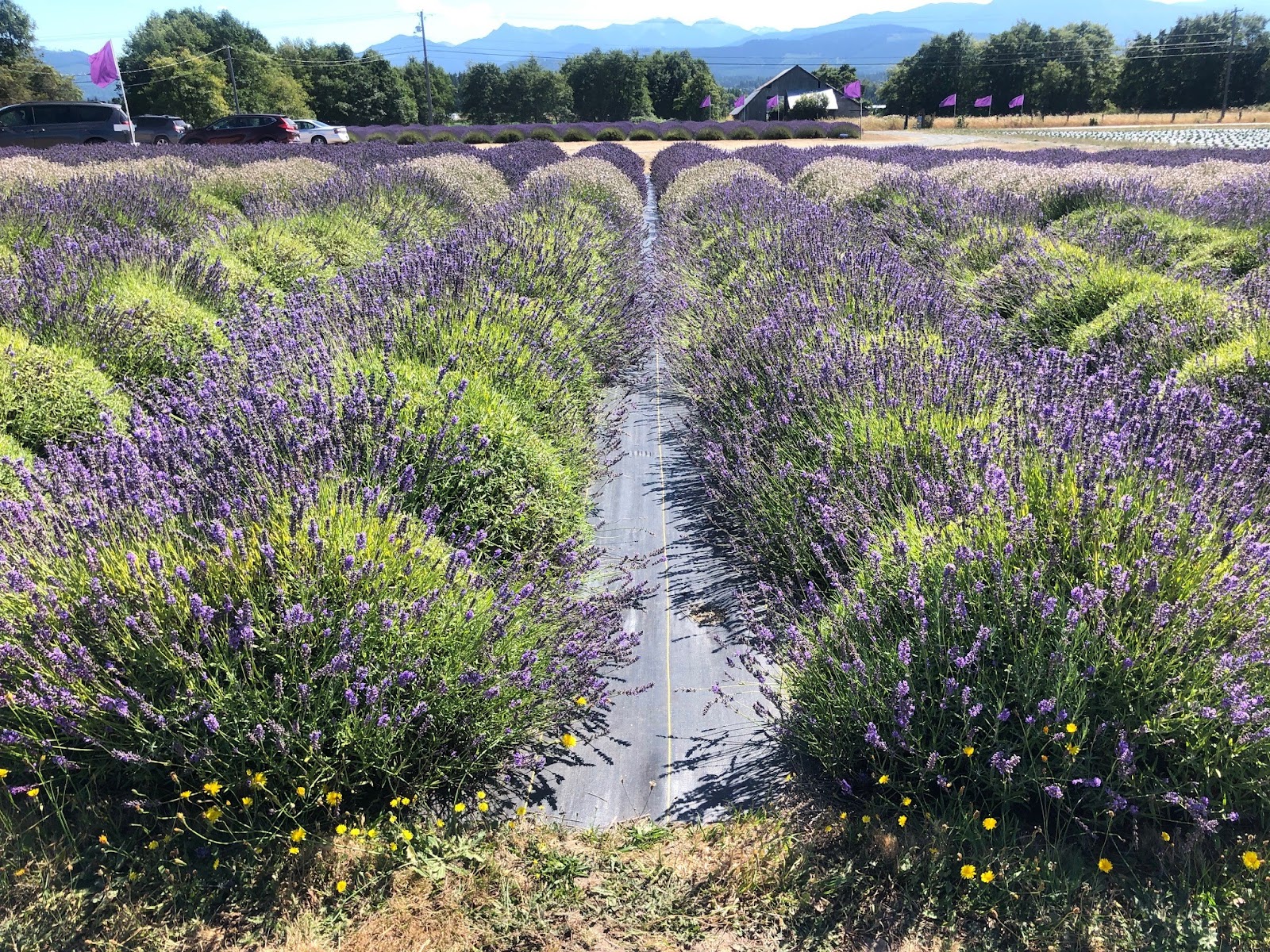
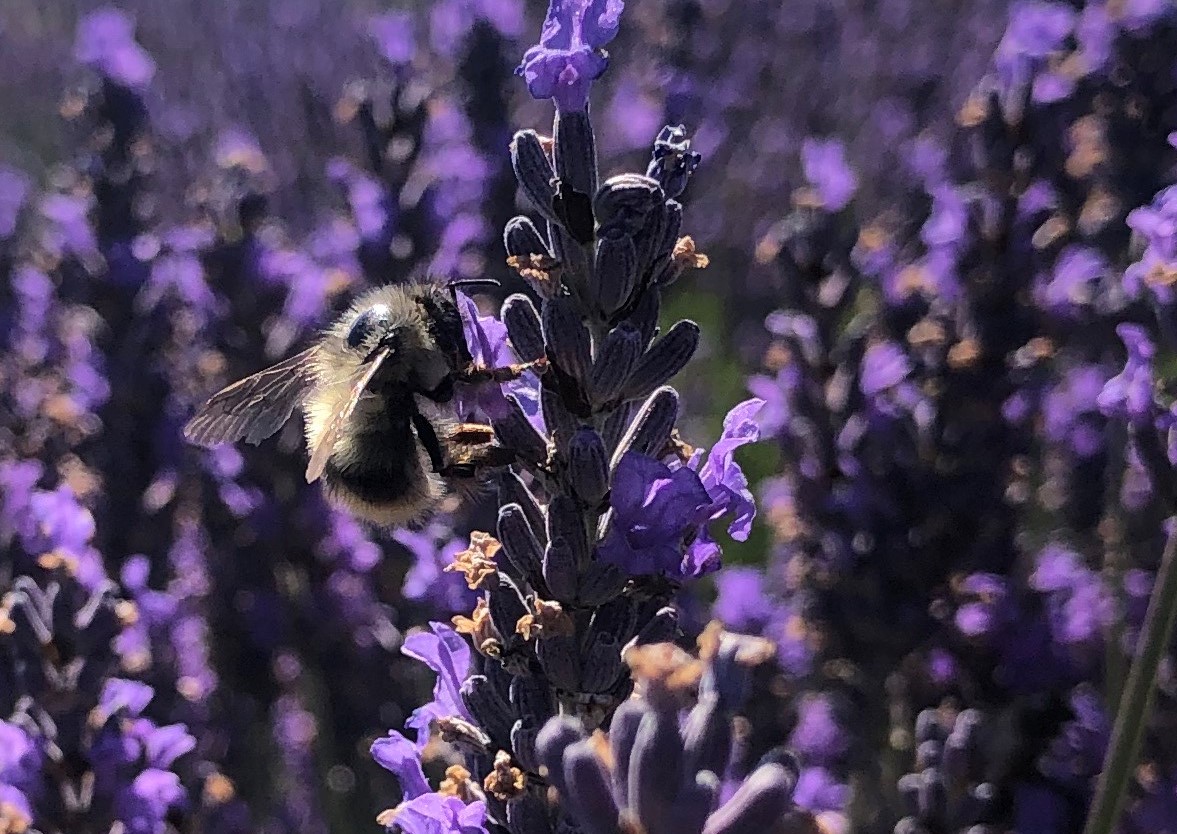
I toured one of the lavender farms, and as soon as I stepped out of the car, the first thing I noticed was the light, fresh scent of lavender in the air. The farm had approximately 12 acres of lavender fields comprising of varieties of purple and white. When looking at the flowers up close, we heard the constant sound of buzzing from honey bees and bumble bees hard at work pollinating the flowers. 

Lavender fields in Sequim, WA. 
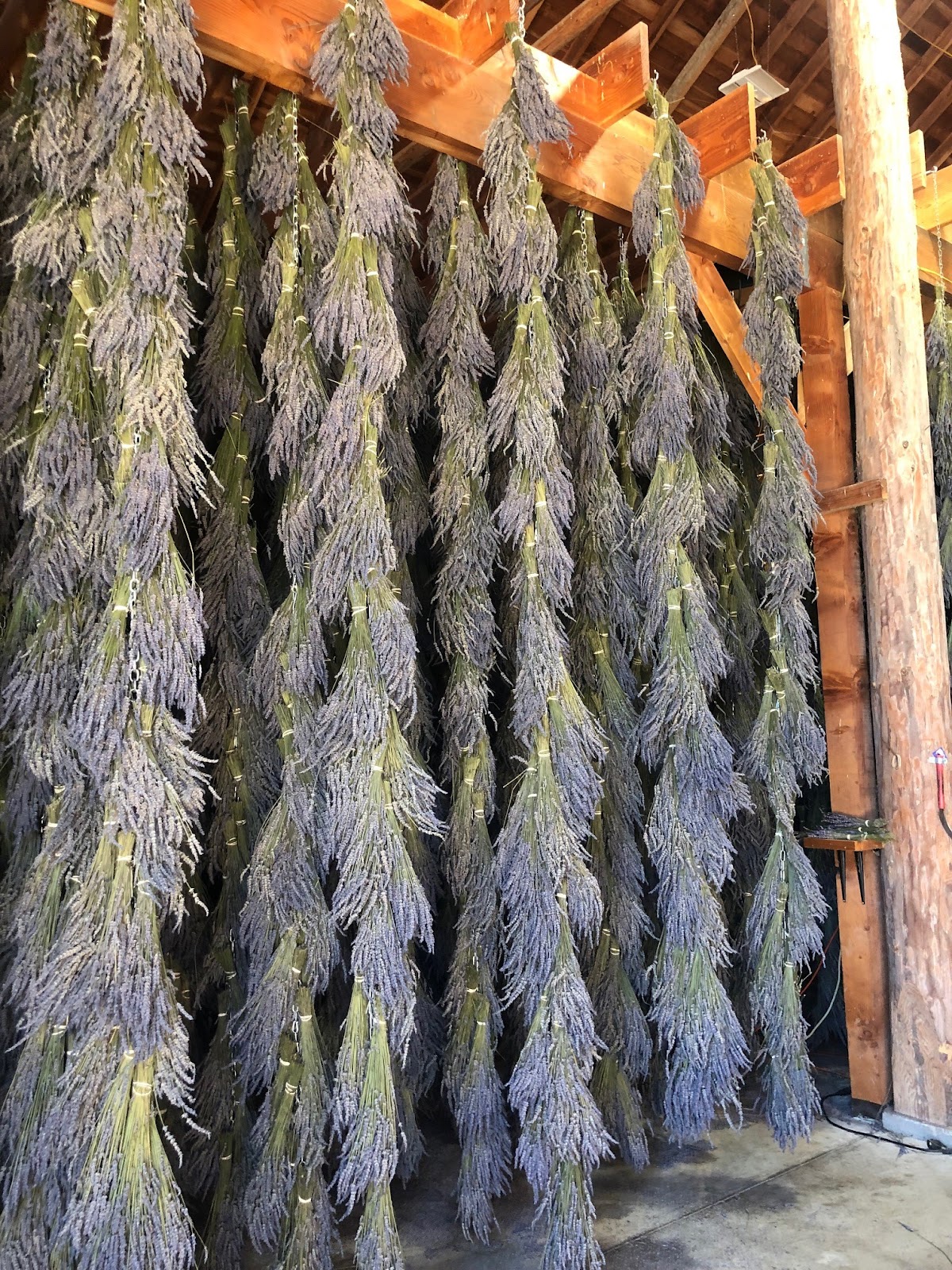
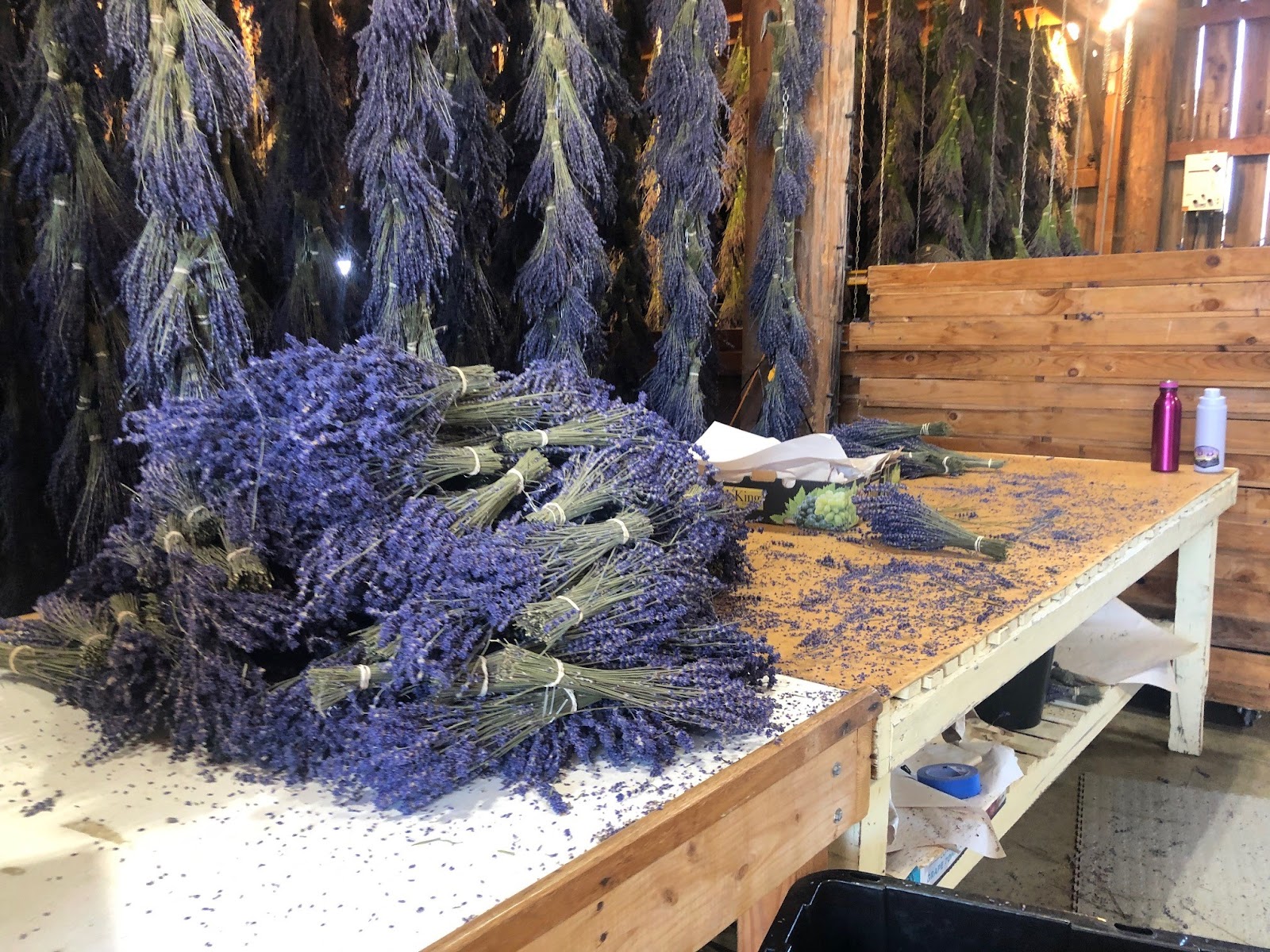
After visiting the fields, we toured inside the barn where they harvest, dry, and process the lavender. The barn consisted of bundles hanging to dry from the floor to the ceiling. They were also steam distilling lavender to make essential oil and creating bundles of dried lavender to sell. On this farm, they use 20-25 lbs. of lavender to fill a 60-liter still which produces 225-300 milliliters of essential oil from “Grosso,” a variety of lavender that produces more oil than other varieties (B&B Family Lavender Farm, 2021).

Drying lavender.

Harvesting lavender.
Visiting the farm provided me an entirely new appreciation for this multi-use plant and served as a great reminder that lavender is an excellent perennial plant to grow in Colorado!

Lavender is a plant in the Lavendula genus in the Lamiaceae plant family, also known as the mint family. Lamiaceae plants are easily identified because most have square stems. Many of the plants are herbaceous, have opposite leaves, and whorled spikes. Leaves and flowers tend to be fragrant. The genus Lavendula has about 45 plant species and more than 450 varieties (UT Institute of Agriculture, 2022). Lavender is native to Europe, specifically the Mediterranean area.

English lavender (Lavandula angustifolia) is an excellent species to grow in Colorado. A wide variety of cultivars are available that differ in size and shades of violet and white. Lavandin plants are another excellent option for Colorado. Lavandins are a hybrid between two lavender species: Lavandula angustifolia and Lavandula latifolia. Essential oils can be extracted from any lavender plant, but lavandin plants tend to yield higher amounts of oil.

A bumble bee (Bombus sp.) pollinating a lavender plant. 

Lavandins and English lavender grow well in USDA Hardiness Zones 5-7. They grow best in full sun and in alkaline and well-draining soils. Once established, lavender can be a great drought-tolerant, and pollinator friendly plant attracting bumble bees and honey bees. Generally, they do not have any pest problems. Refer to Table 1 to learn more about cultivars.

To learn more about planting, growing, and harvesting lavender, check out the following links: 

All photos were taken by Lisa Mason at the B&B Family Lavender Farm

Wednesday, June 29, 2022

Host an Aphid Watch Party This Summer and Look for Biodiversity

Posted by: Lisa Mason, Arapahoe County Extension

Yes, you read that right! Get excited about watching aphids on your plants this summer just as you get excited about your favorite TV show or a new moving coming out! You’re probably asking, “Why would I watch aphids on my plants? Aren’t they a nuisance pest?”

The definition of a nuisance pest depends on who is asking. For instance, if you are a hungry lady beetle, aphids are a feast waiting to be had!

Except for a few species, most aphids cause very little plant damage. Aphids are host-specific meaning that each of Colorado’s 350 aphid species will only feed on certain plants.

Aphids are also one of the insects that excrete honeydew, which is a sweet, sticky substance that coats the plants and anything underneath the plant. 

So, why would you watch aphids on your plants? Aphids attract a wide variety of beneficial insects to our gardens. An aphid infestation can be a hotspot to observe biodiversity in your garden or landscape. For instance, while I was writing this article, I found aphids in my backyard on a sand cherry! So far, I’ve seen lacewing eggs, lady beetle pupa, a katydid nymph, syrphid fly smears, and other insects feeding on the honeydew.

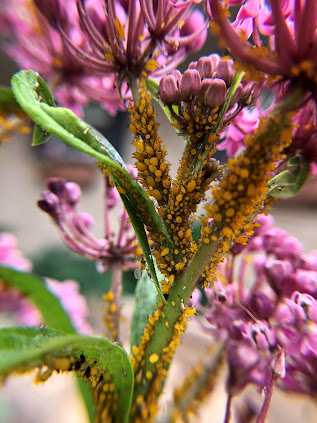
Aphids (Aphis nerii) on a milkweed plant. Photo: Lisa Mason

Here are some fun observations you may witness while you are watching aphids:

Predators Hunting Aphids

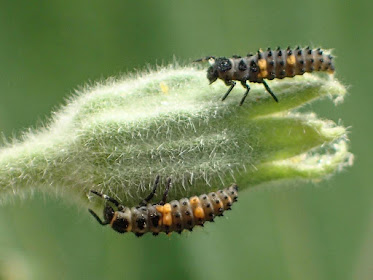
Lady beetles (Family: Coccinellidae), also known as lady bugs, are a common insect you’ll find preying on aphids and other soft-bodied arthropods. We have approximately 80 different lady beetle species in Colorado. Lady beetle larvae have a completely different appearance than the adult beetles because they complete a full metamorphosis (egg, larva, pupa, and adult). The larvae look similar to little dragons or alligators, and they are ferocious predators! Their goal is to eat as much as possible! Convergent lady beetle larvae can devour up to 50 aphids a day, often consuming their weight in aphids (Hoffman and Frodsham, 1993). Other species such as the seven-spotted lady beetle may feed on higher numbers of aphids.

Lady beetle larvae. Photo: Melissa Schreiner

Lady beetles are a natural control option for aphids found in their environment. They are available for purchase at garden centers, but keep in mind that lady beetles can fly away. Since they are so mobile, lady beetles for purchase may not be too effective. However, purchasing and releasing lady beetles can be a great activity for children to help inspire an appreciation for insects and their role in our environment. The lady beetles for purchase are the convergent lady beetle, a native species.

Female lady beetles often lay eggs near an aphid infestation, so look for groups of dark yellow or orange-colored eggs that are oval-shaped and approximately 1 mm long. 

A lady beetle larva preying on an aphid. Photo: Melissa Schreiner

Lacewings (Family: Chrysopidae) are another common predator seen feeding on aphids. Just like lady beetles, the larvae of lacewings are ferocious predators! They earn the nickname “aphid lion” for a reason. In addition to eating up to 200 aphids per week, they can also feed on caterpillars by capturing them with their pair of hooked jaws.

Both green and brown lacewings can be found in Colorado. The adults have long, skinny bodies with membranous wings that that extend over the body forming a triangular or tent-shape.

Lacewings are also available for purchase as a biocontrol for the home garden. They can be more a more effective biocontrol option because they are available as eggs. When they hatch, the larvae will stay in the same place to feed until they reach adulthood.

Lacewing eggs. Photo: Lisa Mason

 Lacewing larva. Photo: Lisa Mason

Syrphid flies are another insect that feed on aphids as larvae, but they are quite elusive. Larvae can feed on 100-400 aphids. They are nondescript, grub-like larvae that vary in color. They leave behind excrement in their path that looks like a black, shiny streak known as a “syrphid smear.”

The adult form of syrphid flies is commonly seen visiting flowers with nectar. They often look like wasps and bees because they exhibit Bastian mimicry i.e., predators may avoid these syrphid flies because they look like stinging insects, though the syrphid flies are harmless. You can differentiate them from wasps and bees by looking for their giant eyes that extend almost to the top of their heads, only one pair of wings, and short antennae.

Syrphid fly. Photo: Lisa Mason

Tiny, parasitoid wasps will prey on aphids by laying eggs inside the aphid. The wasp larvae feed on the aphid. Parasitoid wasps cannot sting people, but they are deadly to aphids! The wasps are so small that they may be hard to observe, but you might see the remnants of them when you see dead aphids on the plant. 

Insects Feeding on Honeydew

Aphid infestations also attract a wide diversity of beneficial insects that feed on the sweet honeydew. You might observe a variety of wasps, ants, flies, and beetles all feeding on honeydew.

Ants and aphids often have a mutually beneficial relationship. Honeydew can be a major food source for ants, and the ants want to protect that food source. Since aphids are easy prey, ants will protect aphids from prey, and in some cases, protect them from fungal pathogens (Nielsen et al., 2009; Rathcke et al., 1967).

Aphid Reproduction and Life Cycle

Most aphids are wingless in a colony. You may observe winged aphids when they need to seek out new plants. Aphids reproduce at an astounding rate because reproduce both sexually and asexually. During the summer, you are likely to see aphids produced by females in asexual process called parthenogenesis. The female aphids give birth to aphids without fertilization. These aphids share the exact same genetics. Later in the season, the colony will produce male aphids to mate with female aphids that are able to reproduce sexually. The female will lay fertilized eggs that overwinter. Many aphid species will complete their life cycle on one plant host. Other species will overwinter on one species of host plant, and after hatching the spring, they will fly to another species of host plant. See Table 2 of the Aphids on Shade Trees and Ornamentals fact sheet for a list of aphids that have two host plants.

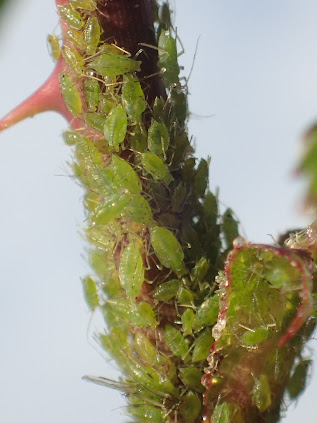
Rose aphids (Macrosiphum rosae) on a rose bush. Photo: Melissa Schreiner

Benefits of Attracting Insects in Your Landscape

Aphids and other pest insects serve an important role in the food web in our garden ecosystems. Just like predatory insects, birds can help keep the pest populations down. Most terrestrial birds rely on insects for a major component of their diet. Hummingbirds will catch up to 2,000 insects per day! They feed on aphids, mosquitos, and a variety of other insects. Consider supporting insects and birds in your landscape by planting a diversity of flowers with nectar and native plants, providing habitat spaces and water sources, and minimizing or eliminating the use of pesticides in the landscape.

Aphid Control Options

Beneficial insects are a great control option for aphids! A few other options are available if additional control is desired. Using a hose with a strong jet of water on the plant will knock aphids down. Since they are a soft-bodied insect, the impact from the water will kill many of them. Horticultural oils are effective at killing overwintering eggs. A variety of insecticide products are available, but use caution because many will kill the beneficial insect predators in your garden. Look for non-persistent contact products like insecticidal soaps that are safer for beneficial insects. As always, follow the label explicitly so that the product is applied effectively and safely. For more information, check out the CSU Extension fact sheet, Aphids on Shade Trees and Ornamentals.

Enjoy Your Backyard Biodiversity!

Have fun making observations this summer. Share photos on social media! Use the hashtag #AphidWatchParty

References

Hoffmann, M.P. and Frodsham, A.C. (1993) Natural Enemies of Vegetable Insect Pests. Cooperative Extension, Cornell University, Ithaca, NY. 63 pp.

Marvin, D. E. (2018) Hummingbirds as Pest Management Partners? New York State Integrated Pest Management, Cornell University. https://blogs.cornell.edu/nysipm/2018/10/11/hummingbirds-as-pest-management-partners/

Nielsen, C., Agrawal, A. A., and Hajek, A. E. (2009) Ants defend aphids against lethal defense. Biology Letters 6: 205-208. https://doi.org/10.1098/rsbl.2009.0743

Rathcke, B., Hamrum, C., and Glass, A. W. (1967) Observations on the interrelationships among ants, aphids, and aphid predators. The Michigan Entomologist, 1(5), 169-173. https://scholar.valpo.edu/cgi/viewcontent.cgi?article=1056&context=tgle

Schuh, M. 2022. Lacewing. University of Minnesota Extension. https://extension.umn.edu/beneficial-insects/lacewing

Statewide Integrated Pest Management Program. (2002) Syrphids (Flower Flies, or Hover Flies). University of California Agriculture and Natural Sciences. https://www2.ipm.ucanr.edu/natural-enemies/syrphids/

Warner, G. (1993) Syrphid Flies (hover flies, flower flies). Washington State University. http://treefruit.wsu.edu/crop-protection/opm/syrphid-flies-hover-flies-flower-flies/


Friday, December 10, 2021

A Winter To-Do List to Enjoy the Outdoors

Posted by: Lisa Mason, Arapahoe County Extension

With the warm fall weather we have had, it’s hard not to take advantage of the nice temperatures and be outside! Even with low temperatures, and hopefully snow (fingers crossed), winter is also a lovely time to be outside and enjoy the scenery! Spending time outdoors is always beneficial for our mental and physical health. While you are out enjoying the fresh air, here are some things to do and observe:

  • Look for tiny critters. Most insects and arthropods overwinter in a diapause state (dormancy), but you may see some activity on warm days. While winter watering my landscape, I came across the larvae of a brown lacewing (Family: Hemerobiidae)! Lacewings are excellent beneficial insects in our gardens because they feed on pests, especially aphids! Recently, I also came across a Say’s stink bug, (Chlorochroa sayi). Stink bugs overwinter as adults, usually finding a safe, warm place under leaf piles and other debris. The Say’s stink bug will slowly turn from green to brown as fall and winter approach. For more information on how insects survive the winter, check out the following blog post: How Insects Survive Winter 

Say's stink bug. Photo: Lisa Mason

 
Brown lacewing larva. Photo: Lisa Mason

On warm days in winter--usually above 50 degrees--you may observe honey bees out flying. Honey bees cluster in the hive most of the time, but on warm days, they leave the hive to go on a cleansing flight to relieve themselves. They may also seek out water and food sources. Honey bees feed on the honey stores in the hive, but occasionally you may see them at bird feeders picking up bits of protein from seeds and cracked corn. Learn more about Where Do Bees Go in the Winter?

  • Notice plants that provide winter interest. Plants also go through a dormant stage during the winter, but many plants still provide beauty and interesting characteristics to your garden and landscape. One of my personal favorites is rabbitbrush (Ericameria nauseosa) and varieties like Baby Blue rabbitbrush (Chrysothamnus nauseosus var. nauseosus). Rabbitbrush is an interesting plant all year around, but in the winter, the seedheads and stalks provide a golden color and interesting texture to the landscape. Here are some examples of other plants that provide unique winter interest: Four Native Plants for Winter Interest and Winter Interest with Plant Select® Plants in the Western Garden
Rabbitbrush along a trail. Photo: Lisa Mason
  • Provide water and food for the birds. During the summer many birds feed on insects and other arthropods. Once winter arrives, food becomes scarce and backyard birds tend to feed on seeds and fruits. Check out the Winter Bird Feeding guide by the Cornell Lab of Ornithology for details on how to provide the most nutritious food for birds during the winter. If you are interested in providing long-term habitat and nutrition for backyard birds, consider adding native plants to your landscape. Check out this Colorado guide on Native Plants for Birds. Fresh water is also critical for birds, and can be hard to come by in the freezing temperatures. Be wary of birdbaths that can crack with freezing water. Consider birdbaths that have a built-in heater. Providing food and water for birds in winter provides them needed resources, and can bring joy from watching the birds visit your yard.
A black-capped chickadee is a common visitor at birdfeeders in Colorado. Photo: Pixabay
  • Take up birdwatching as a hobby. Speaking of birds… Winter is a great time to go birdwatching!  Without the leaves on the trees, sometimes birds are easier to observe. Many birds take up residence in Colorado during the winter. Some bald eagles are residents--you can observe them in Colorado all year around. Others migrate to Colorado for the winter! The population of bald eagles increases during the winter months for a variety of reasons including the available of food. Read more about why bald eagles migrate to Colorado for the winter in a blog post by the Bird Conservancy of the Rockies. Colorado normally has around nesting pairs of bald eagles, and in the winter more than 1,000 are expected to come through Colorado! Learn more about where to observe bald eagles near you.

Another winter migrant raptor you may observe are rough-legged hawks. They live in the arctic tundra during the summer where they breed. For winter, they migrate south and inhabit Colorado and much of the United States. Rough-legged hawks received their name because they have feathers that extend down to their feet.

You may observe great horned owls in the wintertime because they are courting! You can often hear them hooting and see their silhouettes in the trees. Courting begins in December and January—one of the earliest bird species to begin the process of mating. Great horned owls are often crepuscular meaning they are active in the twilight hours.

You can participate in the 122nd year of the Christmas Bird Count, one of the oldest organized citizen/community science programs in existence. Anyone can volunteer whether you are a beginner or advanced birder. Check out the National Audubon website to participate in a location near you.

A great horned owl. Photo: Pixabay
 

  • Water your landscape. Colorado had another dry year. Currently the Denver area has not seen snow in over 230 days! This is the second longest period without snow on record. Many other areas of Colorado are experiencing severe drought. Landscape plants will benefit from extra water to get them through the winter. Winter watering can prevent root damage and help the overall health of your plants. Anytime we have a prolonged period of dry, warm weather in the fall, winter, and spring, consider watering your plants when the weather is above 40 degrees. Apply water during the warm part of the day so it has adequate time to soak in before temperatures cool down. Prioritize wateri
    ng newly planted trees and shrubs, followed by trees in your landscape. Don’t forget to water your lawn and perennials. For more information, check out the CSU Extension fact sheets on Fall and Winter Watering, and Watering Your Landscape During a Drought.

Winter is a wonderful time of year to explore the outdoors and notice the beauty in our surrounding environment. Enjoy the fresh air, cool temperatures, snow, plants, birds, and other wildlife that make Colorado a wonderful place to live!  


Thursday, November 4, 2021

Nothing to Sneeze at: Tree Pollination and How it Impacts You

Posted by: Lisa Mason, Arapahoe County Extension

“Is it true that cities and towns plant only male trees, and male trees tend to cause more allergies for people?”

The answer to this question is far more complex than just choosing to plant male or female trees, so let’s explore tree pollination and diversity in the landscape! 

This question stems from a theory that female trees produce seeds and thus require more cleanup and maintenance, while male trees require less maintenance because they only produce pollen. However, that pollen can trigger allergies!

Note that tree pollen is only one of the sources of allergens in the air. According to the Asthma and Allergy Foundation of America, grasses are the most common cause of allergies, and ragweed is the top contributor to weed allergies.  Other allergy triggers include other weeds, pet dander, dust, and mold. Wildfire smoke has also contributed to poor air quality across the west aggravating allergy symptoms and other health conditions.

Understanding Pollination and Tree Reproduction

Trees produce pollen as part of their reproductive process. To understand tree reproduction, look inside a flower such as a tulip or lily. You can easily see the male and female reproductive organs in the flower.

Pollen is produced by a male reproductive organ called the stamen. The stamen includes the anthers and filaments (see photo below). The female reproductive organ on a flower is called the pistil, which comprises of the ovary, style, and stigma. For trees to reproduce, pollen is transferred from the stamen (male organ) to the pistil (female) organ. These pollination biology concepts apply to other plants, but this article will focus on trees.

Anatomy of a “perfect flower.” Credit: University of Missouri Extension

Wind-Pollinated or Insect-Pollinated?

Pollen is transferred between trees in a variety of ways to facilitate tree reproduction including wind-pollination or insect-pollination.

Wind-pollinated trees produce mass amounts of pollen to increase their chances of the wind carrying the pollen to the appropriate tree to reproduce. Examples of wind-pollinated plants include conifer trees (pines, spruces, firs, etc.), aspens, cottonwoods, ash trees, elms, all grasses, etc. Wind-pollinated plants tend to cause more allergies due to the amount of pollen in the air.

Insect-pollinated plants have a more efficient process of pollination because they rely on insects to transfer the pollen from plant to plant. Pollen grains are generally larger and often are sticky allowing the insects to intentionally and unintentionally carry pollen on their bodies. Bees are among the most efficient pollinators because they have hairs all over their body that easily carry pollen. Other pollinating insects include flies, beetles, butterflies, and some wasp species. Hummingbirds are also pollinators in Colorado, and around the world other animals such as birds, reptiles, and bats and other mammals pollinate plants. Examples of insect-pollinated trees include lindens, apples, crabapples, cherries, northern catalpas, Ohio buckeyes, Kentucky coffee tree, eastern redbud, etc. Insect-pollinated trees generally do not cause allergies. The flowers on these plants are big, showy, fragrant, contain pollen and nectar, and are visually attractive.

A bumble bee visiting a linden tree. Photo: Lisa Mason

How do Male and Female Trees Play a Role?

To add more complexity, the biological processes vary among trees. Trees are either: 1) monecious, or 2) dioecious. 

  • Monecious – trees have male and female parts on the SAME TREE.
    • Perfect/complete flowers – trees have BOTH male and female parts on the SAME FLOWER.
      • Since both male and female parts are on the same flower, the pollen stays near the flowers, and these trees are unlikely to cause allergies. Apple trees have “perfect flowers.” Many of these trees are insect-pollinated or they will self-pollinate. Some “perfect flowers” may also be “incomplete flowers” if they have both reproductive parts, but they lack petals or other flower parts. Elm trees have “perfect flowers”, but lack petals.
    • Incomplete flowers – trees have male flowers AND female flowers on the SAME TREE.
      • Oak trees and black walnut trees have male and female flowers on the same tree. Plants can be wind- or insect-pollinated.
    • Polygamous – trees that have a combination of “perfect flowers” and male and/or female flowers on the plant. Ohio buckeye are polygamous because they have “perfect flowers” and they have male flowers.
  • Dioecious – trees have either male OR female flowers, but NOT BOTH.
    • The male plants produce pollen, and seeds are produced on the female plants after they are pollinated. Dioecious trees are typically wind-pollinated. Male trees tend to cause allergies. Female plants do NOT have pollen. Ash, willows, aspen, and some maples are examples of dioecious trees. 

A complete flower cluster known as an inflorescence on an Ohio buckeye tree. Photo: Lisa Mason

Let’s Talk Cottonwoods!

Cottonwood trees receive a lot of attention in the spring and summer when cotton is flying in the air! They are an example of a dioecious, wind-pollinated tree. Cottonwoods have male and female trees. The male trees produce pollen around April but not cotton. After pollination, female trees produce capsules full of cotton seeds. The capsules open around June, and the wind will carry the cotton to spread the seeds. A common misconception is that cotton causes allergies; the pollen that is released much earlier in the season is what can cause allergies. When the cotton is flying, the cause of allergies is typically grasses, weeds, and other trees.

A male catkin on a cottonwood tree. A catkin is the flowering spike or flower cluster without petals. Photo: Lisa Mason

How are Tree Species Chosen for the Landscape?

Deciding what trees to plant in a landscape depends on many factors including the purpose and goals of the landscape. In terms of the choosing trees species in a home landscape or municipal landscape, all of the following should be considered:

  • Mature size of the tree,
  • Soil, water, and other growing requirements,
  • Management considerations like pruning and susceptibility to insects or diseases, and
  • Weather and climate adaptations (e.g., exposure to cold, heat).

Choosing where to plant the tree is just as important as choosing the species of tree. Nearby infrastructure like power lines and buildings, space for the tree to grow to its mature size, competition from turf or other plants, potential for exposure to de-icing salts in the winter, and potential damage to the trees from human activity, lawn mowers, etc. are all additional considerations.

Different species of trees can achieve different goals. Some trees are more suitable for wildlife habitat or forage for pollinators. Other trees might provide shade or privacy around a home or building. If allergies are a concern, you might select trees that are insect-pollinated versus wind-pollinated. Seedpods on trees can also provide winter interest. If you prefer less maintenance in your landscape, a pollen-producing tree might more suitable.

Another critical consideration for tree selection is DIVERSITY in the landscape! We’ve learned from Dutch elm disease, chestnut blight, and emerald ash borer that when we plant many trees of one species, we risk losing all those trees to insects or diseases. By planting a diversity of species in the landscape—no more than 10% of all trees should be of one species—we create a more resilient landscape.

Even though Colorado can be a tough place for trees to grow, we have a variety of species that do very well. Consult the Front Range Tree Recommendation List to learn more. If you are considering adding a tree to your landscape, do your research to make sure the tree meets your goals. In addition to finding the right place for the tree, make sure the tree is planted and cared for correctly to give the tree the best chance to survive and thrive.

If you need some ideas or inspiration:  The next time you are at your local park or public area, take a close look at the trees. What species do you see? Are they wind- or insect-pollinated? Monecious or dioecious? Do you notice a diversity of trees in the landscape?


Friday, August 27, 2021

The Marvelous Monarch Butterfly

Posted by: Lisa Mason, Arapahoe County Extension

Monarch butterflies are an iconic species in the United States! These bright orange and black butterflies are known for their migration in North America. How do these small creatures make the 3,000-mile journey every year?

Identification

While the bright orange butterflies can be hard to miss, Colorado has a variety of orange-colored butterflies. You can identify a monarch butterfly by the black veins on the wings in addition to the bright orange color. They also have white spots on the edges of the wings. The wingspan usually ranges from 3-4 inches long. You can identify if the butterfly is a male or female by looking at the hind wing. If the butterfly is a male, it will have one black spot on each hind wing along one of the center veins. If the butterfly is female, she will not have a spot.

Monarch caterpillars have contrasting black, yellow, and white stripes on their body. Caterpillar size varies depending on what instar, or stage of growth the caterpillar is in.

A female monarch butterfly. Credit: Lisa Mason

Life Cycle

All butterflies including monarchs go through a lifecycle called metamorphosis that includes an egg, caterpillar, a pupa called a chrysalis, and an adult butterfly. When monarchs are caterpillars, their job is to feed as much as possible. They feed exclusively on milkweed plants (Asclepias spp.). Once they have fully grown, they will find a safe space to form a chrysalis. The chrysalis is a protective covering for the caterpillar while it transforms into a butterfly. It begins as a pale green color, then gradually turns black and orange as the butterfly gets ready to emerge. After emergence, the butterfly will soon search for a mate and the female will begin laying eggs on new milkweed plants. 

A monarch caterpillar on showy milkweed (Asclepias speciosa). Credit: Lisa Mason

Migration

Adult butterflies only live two to five weeks. The only exception is the overwintering generation of monarchs that can live up to nine months in Mexico. Once spring arrives, this overwintering generation will migrate north to Texas and surrounding areas. The females will lay eggs for the next generation. Once the next generation becomes adult butterflies, they continue to migrate north. After a few weeks, they will lay eggs for another generation further north. Typically, monarchs will have two to three generations throughout the summer season. Once fall arrives, the fourth generation, also known as the overwintering generation, will begin to migrate south back to Mexico. How does each generation of monarch know how to navigate migration? For other migratory species like Swainson’s hawks, they follow their parents and large groups of hawks to the overwintering grounds in Argentina. Scientists are still researching how monarchs are able to migrate to the same location every year. Recent research suggests they use a combination of the sun’s position in the sky, landmarks like mountains, and an internal magnetic compass. Genetics may also play a role in the ability to navigate.

Monarchs have two migratory pathways in North America. The eastern monarch population migrates from Mexico up north through the Midwest and eastern US. The western monarch population migrates from the Pacific Coast of California to the states west of the Rocky Mountains. While Colorado is not one of the main migratory corridors, you can still see monarchs throughout our state.

Butterfly Mimicry

Other species look similar to the monarch butterfly include the queen butterfly (Danaus gilippus) that hosts on milkweed and dogbane plants in the Apocynaceae family and the viceroy butterfly (Limenitis archippus) that hosts on plants in the Salicaseae family including willows, cottonwoods, and poplars.

These three butterflies look similar for one reason: mimicry! The contrasting orange and black colors serves as a warning to predators that the insect may be distasteful and potentially toxic. Milkweed is full of a compound called cardenolides. When a caterpillar feeds on milkweed plants, the cardenolides stay in the body of the monarch, which makes it distasteful and toxic to predators like birds. The predators learn to stay away from insects with the bright coloring.

For long time, scientists suspected viceroy butterflies mimicked monarchs in a form of Batesian mimicry meaning that the viceroy appeared toxic and distasteful to predators based on coloring and wing shape, but they were not actually toxic or distasteful. Further research indicates that the monarch, viceroy, and queen butterflies may exhibit Müllerian mimicry, meaning all three can be distasteful or toxic to predators and they mimic each other. More research is needed to fully understand this mimicry relationship between the butterflies because variations in the butterfly’s colors, wing shape, distastefulness, and toxicity vary among different regions and caterpillar host plants.

A queen butterfly has more white spots on the hind wings than a monarch. Colors can be variable but often they are a darker orange color than monarch butterflies. Credit: Lisa Mason

A viceroy butterfly can be differentiated from a monarch by the black, circular line through the hind wing that is perpendicular to the other black veins. Credit: Lisa Mason

Supporting Monarchs and Other Butterflies

You can support monarchs and other butterflies by providing food, habitat, water, and space in your landscape. Each species of butterfly has a different caterpillar host plant, for instance, monarchs rely on milkweed plants for caterpillar food. Black swallowtail caterpillars feed on dill and fennel. All adult butterflies will visit a variety of other flowers for nectar. Plant flowers that have different bloom times so you will have flowers all season. Butterflies need sunny areas and places to shelter from wind and weather. Planting a variety of trees and shrubs can help provide sheltering areas. Be mindful of pesticide use because they can harm caterpillars and butterflies.

Click here for more information on attracting butterflies to your landscape.

For more information on monarch butterflies, visit MonarchJointVenture.org.

To learn more about butterflies in Colorado, read this CSU Co-Horts blog post called The Fascinating Lives of Butterflies