CO-Horts

CO-Horts Blog

Showing posts with label stress. Show all posts

Tuesday, January 24, 2023

Repotting an Heirloom Houseplant

 Posted by: Alison O'Connor

Sometimes horticulture can be stressful. That anxious feeling you get when you splurge on a plant that you know probably won't survive in your landscape...or when you sow your seeds, but forget to turn on the heat mat...or when you don't water your houseplants for a month. Or is it just me? A couple weeks ago I experienced the most horticultural anxiety when I repotted a 50+ year old rope hoya that belonged to my Grandma Mae. Grandma Mae passed away right before I moved to Colorado and this hoya lived in her house for decades. It was always dark green and beautiful.
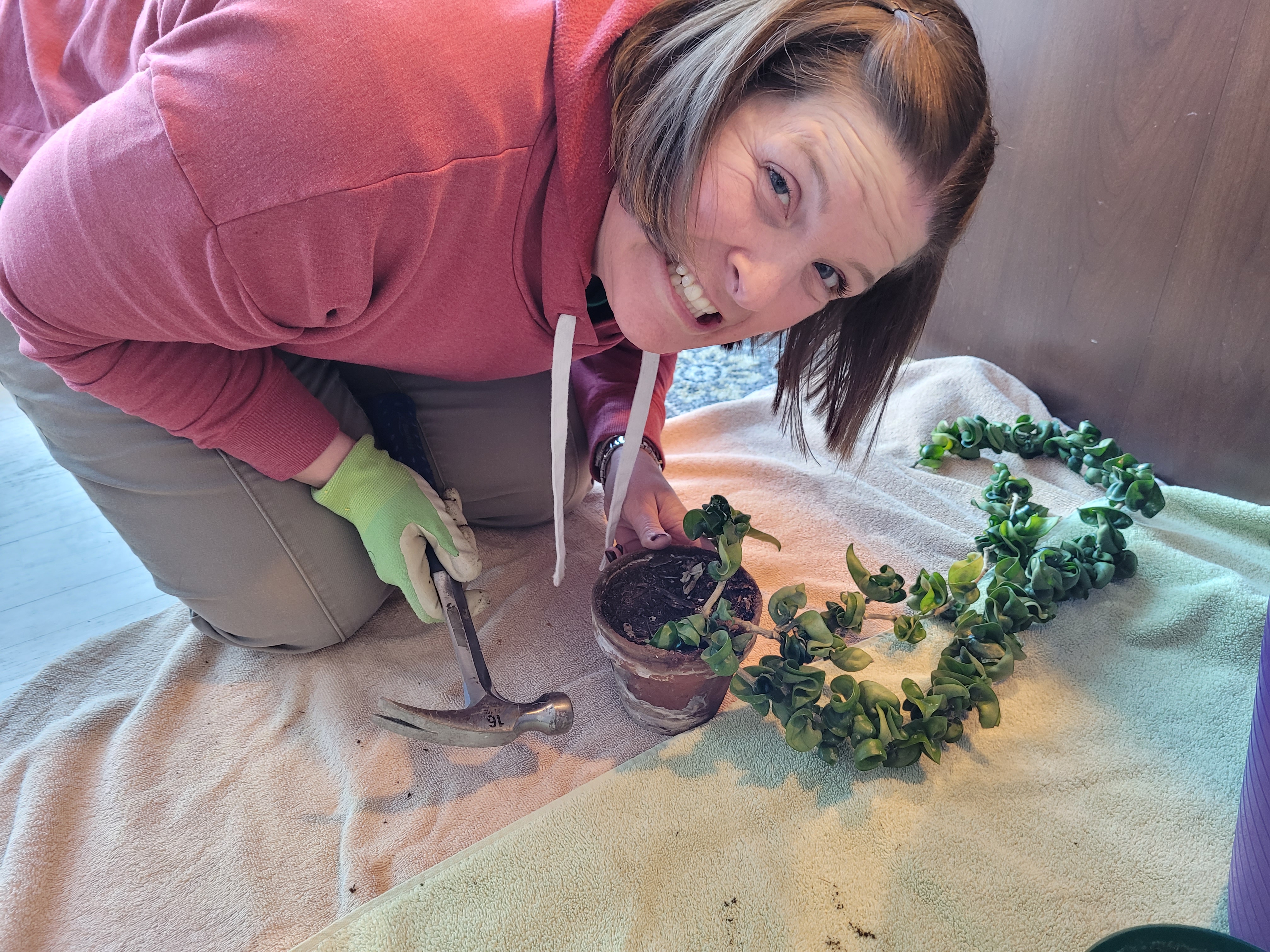
Horticultural anxiety!

This plant means the world to me, and when I moved across the country, it had a prime location in the car, nestled between blankets. Since then, it's happily lived on the hutch in our kitchen, facing east. Well, mostly happily. It needed repotting, something I was happy to ignore for years. Like YEARS. It was growing (kind of)! It was thriving (mostly)! It was green (pale)! But the time came when I couldn't ignore it any longer.

My rope hoya was not a happy camper, but I couldn't bear to repot it. 

With dread in my stomach, I bought new cacti/succulent potting mix, a new pot, and set to work. It was in a tiny clay pot and there wasn't a way to pull it out, so I broke the pot apart with a hammer - gently. It was almost like the plant breathed a sigh of relief when the pot came off. I held the plant in my hands, a matted mess of roots, and cursed myself for not repotting it years ago. 

The root ball is so small! Why did I wait so long?!?

I gently brought it to the sink, hydrated the roots (which seemed to shrink), and prepared the hoya for its new home. A little potting mix in the bottom, tuck the plant in, a little more potting mix, gently press around the plant. I'm fairly certain that my pulse was racing and I barely breathed during the process. Then I returned it to the sink and gave it a good watering. I'll fertilize it in a couple weeks once it gets more settled. 

Happy in its new home. Grandma Mae would be proud.

As of now it's doing fine. I'm hopeful it will bloom again and live another 50+ years!

Tuesday, September 29, 2015

More From the Cottonwood Front

Posted by Mary Small, CSU Extension in Jefferson County
  
Dropped branches 
A few blog articles ago, I wrote that many cottonwoods were shedding leaves early. This was due in part to foliar diseases resulting from a wet spring. Now, it seems, they are shedding small branches and causing a second round of worry from their owners. (Is it winter yet?!)

This phenomenon is known as “cladoptosis”, one of those “osis” words that strikes fear into the hearts of many.  Fortunately, cladoptosis is a naturally occurring twig drop common to many tree species, including cottonwood. And, wouldn’t you know, it happens in the fall alongside leaf drop.
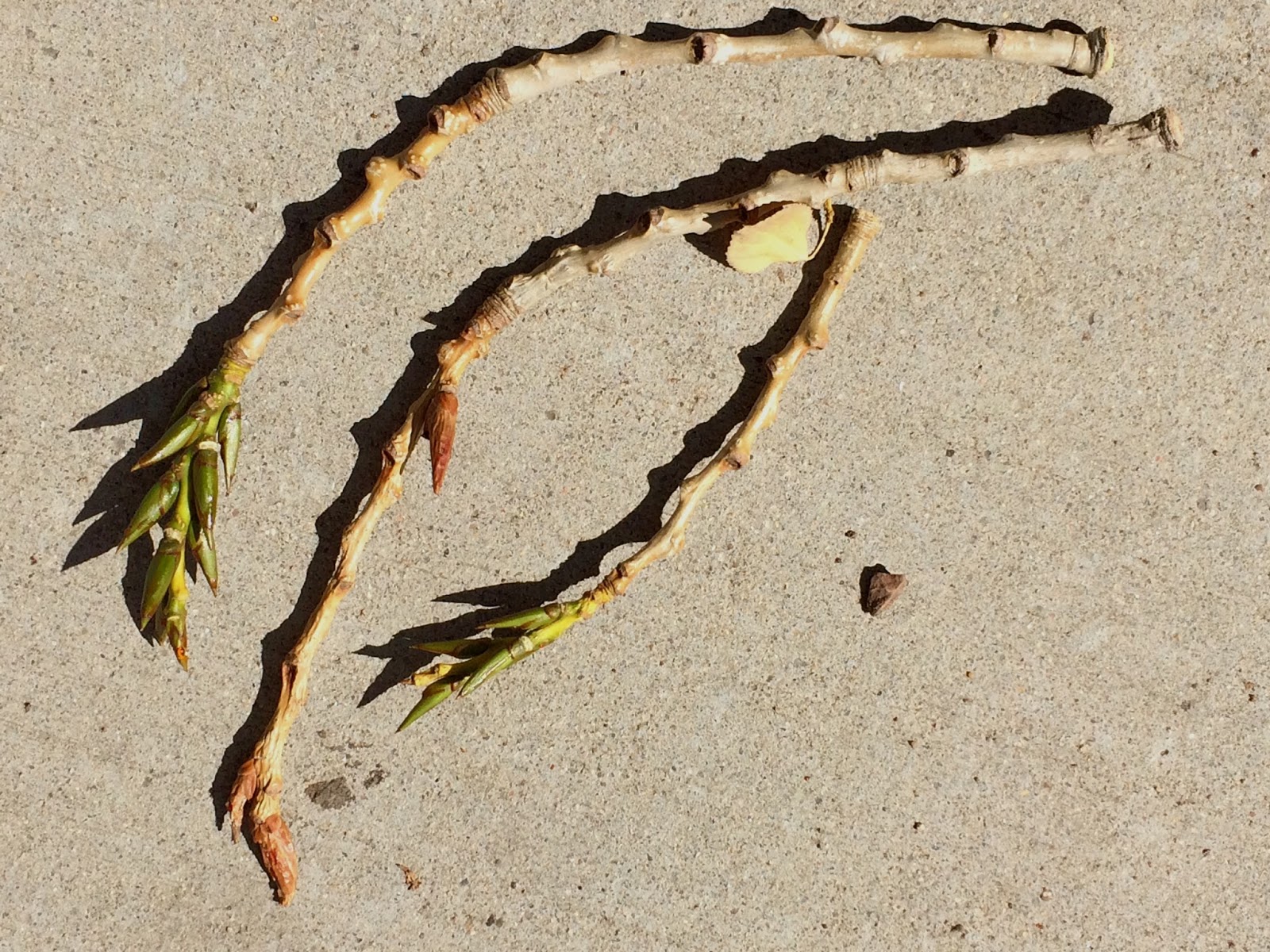
"Ball" of dropped branches
Take a look at the bottom of the fallen, pencil sized branches underneath the tree. You’ll see nice, clean cut with a rounded, raised center. If you tried to reattach the dropped branch to where it was originally connected, you’ll see the two pieces make up a ball and socket arrangement. This is a big clue that the tree was an active player and the branch drop wasn’t caused by squirrels chewing or storm breakage or something else.

"Socket" on tree branch
Before the branch fell from the tree, specialized cells created a separation layer where a break occurs. The cells also created a protective layer covering the opening in the branch remaining on the tree. This helps protect against moisture loss.  

Researchers are unclear why cladoptosis occurs. It's thought to be stress related. Affected trees may be suffering from problems such as soil compaction issues or drought.  The tree is stressed, so it “cuts its losses” by shedding less vigorous plant material, enabling it to better support more vigorous portions. Cladoptosis may also function like leaf drop, a sort of “planned senescence”.  


Bottom line: don’t worry about this type of branch drop, the tree is not dying. Try to improve water applications and reduce compaction in the tree’s root zone to improve its overall health. Don’t be surprised if cladoptosis pays a visit next year, though!