CO-Horts

CO-Horts Blog

Friday, October 18, 2019

ALLEY GARDENS


by Yvette Henson, CSU Extension, Norwood, Colorado

When I was in 5th and 6th grades we lived in downtown Denver, near Denver University, in a house with an amazing garden.  My favorite part was an old blue spruce growing against the corner of the back shed.  The branches touched the ground and made a hidden ‘room’ that I could stand up in.  It is where I set up a play house with a table, etc.  The yard also had a swing set, 2-3 apple trees, a cherry tree, a vegetable garden, asparagus and a grape vine growing over the alley fence.  

In the summer and on weekends I would play 'kick the can' with friends and take walks and explore the alleys in my neighborhood.  I never knew what I would find, maybe love letters in the trash, a snarling dog (not fun) or another beautiful garden.  Alley walks have been a favorite pasttime ever since.  

This spring and summer I took some time whenever I traveled through the western region of our state to explore the alleys and take pictures of gardens or whatever else was interesting to me.  Here are of few of my photos.  I hope you enjoy them!

Norwood
I live near Norwood.  Our small town has some really beautiful backyard food gardens which isn't surprising since people living here like it because it is a local-food, ranching and farming community.

Both these pictures are one backyard

I love the alley entrance to this garden.

We only get lilacs once in every 4 years, due to late spring frosts

Weedy backyard with interesting old outhouse
Telluride
Telluride is in the area I serve and its my birthplace.  The summers are glorious!

Oriental Poppies 

Shasta Daisies

A mallow growing by an alley apartment

Christ Church Garden
Montrose 
Home built greenhouse

Cute shed (70's?)

Awesome treehouse!

Glenwood Springs

Lilacs and iris

I like the practical layout and tidiness of this garden

More unkept beauty

New Castle

Isn't this rose bush just beautiful?!  
Dolores
I absolutely love this shed and the entire backyard.  
Silverton
Silverton has an average 9 frost free day growing season!  And yet the flowers are glorious and there are people growing food!

School spirit

Beautiful old shed

There was kale and arugula among other cool season veggies in these raised beds.

One of several greenhouses in town. 
Look at the flowers!
Silverton has a Rhubarb Festival on the 4th of July.  
Lots of the old Victorian homes have rhubarb, horseradish and tansy still growing in the yards.

Ouray 
I lived and gardened in Ouray for about 6 years.  Its one of my favorite places.  In fact I am writing this blog at a coffee shop in Ouray.


I was surprised these pumpkins survived last winter and couldn't help
but wonder why they didn't harvest them.  

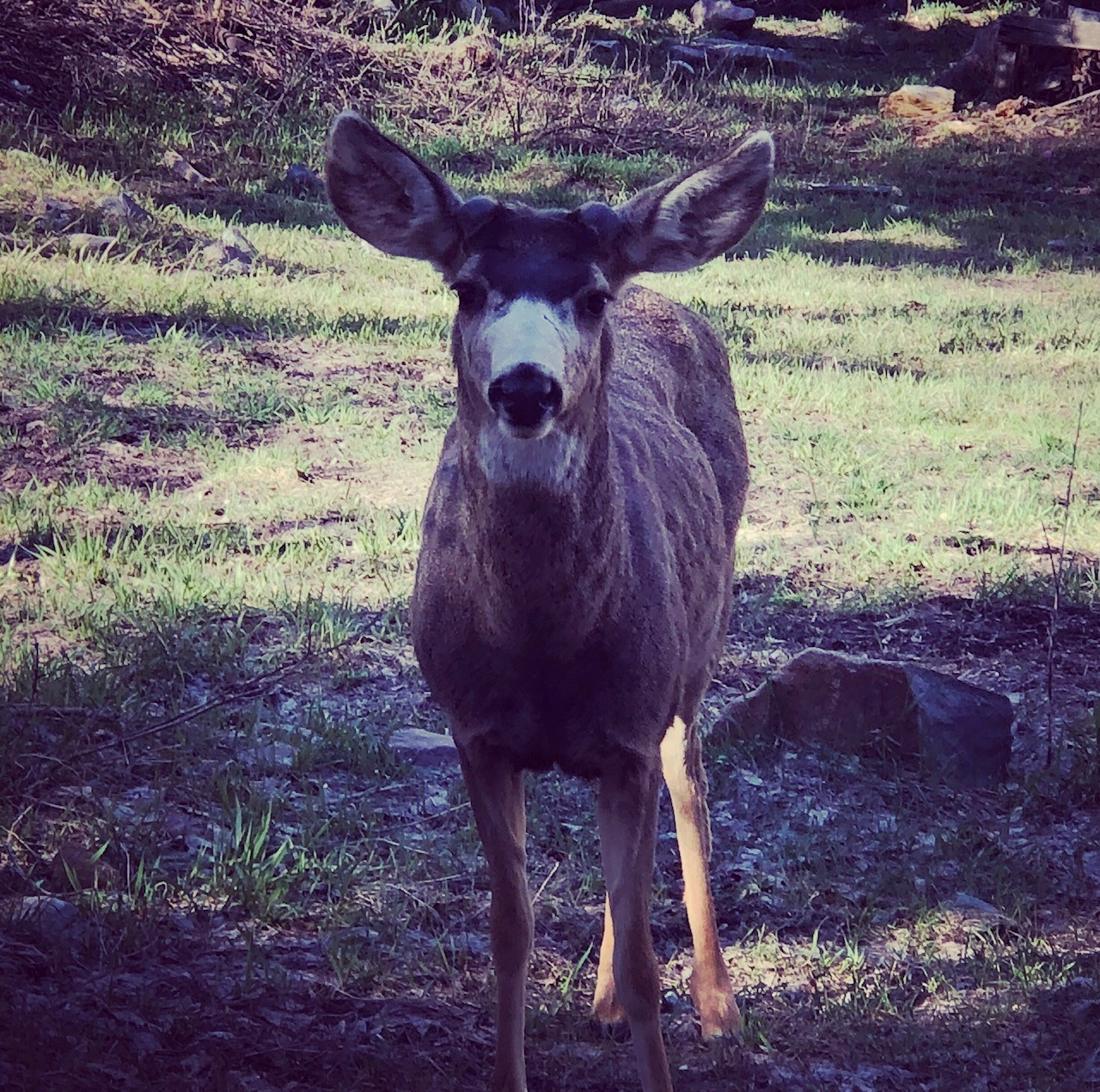
Ouray has lots of docile (ish) deer

'Secret Garden' in Spring
Summer Veggie Garden


Thursday, October 17, 2019

Buzzing Research on Pollinator Conservation


Posted by Lisa Mason, Arapahoe County Extension

Part of the land grant university mission is to bring the latest scientific research to our community. I want to share a recent experience I had on the front lines of research.

In July, I had the privilege of participating in the International Pollinator Conference in Davis, California. Researchers and land managers from all over the world gathered together to discuss the challenges facing pollinators. I was amazed to hear about the great work being done in the United Kingdom, Germany, Thailand, Australia, Canada, Japan, Brazil, Sweden, and France. While the feeling at times was hopeful and inspiring, I think all attendees recognize that more work still needs to be done to protect pollinators, which are critical to the planet’s ecosystems and human survival.
Here are some of the top areas of research and a few of my take-home messages from the conference:
A sweat bee, Halictus sp. on a cosmos flower. Photo: Lisa Mason

·      Plant diversity is critical for pollinators. Each plant has its own nutritional profile and research is still being done on what chemical compounds benefit bees.
·      There are geographical gaps in bee research that need to be addressed. For example, bee diversity tends to be higher in areas where universities or research stations have sampled and studied the local areas. We are lucky in Colorado to have two universities that are conducting significant research here.
·      Climate change will affect different bees in different ways. Possible effects may include shifts in their natural range, shifts in phenology (meaning changes in flower bloom times that could affect the bees), reduction in nectar and pollen yields, increases in disease outbreaks, increases in heat stress and other physiological effects, etc. Some bee species may be able to adapt better than others.
·      Pesticides is a complex issue and continues to be a major theme in research. Understanding the lethal and sublethal effects of pesticides on bees and the routes of pesticide exposure will help inform best management practices in pesticide use and how to protect bees.
·      Understanding how native bees and honey bees interact and coexist continues to be a new area of research. The honey bee (Apis mellifera) is a non-native species but provides important pollination services for plants, crops, etc. Honey bees also provide honey and wax. Native bees are also critical for our ecosystems and provide different pollination services, some very specialized with certain plants. For example, bumble bees pollinate tomatoes and peppers, which other bees cannot pollinate.
·      Diseases and parasites were another major research area of the conference. We need to understand how diseases and parasites are transmitted from bee-to-bee so we can maintain healthier honey bee hives. For example, flowers can be a place to where bee diseases can transfer. Also, we need to understand if and how diseases can transfer to different bee species.
·      Citizen science continues to be a growing area of research in many fields of study, pollinators included. While many scientists continue to be apprehensive about the data accuracy, more and more research utilizes citizen scientists.
A painted lady butterfly, Vanessa cardui on a sunflower. Photo: Lisa Mason
How Can You Help Pollinators?

Even though there is much more research to understand pollinators, we can take actions now to help our local pollinators. The best things you can do include:
·      Plant more flowers that attract pollinators
·      Wildscape your yard for wildlife and pollinator habitat
·      Cut your turf grass less often or remove areas of turf that do not serve a purpose
·      Leave insect nest and hibernation places alone
·      Think carefully and research how and when to use pesticides
·      Share your science-based knowledge with your family, friends, neighbors, and community
·      Participate in local classes and events to continue learning
·      Learn about the benefits of adding native plants to your landscape
A green metallic sweat bee, Agapostemon sp. climbing out of a Rocky Mountain penstemon flower. Photo: Lisa Mason
CSU Extension has factsheets and a field guide available with information on how to build habitat and attract pollinators to your landscape. Publications include:

I encourage you to keep learning! Protecting pollinators will take efforts from everyone—researchers, land managers, governments, and citizens. While there is so much to learn, we can still use our current knowledge to make a difference.


Thursday, October 10, 2019

Fall cheatgrass


Posted by: Kara Harders - Regional Small Acreage Management Specialist, Peaks and Plains

With the first cold snap of the year upon us, we Coloradans tend to have differing opinions of the coming weather and what it means. Some of us are singing “hip-hip-hooray!” for the cool weather, while others are lamenting the shortening days and end of shorts and flip flop season. However, most people who deal with weeds are probably feeling relief as the growing season comes to a dramatic halt.

As with most things in life, there is usually a grey area and an “it depends” answer for everything. The problem plants that seem to fill in this grey area of weed growth in the cooler months are the winter annuals. In my opinion, the biggest offender of the winter annual group is Cheatgrass/Downy brome/ Drooping brome/Bromus tectorum (it makes sense that something so evil has so many names, right?).

(Identifying Cheat grass without the seed head)

This annual noxious weed (which hails from the mythical land of Eurasia) depends entirely on its seed to reproduce year to year, but what makes it sort of unique is that it usually germinates in the fall, not the spring. This allows the plant to get started, lie in wait all winter establishing roots, and then bombard us first thing in the spring and “cheat” the other plants out of space and resources. Cheatgrass germination depends on environmental conditions, especially precipitation. Summer and fall rains cause rapid germination, but the plants need about 2” of rainfall to really get going. Another impressive factor to consider is the seeds can also germinate in the spring if they do not get enough moisture to get a fall start. Due to this flexibility, it is common to have plants of various ages in a Cheatgrass stand. Which is a real get-ya-downer.

So, what can we do?

If you have not seen any of the soft, delicate, lovely, green patches spring up yet, you can apply a pre-emergent to keep the seeds from germinating at all (woo-hoo). If you are seeing young Cheatgrasses you can spray them with an herbicide that effects grasses or simply pull them up. Really, any method of weed control (besides mowing) should be effective at this point. When killing Cheatgrass at this age always consider you are simply trying to kill the roots of this plant. Grazing at this stage is fine for animals but will probably leave viable roots for overwintering and spring growth, for this reason I would avoid relying only on grazing management to control the plant. The biggest benefit to treating Cheatgrass in the fall is they will not have seed heads yet, so you don’t need to worry about disposing of the seeds to prevent a problem next year!

If you would like more information on Cheatgrass in general check out this fact sheet: https://extension.colostate.edu/docs/pubs/natres/06310.pdf

Best of luck and happy fall everyone!!