CO-Horts

CO-Horts Blog

Showing posts with label pollinators. Show all posts

Monday, July 17, 2023

The Amazing Summertime Blues

The backyard entry garden greets people with
native flowers including penstemon and flax.
Posted by: Todd Hagenbuch, CSU Routt County Extension

The only thing that really makes me really blue in the summer is knowing that it is but a fleeting moment for us in the Yampa Valley. This year that seems especially true as the winter snows stayed longer than usual and we had an exceptionally short spring. As a result, our growing season seems even more compressed than usual…which is saying a lot. Those winter snows and spring storms, however, provided water for a spectacular season of blooming native plants, and not only those growing in wild areas.

As part of a landscaping plan that focuses on reducing water use while also providing bountiful color, natives have played a key role in making our family’s yard a sea of red, white, and blue over the July 4th holiday. Rocky Mountain penstemon plays the starring role for blue, with flax and lupine playing a supporting role. Red columbine, white snow-in-summer, and white campion help complete the colors of our flag, with some annuals in pots thrown in for good measure. But it’s the blues that really make a statement.

Penestemon rises above the flax with
snow-in-summer in the background
Rocky Mountain Penstemon (Pensemon strictus) is a long-lived native that grows naturally in sagebrush pastures, meadows, scrub oak stands, and openings in aspen/spruce mixed forests. It has blue flowers that range in shade from light blue to almost purple, with most in my yard blooming a shade of royal blue. Being adapted to many of our local soils and ecological sites, it is an easy-keeper in the garden and requires little, if any care. Pollinators love it, with not only bees and wasps visiting it, but hummingbirds, too, on occasion. It will spread and reseed, so if you don’t have an area where it can run free, note that some control may be needed to keep it in check.

Blue flax (Linum lewisii) has been a favorite of mine for years. In fact, when my wife and I got married 17 years ago (!), we gave packets of flax seeds to our wedding attendees to plant in their yards to remember the event as our colors were pale yellow and flax blue. I love seeing flax bloom in pastures, on hillsides, and along roadways, where it is a favorite reclamation plant. This fine-leafed plant is a perennial, and if you save the seeds and spread them, you can get stands to spread, even though I don’t find it to be aggressive. It is exceptionally drought tolerant and tolerates most of our native soils.

Silver lupine (Lupinus argenteus) is another native that we enjoy having in our yard. Our particular plants are a blue that tends toward lavender, but they can be many shades of blue, purple, and even pink! Lupine are very drought resistant and are liked by all of the same pollinators as the penstemon. Note if you have livestock that propagation of this plant isn’t warranted because it does have toxic principles that make it unsafe for grazing, but in a yard can be a great addition. The fact that it is a nitrogen fixer and helps add nitrogen to our lean soils is a real bonus.

If you don’t have the summertime blues, find a friend who will save you some seed from one of these pollinator-friendly, low-water-use natives; you’ll be thrilled you did!

Lupine in the foreground with penstemon and 
campion filling in behind

Wednesday, January 4, 2023

Meant to Bee: Overwintering Strategies for Bees

Posted by: Lisa Mason, Arapahoe County Extension

Where do the bees go in the winter? With over 900 species of bees found in Colorado, it is an interesting question. How do they survive the snow and cold temperatures? Can we support bees during the winter? Bees and other insects have special adaptations so their species survives from year to year. Here is a look at bee adaptations and life cycles in the winter time.

Honey bees

Honey bees (Apis mellifera) are one of the 900+ species of bee in Colorado. They have a eusocial structure meaning the colony has: 1) overlapping generations, 2) a reproductive division of labor, and 3) cooperative care of the developing larvae. The female worker bees forage all summer and into fall bringing in food reserves to last them the winter. When temperatures start to drop, honey bees huddle together to make a cluster and shiver their wings. Shivering provides warmth for the hive. Their main goal is to keep the queen warm so the colony can survive. The core temperature in the hive can be as high as approximately 91 degrees Fahrenheit. A healthy hive with adequate food storage is more likely to survive, which reinforces the importance of best beekeeping practices by the beekeeper all year. Read how to prep a hive for winter here. When a beekeeper harvests honey, they have to be careful not to harvest too much. Beekeepers should leave 80-100 pounds of honey in the hive for the bees to feed on throughout the winter. Honey bees are often seen outside the hive warm winter days. Anytime temperatures rise above 55 degrees Fahrenheit, honey bees may take a cleansing flight which provides them the opportunity to relieve themselves. Honey bees may also forage for whatever they can find including tiny bits of protein at bird feeders.

The worker bees in the hive cluster around the queen during the winter to keep her warm and safe. Credit: Lisa Mason

Bumble bees

Colorado has 23 species of bumble bees (Bombus spp.). They live underground or in large cavities. They have a one-year life cycle, like solitary bees. They have a social structure within their colonies that include a reproductive queen and workers. Like other social insects, they have overlapping generations and cooperative brood care in the colony.

Newly mated queens are the only bumble bee survivors during the winter. The hardy queens find a place to hibernate in a protected place like leaf litter, a wood pile, or underground. When spring arrives, the queens will emerge, begin to forage, build a new nest, and lay eggs. The eggs will mostly be female worker bees at the beginning of the season. The queen will continue to lay eggs throughout the season. In late summer, new queens and male bumble bees will hatch and leave the colony to find mate. As temperatures drop, the colony from the current season will end except for the mated queens that will hibernate. Queen bumble bees are capable of living alone, unlike honey bee queens.

A queen bumble bee (Bombus nevadensis) foraging on Rocky Mountain bee plant. Photo: Lisa Mason 

Solitary bees

Solitary bees comprise of the the vast majority of bee species diversity. They live a one-year life cycle. During the life cycle, a female bee builds a nest underground or in a cavity. A cavity usually consists of a pre-existing tunnel. Some tunnels might be in a dead log, nooks and crannies in stone or brick, a human-made bee hotel, or hollow stems. The female bees collect pollen and nectar to bring back to the nest. All the collected pollen and nectar is made into a ball called “bee bread” which is all the food needed for one bee to grow from a larva to an adult. The female lays an egg on the bee bread and seals up the nest. After the egg hatches, the larva will go through full metamorphosis from a larva, to a pupa, and on to an adult before emerging from the nest the following season. The lives ended for the female and male solitary bees we saw flying around the previous summer, but their brood is warm for the winter deep underground or in a cavity. 

An underground, solitary bee nest (Agapostemon sp.). Photo: Rachelle Stoddard

Does “leaving the leaves” support the overwintering bees?

Leaf litter supports hibernating bumble bees by providing them a sheltered area for the winter. Solitary bees are well-protected in their underground or cavity nest but leaf litter may provide some insulation for their ground nest. Since honey bees live in hives, they don’t rely on leaf litter but they have been observed drinking water from damp leaf piles. Leaf litter also supports a wide diversity of arthropods by providing shelter during the winter. Wooly bear caterpillars are a great example of a moth that relies on leaf litter. They overwinter in the caterpillar stage by hibernating in leaf litter. They have an impressive adaptations to survive the winter. When summer arrives, they complete metamorphosis and transform to an adult Isabella tiger moth. Overall, leaf litter can provide a shelter for a diversity of overwinter arthropods. Leaf litter is also a great mulch for perennial and vegetable gardens. The leaves also return critical nutrients back to the soil. While leaf litter is a valuable component to the landscape, it is important to remove leaves from the lawn to prevent mold and disease growth, and to avoid smothering the turf.

When should spring garden clean-up begin to best support the overwintering bees?

Different bee species emerge at different times, so it is a challenge to find a perfect date for spring garden clean-up that supports bees. Here are some general considerations for supporting overwinter bees:

  • Bumble bees typically emerge from hibernation between mid-April and mid-May depending on weather and elevation. Bumble bees could be impacted if leaf litter is disturbed before they emerge.
  • Some solitary bees nest in hollow or pithy stems such as Rubus spp. (raspberries, blackberries, etc.), joe-pye weed, bee balm, etc. They will emerge in the spring. If hollow stems appear to be plugged, perhaps consider leaving them stems until they emerge, or stems could be carefully moved to a protected location where they won’t be disturbed.
  • Leafcutter bees are often some of the latest emerging bees. They nest in a wide variety of cavity locations from natural spaces to human infrastructure (e.g. patio stones, and occasionally even inside gardening gloves). Since they emerge later in the season, it is likely best not to postpone garden work for leafcutter bees unless specific locations of nests are known that could be protected.
  • Squash bees may nest in underground areas where squash and pumpkin plants are typically planted. Consider not tilling the vegetable garden to support these important pollinators.

  • All bees need early-season flowers that offer pollen and nectar. Consider adding plants that flower as early as April and May. Some options include golden currant, chokecherry, crocus, and pasque flowers.
A leafcutter bee (Megachile sp.) nest found inside a garden glove. Credit: Nicole Didero

More information

For more information on bee lifecycles, check out the Native Bee Watch Citizen Science Field Guide. Learn more about the 900+ native bee species in Colorado by checking out A Beginner’s Field Guide to Identifying Bees. 

For more information on what happens to other insects in the winter, refer to this CO-Horts Blog post written by Jessica Wong. 

Tuesday, September 27, 2022

May The Gourds Be With You

Posted by Donnetta Wilhelm, Arapahoe County Master Gardener

The Cucurbitaceae family of plants features about 975 species of food and ornamental plants, which includes cucumbers, gourds, melons, squashes, and pumpkins. It is one of the largest plant families used as food for human consumption. Three standouts of this plant family: it boasts some of the biggest fruits and vegetables in world, the plants have many interesting characteristics, and this plant family offers a variety of uses other than just human consumption.

Grow Big

The Guinness Book of World Records lists the largest pumpkin in the world weighed just above 2,702 pounds in Italy in 2021. The longest bottle gourd, known as calabash, measured 12.5 feet long in Canada in 2015. The longest cucumber on record is 42.1 inches in 2011 in the United Kingdom. Not to be outdone by other countries, the heaviest butternut squash weighed 65.5 pounds in 2021 in Rhode Island.

Interesting Characteristics

Cucurbitaceae plants are monoecious, meaning they have both separate male and female flowers. While only the female flowers produce fruit, they need the male flowers to accomplish this task. Plants in this family are mostly prostrate or herbaceous annuals and are native to the tropics and subtropic regions. When grown in Colorado, they are warm weather lovers, need full sun, and for best production, plenty of water as the fruits begin to develop.

A squash bee (Peponapis spp.). Photo: Susan Ellis, Bugwood.org.

Bumblebees and squash bees (Peponapis spp. and Xenoglossa spp.) are the best pollinators of pumpkins and squash since they forage in the morning. Squash bees have a life cycle that is perfectly timed with the life cycles of cucurbits. These bees have very fuzzy bodies that accumulate substantial amounts of pollen.

Three genera, Cucumis spp. (cucumbers, melons), Cucurbita spp. (pumpkins, squash), and Citrullus spp. (watermelons), rank among the top 10 in economic importance among the edible crops of the world.

An interesting fact about cucumbers is that because they have seeds in the middle and grow from the flower of a cucumber plant, they are botanically a fruit. Watermelon is considered the most popular among the cucurbits whose delicious fruit are widely consumed throughout the world. The red pigment of watermelon is the antioxidant lycopene, and watermelon has more lycopene than tomato.

Cucurbits are rich in carotenoids, terpenoids, saponins, and phytochemicals. Fruits, vegetables, and edible seeds from the Cucurbitaceae family have a positive influence on human health. Various studies have shown the plants in this family have antioxidant, antidiabetic, anti-inflammatory, and cleansing properties, and the seeds and oils have high nutritional value.

Usefulness

Cucurbitaceae is one of the most varied and widely used plant families. The cucumber is mostly used as a consumption crop, used in soups, sandwiches, drinks, dips, and a variety of pickling. But cucumbers are also used in a wide range of hair, skin, and beauty products. Muskmelon and watermelon are used fresh in desserts, and alone or in combination with other fruits in salads. Watermelon rind is commonly pickled. In Russia, beer is produced from watermelon juice. Pumpkin and squash are cooked with other vegetables or used in pie-making, cookies, breads, and roasted seeds.

Squash blossoms are edible and can be stuffed with a variety of ingredients. Photo: Canva

Luffa, bottle gourd, ash gourd, bitter gourd, pointed gourd, and Indian squash are cooked, and some are fried for the preparation of various dishes. Blossoms of squash, pumpkin, and ash gourd are consumed as edible flowers stuffed with a variety of delectable cheeses, herbs, rice, mushrooms, and crabmeat. Hundreds of recipes can also be found for the use of pumpkin leaves.

Gourds are not only used for food, but for making musical instruments, containers, and other decorative pieces. The Lagenaria siceraria (bottle gourd) is commonly used for anything from bowls to musical instruments to smoking pipes. They are the preferred water vessel containers in many parts of the world because they are lighter than earthenware jars. Luffa cylindrica (sponge gourd) is used as loofah, sponges and scrubbers, and even as filters, while Sicana odorifera (casabanana or musk cucumber) is often used as an air freshener as the ripe fruits produce a long-lasting, fruity fragrance. Siraitia grosvenorii (monkfruit) is used as a sweetener, 300 times sweeter than sugar and lower in calories.

Many different gourds found in Africa and India are used to make musical instruments such as drums, lutes, and sitars. Shaker gourds are probably one of the earliest of all musical instruments, and the Cucurbita palamta (coyote melon) is used to create maracas.

Jack-o'-lanterns. Photo: Pixabay

When Irish immigrants moved to the United States, they brought with them the myth of “Stingy Jack.” Rather than carving turnips like in Ireland, they began using the locally grown pumpkins for carving. The Jack-o’-lantern variety of pumpkins have a thinner shell and less flesh for better carving.

Western culture esteems ornamental gourds for autumn decorations inside and outside the home, special occasion accents, and birdhouses.

Whether trying to grow the world’s largest zucchini, pumpkins for the World Championship Punkin Chunkin competition, cucumbers for grandma’s favorite pickling recipe, or the beautiful ornamental gourds for autumn or holiday décor, there is a Cucurbitaceae perfect for your garden.


Thursday, May 19, 2022

The Role of A Bumble Bee

 
The Role of A Bumble Bee
By CSU Horticulture Agent, Linda Langelo

A great northern bumble bee (Bombus fervidus) foraging on catmint (Nepeta spp.) at the Lima Plaza Pollinator Demonstration Garden in Araphoe County, Photo: Lisa Mason

According to the Xerces Society, bumble bees pollinate wild flowering plants and crops. They do not depend on flower type to survive. With some plants, it is not that way. There are some rare plants that depend on a bumble bees such as the native monkshoods and lady's tresses orchids. Bumble bees are the only known pollinator of potatoes worldwide.

Other flowers the bumble bee pollinates are snapdragons, mints, orchid and peas. According to the Brooklyn Botanic Gardens, flowers pollinated by the bumble bee must have a sturdy lip, apron or heel for a landing pad. When the bumble bee lands on monkshood it opens the flower. The petals pop open and the bumble bee clambers over the male and female parts collecting pollen at its feet while reaching with its head to the nectaries in the hood of the monkshood flower. Once it flys to the next monkshood, seeds are pollinated, and the species is ensured continuation. 


One of the most common bumble bees in Colorado, the Hunt's bumble bee (Bombus huntii) forages
on a linden tree (Tilia spp.) in the Araphoe County. Note the ball of pollen and nectar she has collected
in her pollen baskets called corbiculae. Photo: Lisa Mason

What would the world look like without bumble bees as pollinators? There would be several plants missing from the world. However, there is some recent research according to www.inverse.com in an article Bumble Bees Have Learned to Hack Plants by Nina Pullano. Pullano is referring to the hacking of a plant when a bumble nibbles on the leaves of a plant that is not producing flowers. This may damage the plant by stimulates flower growth. Plants not in flower can bloom up to a month earlier. This behavior was found in a lab at the University of ETH Zurich by researchers Mark Mescher and Consuelo De Moraes. They found that this also happens in the wild. This is a particular characteristic that only bumble bees possess. Researchers are uncertain if they have in their saliva that causes plants to flower. But it seems we can say that bumble bees are adapting to climate change. But what will they be able to tolerate as the climate continues to change remains to be seen?

Bumble bees still need our help. Creating gardens with diverse flowers and the right habitat for bees is essential. Here is a brief list of the trees that benefit bumble bees:

  • Oak
  • Black Locust
  • Elms
  • Wild Cherry
  • Maples
  • Honey Locust
  • Plum
  • Peach 
  • Apricot
  • Lindens
The following link is a Colorado State University Fact Sheet Attracting Native Bees to the Landscape: Https://extension.colostate.edu/docs/pubs/insect/05615.pdf

Bumble bees need pollen because it is a great source of protein. They also need nectar which provides carbohydrates. The more diverse type of plants in our landscapes, the more opportunities we give the bumble bees the chance to obtain what they need when they need it. Having plants that bloom early to late season ensures the success of keeping bumble bees going. 

The following link is a Colorado State University Extension Fact Sheet Creating Pollinator Habitat: Https://extension.colostate.edu/docs/pubs/insect/05616.pdf


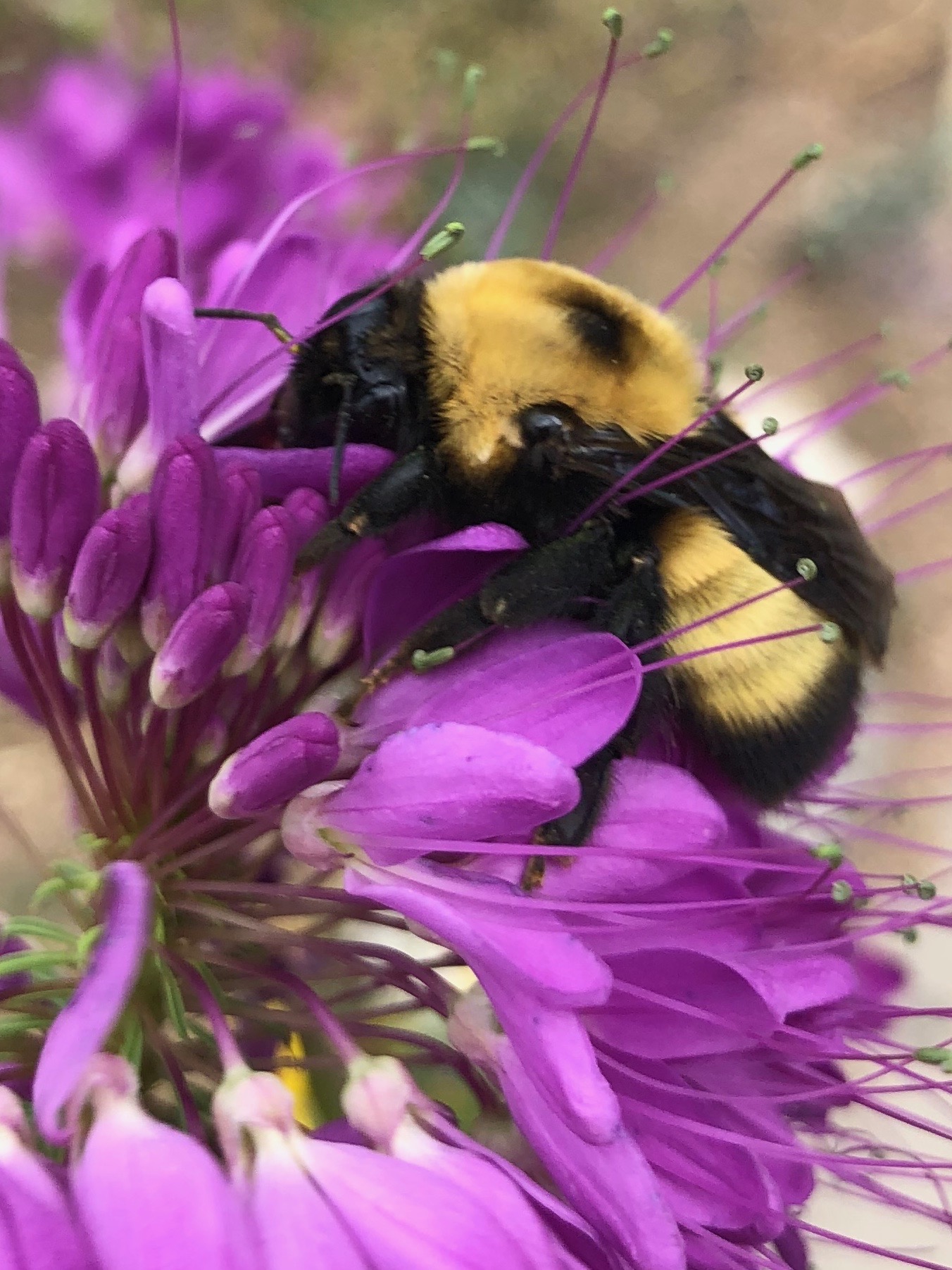
A Nevada bumble bee (Bombus nevadensis) foraging on a Rocky Mountain Bee Plant (Cleome serrulata) in Gilpin County. Photo: Lisa Mason


Thursday, December 2, 2021

Give the Gift of Pollination

Posted by John Murgel, Douglas County Extension

For many, December brings gift-giving.  One of my favorite things to do in recent years is to give people in my life gifts from or for the growing season—a nice reminder of summer in the dark of winter.  Sometimes it’s even snowy at this time of year.

 While we can’t see most pollinators as they “slumber” through the winter, here are some ideas to keep them front-of-mind for you and for your loved ones!

 1. Pollinator houses.  They come in all shapes and sizes, can be bought pre-made, as a ready-to-assemble kit, or be home-made.  Just be sure to have tailored the home for the pollinators you’re trying to attract.  For cavity-nesting bees, this means deep enough cavities to allow for multiple eggs to be laid, and something that is cleanable from year to year.  Avoid butterfly houses, though—butterflies don’t use them, and they can be a perfect home to European Paper Wasps, voracious predators of caterpillars.  If you purchase (or receive) a pollinator house with both bee cavities and butterfly slits, simply cover over the butterfly portion with fine screen, or fill them with caulk, wood filler, or another wasp-barrier of your choice.


A pollinator hotel with butterfly shelters closed.
Fill in the "butterfly shelter slits," marked here with blue "x"s.

2. Plants.  Seeds and gift cards to garden centers can be a great way to give plants without saddling someone with a potted perennial to keep alive until spring.  Consider including seeds for designed gardens—many free designs can be found from both PlantSelect® and the Colorado Native Plant Society.  Or build a garden around a theme, like providing host plants—either food for caterpillars (if you don’t have paper wasps!) or nesting cavities for bees--and food plants for the adult forms of a single pollinator type.  Don’t forget to include registration information for Native Bee Watch so pollinator observations can contribute to our understanding of wider population trends.


A flowering garden.
A "designed" pollinator garden with native and introduced plants.

3. Pollinator ID materials.  Whether you have a budding young entomologist on your hands or are an enthusiastic amateur with no time for technical language, resources for pollinator identification abound.  Consider books like The Bees in Your Backyard, publications from the Xerces Society for Invertebrate Conservation, or CSU.  Many online suppliers carry nets and collection aspirators for up-close viewing for the hard-core insect person.

 4. Photography supplies.  Smartphone cameras are amazing these days, and many attachments and pairable devices are available to enhance their capability to get captivating shots of invertebrates, including pollinators.  I’m notoriously good at destroying nice things, so for under $50 this year I purchased both a clip-on close-up lens and a wide-angle lens for my phone and a portable microscope that connects via WiFi.  The photos are great.  More expensive options are out there too, for people who aren’t as clumsy as I am.


Close-up of cabbage worm
An imported cabbage worm--photo taken by yours truly with a cheap lens.

Have fun and be creative, and have a wonderful holiday season.

Friday, August 27, 2021

The Marvelous Monarch Butterfly

Posted by: Lisa Mason, Arapahoe County Extension

Monarch butterflies are an iconic species in the United States! These bright orange and black butterflies are known for their migration in North America. How do these small creatures make the 3,000-mile journey every year?

Identification

While the bright orange butterflies can be hard to miss, Colorado has a variety of orange-colored butterflies. You can identify a monarch butterfly by the black veins on the wings in addition to the bright orange color. They also have white spots on the edges of the wings. The wingspan usually ranges from 3-4 inches long. You can identify if the butterfly is a male or female by looking at the hind wing. If the butterfly is a male, it will have one black spot on each hind wing along one of the center veins. If the butterfly is female, she will not have a spot.

Monarch caterpillars have contrasting black, yellow, and white stripes on their body. Caterpillar size varies depending on what instar, or stage of growth the caterpillar is in.

A female monarch butterfly. Credit: Lisa Mason

Life Cycle

All butterflies including monarchs go through a lifecycle called metamorphosis that includes an egg, caterpillar, a pupa called a chrysalis, and an adult butterfly. When monarchs are caterpillars, their job is to feed as much as possible. They feed exclusively on milkweed plants (Asclepias spp.). Once they have fully grown, they will find a safe space to form a chrysalis. The chrysalis is a protective covering for the caterpillar while it transforms into a butterfly. It begins as a pale green color, then gradually turns black and orange as the butterfly gets ready to emerge. After emergence, the butterfly will soon search for a mate and the female will begin laying eggs on new milkweed plants. 

A monarch caterpillar on showy milkweed (Asclepias speciosa). Credit: Lisa Mason

Migration

Adult butterflies only live two to five weeks. The only exception is the overwintering generation of monarchs that can live up to nine months in Mexico. Once spring arrives, this overwintering generation will migrate north to Texas and surrounding areas. The females will lay eggs for the next generation. Once the next generation becomes adult butterflies, they continue to migrate north. After a few weeks, they will lay eggs for another generation further north. Typically, monarchs will have two to three generations throughout the summer season. Once fall arrives, the fourth generation, also known as the overwintering generation, will begin to migrate south back to Mexico. How does each generation of monarch know how to navigate migration? For other migratory species like Swainson’s hawks, they follow their parents and large groups of hawks to the overwintering grounds in Argentina. Scientists are still researching how monarchs are able to migrate to the same location every year. Recent research suggests they use a combination of the sun’s position in the sky, landmarks like mountains, and an internal magnetic compass. Genetics may also play a role in the ability to navigate.

Monarchs have two migratory pathways in North America. The eastern monarch population migrates from Mexico up north through the Midwest and eastern US. The western monarch population migrates from the Pacific Coast of California to the states west of the Rocky Mountains. While Colorado is not one of the main migratory corridors, you can still see monarchs throughout our state.

Butterfly Mimicry

Other species look similar to the monarch butterfly include the queen butterfly (Danaus gilippus) that hosts on milkweed and dogbane plants in the Apocynaceae family and the viceroy butterfly (Limenitis archippus) that hosts on plants in the Salicaseae family including willows, cottonwoods, and poplars.

These three butterflies look similar for one reason: mimicry! The contrasting orange and black colors serves as a warning to predators that the insect may be distasteful and potentially toxic. Milkweed is full of a compound called cardenolides. When a caterpillar feeds on milkweed plants, the cardenolides stay in the body of the monarch, which makes it distasteful and toxic to predators like birds. The predators learn to stay away from insects with the bright coloring.

For long time, scientists suspected viceroy butterflies mimicked monarchs in a form of Batesian mimicry meaning that the viceroy appeared toxic and distasteful to predators based on coloring and wing shape, but they were not actually toxic or distasteful. Further research indicates that the monarch, viceroy, and queen butterflies may exhibit Müllerian mimicry, meaning all three can be distasteful or toxic to predators and they mimic each other. More research is needed to fully understand this mimicry relationship between the butterflies because variations in the butterfly’s colors, wing shape, distastefulness, and toxicity vary among different regions and caterpillar host plants.

A queen butterfly has more white spots on the hind wings than a monarch. Colors can be variable but often they are a darker orange color than monarch butterflies. Credit: Lisa Mason

A viceroy butterfly can be differentiated from a monarch by the black, circular line through the hind wing that is perpendicular to the other black veins. Credit: Lisa Mason

Supporting Monarchs and Other Butterflies

You can support monarchs and other butterflies by providing food, habitat, water, and space in your landscape. Each species of butterfly has a different caterpillar host plant, for instance, monarchs rely on milkweed plants for caterpillar food. Black swallowtail caterpillars feed on dill and fennel. All adult butterflies will visit a variety of other flowers for nectar. Plant flowers that have different bloom times so you will have flowers all season. Butterflies need sunny areas and places to shelter from wind and weather. Planting a variety of trees and shrubs can help provide sheltering areas. Be mindful of pesticide use because they can harm caterpillars and butterflies.

Click here for more information on attracting butterflies to your landscape.

For more information on monarch butterflies, visit MonarchJointVenture.org.

To learn more about butterflies in Colorado, read this CSU Co-Horts blog post called The Fascinating Lives of Butterflies. 

Friday, June 4, 2021

UnBEElievable: The Benefits of Pollinators in Our World

Posted by: Lisa Mason, Arapahoe County Extension

Let’s celebrate pollinators! June is Colorado Pollinator month and June 21-27th is National Pollinator Week!

Pollinators provide so many benefits to humans and ecosystems that they deserve more recognition than just one month out of the year! Education and awareness is critical because pollinators are declining all over the world for a variety of reasons including habitat loss, pesticides, parasites, diseases, climate change, etc.

Pollinators around the world include bees, bats, flies, beetles, wasps, ants, butterflies, moths, and some species of reptiles and small mammals. Bees are among the most efficient pollinators because the pollen sticks to the hairs on a bee.

Why should we care about pollinators?

Pollinators provide valuable ecosystems services. They transfer pollen grains from one flower to another which enables the plants to reproduce. Here is a closer look at the value pollinators have to humans and ecosystems:

  • 75% of more than 240,000 plant species rely on pollinators for reproduction.
  • The global production of crops that depend on pollinators is an industry worth up to US $577 billion annually.
  • Bees help to pollinate 1/3rd of the human diet including the most nutritious part of our diet—fruits, vegetables and nuts.
  • In addition to crops, they pollinate the food for livestock that contributes to the meat and dairy industry.

In addition to providing nutritious food, pollinators offer a variety of other ecosystem services that are less known. Think of all the benefits that plants provide us. We can thank pollinators for facilitating plant reproduction for many of those plants. Examples of ecosystem services include:

  • Raw material production
  • Recreation
  • Climate regulation
  • Erosion control
  • Nutrient cycling
  • Clean air
  • Cultural value
  • Medicinal plants
  • Plant-based dyes
  • And more!

The Buzz with Bees

All bees should be celebrated! Our planet has an incredible amount of bee diversity! We have approximately 20,000 species of bees worldwide. We have over 900 species in Colorado! Most of us are familiar with the honey bee (Apis mellifera), a non-native bee species to the United States. The honey bee was brought over from Europe in the 1600’s and is a domesticated species. While they are not at risk of going extinct, they do face a variety of challenges like varroa mites. Honey bees are an important species economically and for pollinating food crops. They also provide us with honey, wax, and other products. Native bees provide an incredible amount of biodiversity and many native bees have specialist relationships with the plants they pollinate meaning other bees are unable to pollinate those specific plants. A couple of examples include squash bees that are very efficient at pollinating pumpkins and squash, and bumble bees that “buzz pollinate” plants. Buzz pollination occurs when a bee has a strong vibration frequency that allows the plant to release the pollen. Plants that need buzz pollination include tomatoes and peppers.

While writing this blog post, I took a break to water flowers in my yard. I came across this little bee who landed on my hand. This bee was less than a quarter of an inch, but she was working hard a pollinating the catmint (Nepeta spp.). She is closely related to Mason bees (Osmiini Tribe). We need a microscope to determine the exact genus, but she is likely a Hoplitis spp. or Heriades spp. bee. She has special pollen-collecting hairs on the underside of her abdomen. She is also a cavity-nesting bee.

How are you going to celebrate Colorado Pollinator Month?

Here are some ideas:

  • Observe pollinators in your backyard, parks, or open spaces. Look for visiting insects and birds that might be pollinating blooming flowers. Notice the diversity of flower visitors, and how hard they work at collecting pollen and nectar. If you take photos, you can upload them to iNaturalist, a biodiversity science database of observations. You can also explore iNaturalist to see what others are observing. 
  • Plant flowers and provide pollinator habitat in your landscape. No landscape is too small or too big. Planting some pollinator-friendly flowers or providing some habitat space will benefit the pollinators that visit. How can you provide habitat space? Keep in mind that approximately 90% of bees are solitary which means they mostly do not interact with other bees with the exception of mating.  Of the solitary bees, about 70% live underground and the other 30% are cavity nesters.  Here are some resources:
  • Join the Native Bee Watch Community Science program! All training free and provided. You can watch bees in your landscape and collect data on your observations. Register here by June 13th. Learn more about the program at NativeBeeWatch.org. Check out the CSU Source Story on Native Bee Watch.
  • Attend a virtual class during National Pollinator Week! Register here to take a one-hour class on June 25th at 12pm on who the pollinators are and how to support them. 
  • Spread the word! Check out the resources for National Pollinator Week and share with your friends, families, and neighbors. Share your photos on social media and use the hashtags: #ColoradoPollinators #PollinateCO #NativeBeeWatch #CSUExtension 


Thursday, May 6, 2021

Climate change and pollinators

 By Irene Shonle, CSU Extension El Paso County

Plants and pollinators have evolved over the millennia to depend on each other. Pollinators need the nectar and pollen that plants provide, and plants need the pollinators to carry pollen from one plant to another to achieve fertilization and seed set. 

Climate change is having a negative impact on both plants and pollinators as the changing temperatures affect each species differently. In some cases the resulting mismatch in bloom time and pollinator activity can mean that some plants don’t get pollinated, and some bees don’t find the food they need at a critical time.

Plants tend to bloom primarily in response to a combination of increasing temperatures and daylight. This is why we see flowers bloom earlier in years with warm springs, and later in cold springs.  Insects also respond to similar environmental cues, which makes sense, given that mutually dependent species would be expected to be fairly synchronized.

European scientists Holzschuh and Kehrberger found that the European pasque flower (Pulsatilla vulgaris) responds to rising temperatures by flowering earlier each year, whereas one of its major pollinators, a solitary bee species, does not quite keep pace by hatching earlier. 
 

This system may have worked well for ordinary weather vagaries, but the warming of the earth’s climate has caused plant species to bloom an average of a half-day earlier each year. In total, that can result in the growing season of some species now beginning up to a month earlier compared to 45 years ago. Insects aren’t quite keeping pace, although the timing of their emergence is less well understood than with plants, especially for solitary, ground-nesting bees species (as many in Colorado are).  It appears as though insects have a higher threshold temperature for development than those required for plants, so plants are more likely than insects to bloom earlier in response to springtime warming (Forrest and Thomson, Ecological Monographs 2011, Holsuch and Kehrberger, Plos 1 2019).


This has implications for both wild populations of both the plants and pollinators.  If pollination gets missed, early spring ephemeral plants (which are often critical early nectar plants) will reduce in population size. Pollinators that miss the peak bloom of an important plant will be forced to switch to a different species – if another one is even availableavailable (Holzschuh and Kehrberger Plos One 2019).


Wild plums provide early nectar for pollinators


On a home landscape level, we can all help the pollinators by
including a variety of flowering plants that bloom from the very earliest days of spring until later in the season when more is in bloom.  Walk around your neighborhood and open space to see what is blooming when, and take notes, especially of plants that you don’t already have in your yard- such as perhaps quince, currants, plums, creeping phlox or violets.  Highly hybridized plants like tulips and daffodils may or may not provide nectar, despite their showy flowers.

Three lobed sumacs (Rhus trilobata) don't have showy flowers, but are great for early pollinators

There are some early plants that aren’t as showy, but still provide nectar and pollen – such as maples, sumacs and even willows.  If an early spring means the pollinators miss one plant, a diversity of plants with slightly different bloom times will mean that the insects can still find food.

We can all do our part to keep pollinator populations as robust as possible – starting with our own backyards!

Thursday, January 7, 2021

Your 2021 Pollinator Revolution!


Posted by: John Murgel, Douglas County Extension

Whether your pollinator patch is well established or only a January daydream, here are four ways to take your yard or garden to the next level for pollinators this year.

 1. Ditch your weed fabric.

        Perhaps you have all the plants you want.  Maybe you’re looking for an easy “big impact” to help pollinators.  Here’s one that’s friendly on garden budgets too: stop using weed fabric.  The majority of native bees nest underground, and many species of moth pupate underground. Bees and caterpillars can find a way through plants, gravel, and wood mulch (as long as it’s not too deep) but they’ll never get through a woven layer of plastic fibers.  Considering that weed barrier fabrics are at best minimally successful controlling weeds in the long-term, why bother!?


Native Bee Burrows in Gravel Mulch
Bee burrows can be hard to see!

 2. Grow Your Own.

Growing many garden perennials from seed can be easy and economical and expands the kinds of plants you can include in your garden.  Consider pollinators you’ve seen, pollinators you’d like to see, and your growing conditions.  Are you installing or enhancing a xeriscape?  A cutting garden?  Think about the time of day and times of year you are most likely to be in the garden (if you want to watch your pollinator friends at work) and choose plants that will be blooming at those times.  Consider when you might have gaps in bloom and look for plants to fill those gaps.  Some seeds may require treatments of cold or “scarifying” (roughing up the seed) before they’ll sprout, others will come up right away.  You can plant them straight into the garden or start them in pots—inside or outside—depending on the variety and your preference. Planting a few perennial seeds is a great way to get some gardening done on a sunny winter day!

3. Rethink caterpillar host-plants and bug hotels.

            You might have read about host plants for caterpillars as a key component of a successful pollinator garden along with the nectar- and pollen-producing blossoms for bees and adult butterflies and moths.  Host plants are important and come along with a caveat:  know your predator situation.  Caterpillars in urban and suburban parts of Colorado are particularly vulnerable to being eaten by European Paper Wasps, a non-native social wasp that thrives in human-made habitats.  They build their nests under eaves, in hollow pipes, under stacked lumber or garbage can lids—anywhere a ledge that can shelter them from the weather.  Keep a watchful eye for them and deal with the nests to help caterpillars reach maturity.  Encourage your neighbors to control European Paper Wasps as well.  Otherwise planting host plants might as well be setting up a wasp buffet!

Speaking of amenities and accommodations, what about bee and butterfly “hotels”?  Those designed for mason and leaf-cutter bees may be worthwhile.  But steer well clear of butterfly houses.  These are typically a closed box with tall, narrow entrances and are supposedly designed to provide butterflies a dry, sheltered place to spend the night. Unlike bee hotels, which provide cavities similar to what certain bees would seek out in nature, butterfly hotels do not mimic any natural shelter butterflies would use (and they can’t read the adorable signs!).  And recent research has shown that butterflies indeed don’t actually use them.    What sort of thing would use a dry cavity with a narrow entrance?  European paper wasps! So butterfly houses/hotels provide a ready shelter for the number one killer of backyard butterflies.  Plant some flowers instead!


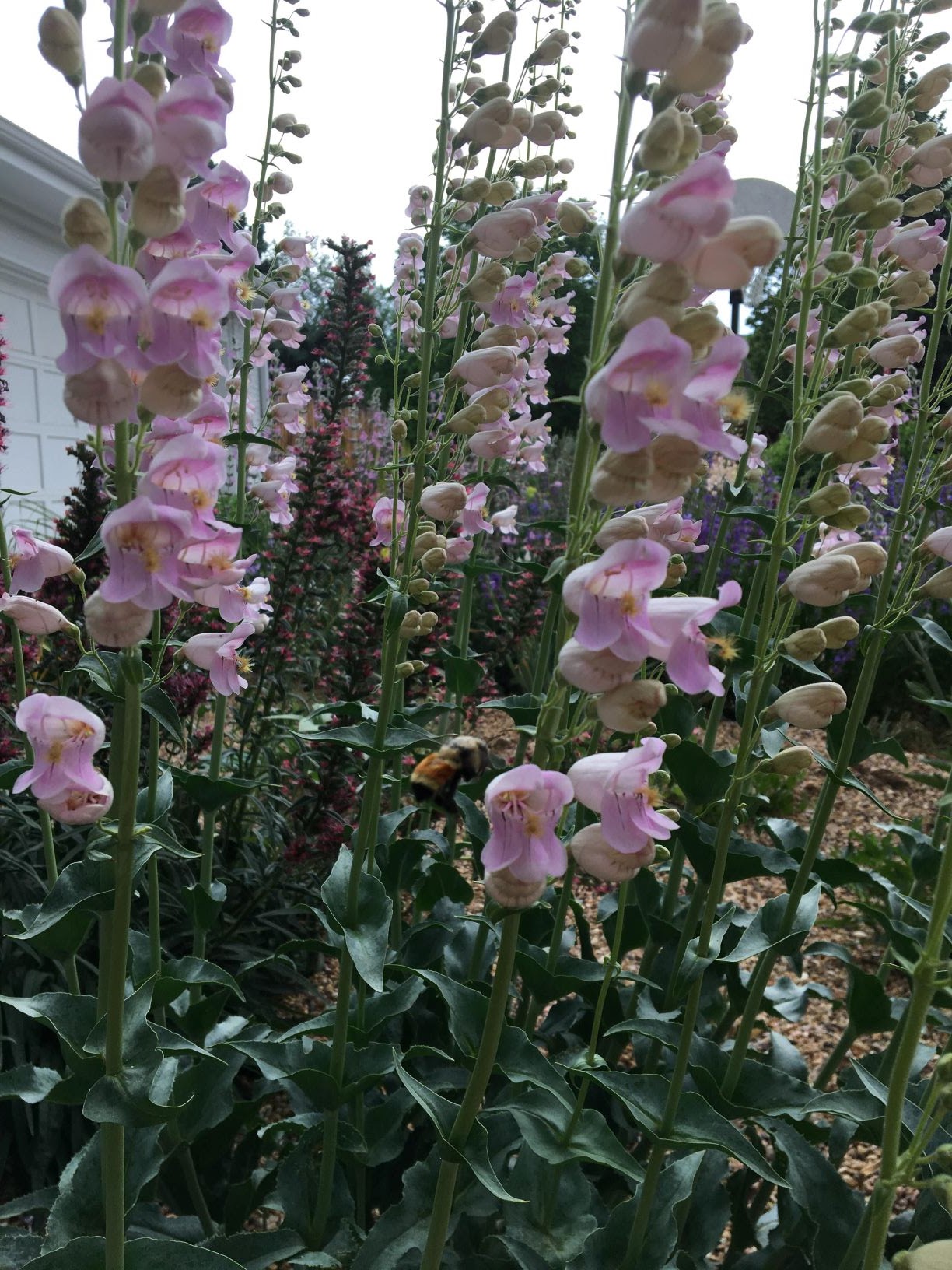
Penstemon palmeri and a bumblebee
Penstemon palmeri (pink) and Echium russicum (red) grow well together


4.  Consider pre-made seed mixes carefully.

        As our awareness of the importance of supporting invertebrate life, especially pollinators, grows, seed mixes marketed especially for boosting and supporting pollinators are more and more common.  And what could be easier?  A sprinkle of seeds, pre-mixed for beauty, onto prepared soil, water a couple of times, and voila!  Your new pollinator garden is finished!  Well…a guy or gal can dream.  Let the buyer beware!  Seed mixes can be a good option for establishing a new garden, particularly if you’re not sure what might grow well in your garden or aren’t choosy about appearances.  But many mixes contain plants that aren’t particularly well suited to life together.  In order to get at least something to grow, many mixes include plants that grow in habitats ranging from wetlands to deserts.  Unless your garden contains both wetlands and deserts in close proximity, you’re not likely to observe all of the species in the mix growing in your plot.  A small percentage will be able to survive in the conditions of your particular site, the rest of the seeds are essentially wasted.  Many species in mixes are also annuals or short-lived perennials that will require regular replacement or re-sowing.  If you’ve got a good idea of the soil conditions and how you will water your garden, you might decide to choose your own species and make your own mix.

Thursday, December 10, 2020

Native plants for winter interest- lesser used edition

 By Irene Shonle, CSU Extension, El Paso County


With climate change creating warmer, drier winters, Colorado gardeners can't rely much on a snowy landscape to hide a garden that has lost its summer pizazz.

This post is devoted to native plants that seldom make the winter interest lists, but will help make your yard maintain some flair during the dullest time of year.  Not only that, but they are also waterwise stars -- we are also experiencing hotter, drier summers, and need to consider our overall water use directed towards landscapes.


I am  in love with yuccas. Their spiky leaves look fantastic all winter, and there is the added bonus of white stalks of flowers in June.  If you do get snow, the drama only increases:


I 
Most woody sages keep their leaves all winter.  Western Sage (Artemisia tridentata looks great, as does the smaller Artemisia bigelovii pictured above).


Prickly pear cactus (Opuntias) maintain a solid presence throughout the winter.  Some even turn purplish in the winter.  And, of course, in the summer they produce beautiful flowers beloved by bees. And, often, showy fruit in the fall.

                                Opuntia spines can look fantastic in low-angled winter light.


                        A plant I have often overlooked is the humble four-winged saltbrush (Atriplex canescens). It keeps its gray-green leaves in the winter, and the female plants produce interesting seed pods that persist into the winter.


                                Broom Snakeweed (Gutierrezia sarothrae), in my opinion, is a much under-utilized                                     plant. It has tidy blooms of yellow in the fall (appreciated by pollinators), but then in the                                 winter, the seed heads dry out to created a charming presence. A bit like a rough-                                        around-the-edges baby's breath.


                                    Winterfat (Krascheninnikovia lanata) is a much under-utilized shrub. It is extremely         waterwise and provides food for many bird species, including  horned lark, Brewer's sparrow, sage             thrasher  black-throated sparrow, loggerhead shrike, and other birds.  Not only that, but it keeps its narrow, grey-  green leaves in the winter, and the seed heads look wonderful in the morning light.


Here's a plant I did not expect to put on this list, but I am taken with how the seed heads persist into the winter, providing interest and seed for birds.  This is hairy golden aster (the extremely variable Heterotheca villosa).


Consider planting some of these plants in your garden in a sunny dry area, and reap the rewards of providing habitat as well as winter enjoyment.