CO-Horts

CO-Horts Blog

Thursday, October 24, 2019

Are your trees STRESSED?

Posted by: Susan Carter, Mesa County Extension


Stress, we all suffer from it at some point or another.  When we are stressed, we are more prone to get a cold or some other illness.  However, have you ever thought about the stress your plants and trees go through?  For a plant, stress could be planted in the wrong place, incorrectly planted, too much or too little water, storms including lightning, hail, fast changes in weather and long term stress like drought.  The effects on the plants could include something as simple as dropping a few leaves, going into fall color early, or more severely dropping all its leaves and not recouping.  Stress also attracts the bad bugs.
Pinyon pine with Ips damage and drought stress.
Here is Western Colorado; long term drought followed by a severe drought from October 2017-October 2018 has greatly affected our trees.  October to October is considered a water year.  In addition, when you add in incorrect care, boy can the trees suffer.  An example is you see many ash trees planted in parking lot planters.  Did you know ash trees are not particularly fond of heat? Right Plant, Right Place.
Mature ash showing signs of drought stress.
Well, could you put them in a hotter situation and with a limited amount of space for the roots to grow?  And to compound that there may be landscape fabric and rock with drip irrigation, making it hard for the trees to get enough moisture.  Therefore, these ash trees suffer from drought and heat stress attracting such insects as flat-headed apple borer,lilac ash borer and ash bark beetle. Once you get a major insect infestation, it is hard to save or bring back the tree to what it should be.  The ash trees on the western slope may be gone before the emerald ash borer makes it over the mountain.

Then we have our Pinon Pine.  They are native just a little higher in elevation than the Grand Valley.  They can live up to 800 years and produce the pine nuts that we eat.  Many animals depend on this tree and typically, it is a wonderful smaller evergreen for drought tolerant landscapes.  It prefers a deep soak about once a month.  In nature, the long-term drought have made them very susceptible to Ips beetle, also called Engraver beetles from the pattern that they leave from their eating under the bark.  When a tree is healthy and has enough water, but not too much, it can push the beetle out with its pitch.  But when stressed it gets attacked and more and more beetles come up to the thousands.  Once this has happened it takes a little while to turn brown, but once it does it is too late.  Since we water, we often do not see issues that occur in the wild happening in our landscape.  Unfortunately, numbers of Ips are so high and our landscape trees are stressed, so we are rapidly losing pinon pines in the landscape.  
Pinon pine with Ips damage.
Adult Ips beetle.
So what can you do?  Well if your pinyon is still green, treat the trunk with a pyrethroid spray in spring and fall. Then water properly!  What does that mean?  Well, we are great at watering trees when we first install them.  Then we forget to MOVE the water with the root growth.  The drip at the trunk is only good for the first 4-5 months, and then the roots want to grow beyond that.  Pinyons are one of the few trees that has a modified root system of part taproot but mostly spreading root.  So as wide as the crown of the tree, multiple by at least two (2) to get where the roots occur.  In rocky areas, this is even greater distance.  Therefore, a 10’ wide tree has a minimum of a 20’ wide root system. 
Pinon pine in Glade Park with drought stress.
In addition, the majority of the root system is in the top 12-18” of soil.  So wet that entire mass of root system.  Do not plant drought resistant trees in a lawn, which has different watering needs.  Don’t use weed fabric; it blocks movement of air and water and causes roots to rise and girdle making them less drought tolerant.

If you plant new trees, plant a diversity of trees.  Plant them in the right place that they love.  Follow our planting guidelines.  In addition, do not forget to move the water.

Friday, October 18, 2019

The Basics of Fall Bulbs

By Sherie Caffey, Horticulture Agent, CSU Extension-Pueblo County

Are you wanting to get a head start on some Spring color in your garden? Fall planted bulbs will come up early in the Springtime and help you to shake the winter blues away. Bulbs are best planted in September to October, so don’t delay, plant some bulbs today!
Fall planted bulbs include things like crocus, tulips, hyacinths, and daffodils. There is a direct correlation between the size of the bulbs and the size of the flowers they will produce, so choose the biggest and best bulbs. Try and plant bulbs that are not damaged or moldy. Choose a well-draining site that is visible so you can enjoy the flowers when they come up.
Since bulbs need to be planted more deeply than seeds, you must prepare the soil in the planting area a little differently. You should excavate and mix in soil amendments to the depth that your deepest bulb will go. Be sure the soil is nice and fluffy underneath your deepest bulb so it does not become water logged. If you have a very heavy clay soil, you should amend it with peat moss or well decomposed compost to loosen it up.
Use the planting chart on the packaging of your bulbs to determine how deep to plant them. Generally, this depth will be about four times the height of the bulb between the soil surface and the tip of the bulb. Be sure the growing tip is pointing up. It is a good idea to cover the planting site with about 3 inches of mulch to prevent freezing and thawing of the soil. You can remove the mulch in April, or if it is easily penetrated by the shoots it can be left in place.
            Flower bulbs are great, but don’t forget about the amazing culinary bulb, garlic! Garlic can also be planted this fall for harvest around July. You can get many varieties of garlic to plant at your local garden center. Soft neck garlic is what you typically find in the grocery store, it has relatively small cloves and a long shelf life. Hard neck garlic produces a big attractive flower stalk that can be used in cooking.
            Break apart your garlic head into individual cloves. Choose large, firm cloves to plant, and leave the papery outer layer on. The cloves should be planted two to three inches deep and about six inches apart. Plant the cloves with the pointy end facing up. Water the garlic and add a couple inches of mulch. Over the winter you should water if there is no precipitation for an extended amount of time. 
            Check out the CSU Extension website for more information on flower bulbs and garlic! Happy planting!

ALLEY GARDENS


by Yvette Henson, CSU Extension, Norwood, Colorado

When I was in 5th and 6th grades we lived in downtown Denver, near Denver University, in a house with an amazing garden.  My favorite part was an old blue spruce growing against the corner of the back shed.  The branches touched the ground and made a hidden ‘room’ that I could stand up in.  It is where I set up a play house with a table, etc.  The yard also had a swing set, 2-3 apple trees, a cherry tree, a vegetable garden, asparagus and a grape vine growing over the alley fence.  

In the summer and on weekends I would play 'kick the can' with friends and take walks and explore the alleys in my neighborhood.  I never knew what I would find, maybe love letters in the trash, a snarling dog (not fun) or another beautiful garden.  Alley walks have been a favorite pasttime ever since.  

This spring and summer I took some time whenever I traveled through the western region of our state to explore the alleys and take pictures of gardens or whatever else was interesting to me.  Here are of few of my photos.  I hope you enjoy them!

Norwood
I live near Norwood.  Our small town has some really beautiful backyard food gardens which isn't surprising since people living here like it because it is a local-food, ranching and farming community.

Both these pictures are one backyard

I love the alley entrance to this garden.

We only get lilacs once in every 4 years, due to late spring frosts

Weedy backyard with interesting old outhouse
Telluride
Telluride is in the area I serve and its my birthplace.  The summers are glorious!

Oriental Poppies 

Shasta Daisies

A mallow growing by an alley apartment

Christ Church Garden
Montrose 
Home built greenhouse

Cute shed (70's?)

Awesome treehouse!

Glenwood Springs

Lilacs and iris

I like the practical layout and tidiness of this garden

More unkept beauty

New Castle

Isn't this rose bush just beautiful?!  
Dolores
I absolutely love this shed and the entire backyard.  
Silverton
Silverton has an average 9 frost free day growing season!  And yet the flowers are glorious and there are people growing food!

School spirit

Beautiful old shed

There was kale and arugula among other cool season veggies in these raised beds.

One of several greenhouses in town. 
Look at the flowers!
Silverton has a Rhubarb Festival on the 4th of July.  
Lots of the old Victorian homes have rhubarb, horseradish and tansy still growing in the yards.

Ouray 
I lived and gardened in Ouray for about 6 years.  Its one of my favorite places.  In fact I am writing this blog at a coffee shop in Ouray.


I was surprised these pumpkins survived last winter and couldn't help
but wonder why they didn't harvest them.  

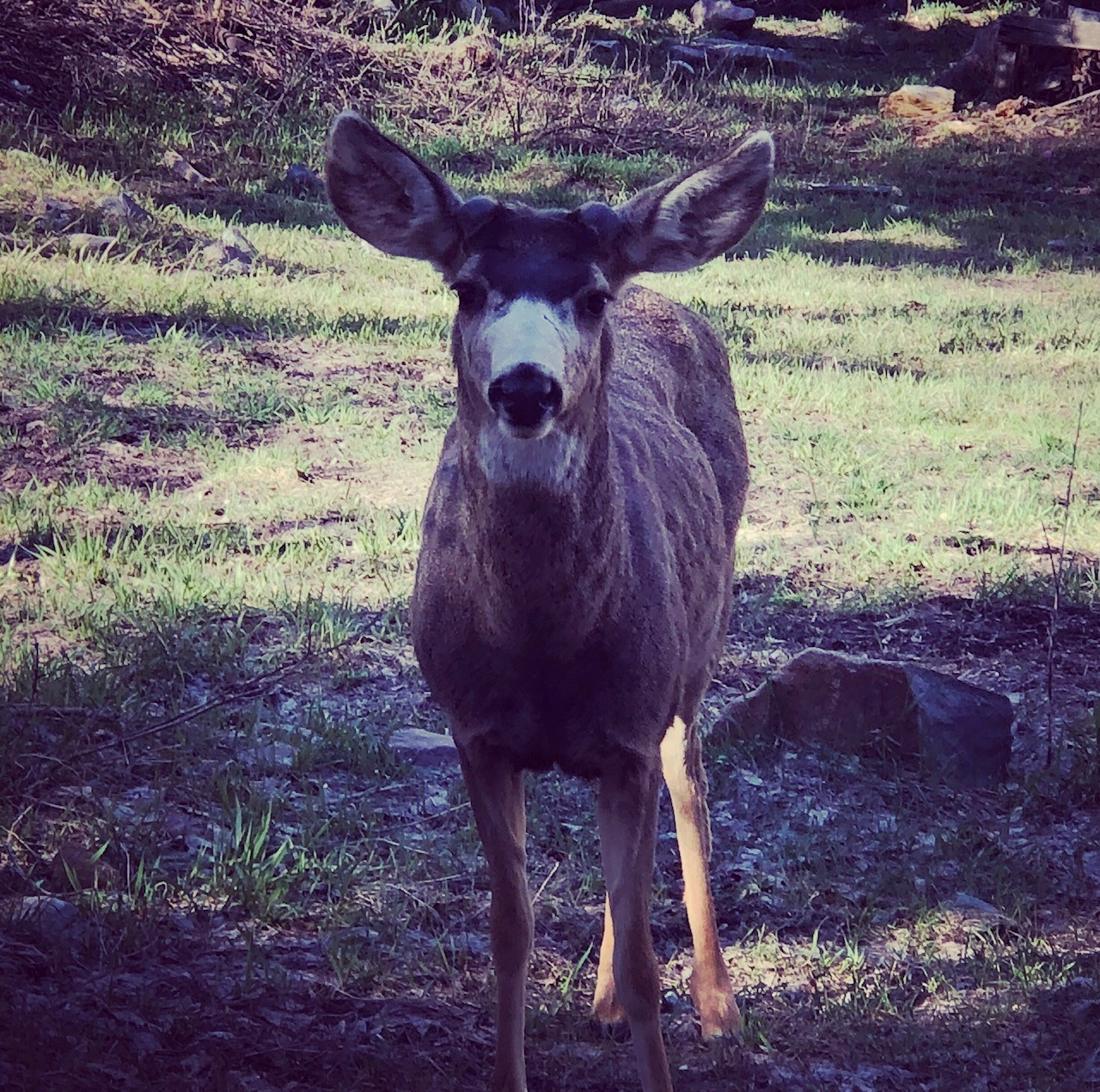
Ouray has lots of docile (ish) deer

'Secret Garden' in Spring
Summer Veggie Garden


Thursday, October 17, 2019

Buzzing Research on Pollinator Conservation


Posted by Lisa Mason, Arapahoe County Extension

Part of the land grant university mission is to bring the latest scientific research to our community. I want to share a recent experience I had on the front lines of research.

In July, I had the privilege of participating in the International Pollinator Conference in Davis, California. Researchers and land managers from all over the world gathered together to discuss the challenges facing pollinators. I was amazed to hear about the great work being done in the United Kingdom, Germany, Thailand, Australia, Canada, Japan, Brazil, Sweden, and France. While the feeling at times was hopeful and inspiring, I think all attendees recognize that more work still needs to be done to protect pollinators, which are critical to the planet’s ecosystems and human survival.
Here are some of the top areas of research and a few of my take-home messages from the conference:
A sweat bee, Halictus sp. on a cosmos flower. Photo: Lisa Mason

·      Plant diversity is critical for pollinators. Each plant has its own nutritional profile and research is still being done on what chemical compounds benefit bees.
·      There are geographical gaps in bee research that need to be addressed. For example, bee diversity tends to be higher in areas where universities or research stations have sampled and studied the local areas. We are lucky in Colorado to have two universities that are conducting significant research here.
·      Climate change will affect different bees in different ways. Possible effects may include shifts in their natural range, shifts in phenology (meaning changes in flower bloom times that could affect the bees), reduction in nectar and pollen yields, increases in disease outbreaks, increases in heat stress and other physiological effects, etc. Some bee species may be able to adapt better than others.
·      Pesticides is a complex issue and continues to be a major theme in research. Understanding the lethal and sublethal effects of pesticides on bees and the routes of pesticide exposure will help inform best management practices in pesticide use and how to protect bees.
·      Understanding how native bees and honey bees interact and coexist continues to be a new area of research. The honey bee (Apis mellifera) is a non-native species but provides important pollination services for plants, crops, etc. Honey bees also provide honey and wax. Native bees are also critical for our ecosystems and provide different pollination services, some very specialized with certain plants. For example, bumble bees pollinate tomatoes and peppers, which other bees cannot pollinate.
·      Diseases and parasites were another major research area of the conference. We need to understand how diseases and parasites are transmitted from bee-to-bee so we can maintain healthier honey bee hives. For example, flowers can be a place to where bee diseases can transfer. Also, we need to understand if and how diseases can transfer to different bee species.
·      Citizen science continues to be a growing area of research in many fields of study, pollinators included. While many scientists continue to be apprehensive about the data accuracy, more and more research utilizes citizen scientists.
A painted lady butterfly, Vanessa cardui on a sunflower. Photo: Lisa Mason
How Can You Help Pollinators?

Even though there is much more research to understand pollinators, we can take actions now to help our local pollinators. The best things you can do include:
·      Plant more flowers that attract pollinators
·      Wildscape your yard for wildlife and pollinator habitat
·      Cut your turf grass less often or remove areas of turf that do not serve a purpose
·      Leave insect nest and hibernation places alone
·      Think carefully and research how and when to use pesticides
·      Share your science-based knowledge with your family, friends, neighbors, and community
·      Participate in local classes and events to continue learning
·      Learn about the benefits of adding native plants to your landscape
A green metallic sweat bee, Agapostemon sp. climbing out of a Rocky Mountain penstemon flower. Photo: Lisa Mason
CSU Extension has factsheets and a field guide available with information on how to build habitat and attract pollinators to your landscape. Publications include:

I encourage you to keep learning! Protecting pollinators will take efforts from everyone—researchers, land managers, governments, and citizens. While there is so much to learn, we can still use our current knowledge to make a difference.