CO-Horts

CO-Horts Blog

Wednesday, February 9, 2022

When is it no longer just a drought?


By Irene Shonle, CSU Extension El Paso County


Despite a statewide snowpack of right at 100% (as of Feb 7, 2022), most of the state is in moderate to extreme drought, especially along the Front Range.  The Western Slope, thanks to recent snows, has improved to “just” moderate drought or even abnormally dry.This is because drought conditions only improve when precipitation falls on the area in question - the mountain snowpacks will help our reservoirs and rivers, but if snow doesn't fall in your yard or open space, it will remain in drought no matter how good the mountain snowpack is (if you don't live in the mountains).

Colorado drought monitor, Feb 3 2022


Temperatures are warming, too. The statewide average temperature for this past December was 7.1°F above the monthly average -- the 2nd warmest December on record. Colorado observed its warmest Jul-Dec on record in 2021, far beating out the previous record from 1933. It also ranked as 39th driest. This year, Denver had its least snowy September through November period on record and latest first snow on record since records began in 1882.

We are used to seeing drought in Colorado, even multiyear drought. It has come and gone over the years, but good times have always followed the bad times.
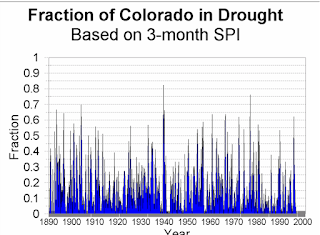


 However, there is reason to believe that things may be changing, and that the current drought may not be a situation where we can just grit our teeth and endure for a time. Some scientists are suggesting that we abandon using the word ‘drought’ altogether, because that implies that a year or two of good precipitation will put things to rights again.  Jonathan Overpeck and Brad Udall instead say that “anthropogenic climate change calls this assumption (that drought will end) into question because we now know with high confidence that continued emissions of greenhouse gases into the atmosphere guarantee continued warming and that this continued warming makes more widespread, prolonged, and severe dry spells and drought almost a sure bet.” (https://www.pnas.org/content/117/22/11856).

The reason that precipitation won’t necessarily fix things is because even if the rains come, "the hotter temperatures we are beginning to experience are a potent driver of greater aridity: hotter climate extremes; drier soil conditions; more severe drought; and the impacts of hydrologic stress on rivers, forests, agriculture, and other systems". (https://www.pnas.org/content/117/22/11856).  Warmer air holds more moisture and can basically suck more water out of soils and plants due to evaporation and evapotranspiration. So, even if climate change brings increased precipitation (which is still very unclear in the models), we will be seeing widespread aridification across the West, and even creeping eastward. Some scientists are beginning to compare the trajectory we are on to the medieval megadrought (https://www.science.org/doi/10.1126/science.aaz9600).  Edit to add that 2 days after I published this post, an article in Nature Climate Change showed that the current drought is the driest period since the 1500s! (https://www.nature.com/articles/s41558-022-01290-z)

 It does seem as though we have already hit somewhat of a tipping point with our forests. Just a decade ago, you could count on clear mountain skies for summer hikes, but now, the huge fires across the west create unhealthy air conditions and poor air quality on a yearly basis. Smoke monitoring apps are now a thing. The fire season is no longer a season, but year round – as illustrated by the unprecedented wildfire in Boulder County on December 30, 2021, shaking many. Overall, we are seeing an uptick in large wildfires and wildfire severity, which studies have tied to human-caused climate change. Sixteen of the top 20 largest wildfires on record have occurred since 2008, according to the Colorado Division of Fire Prevention and Control.  Unfortunately, there is no relief in sight – wildfires are only expected to increase in frequency and in scope (https://csfs.colostate.edu/colorados-forests-changing-climate/).

 We will also see more challenges to agriculture, as producers may experience less water for irrigation either from overtapped aquifers or overappropriated rivers with less water, and unirrigated rangeland may become less productive.

I am not intending this to be a doom and gloom post, although I know the message is grim, and one no one really wants to hear.  I am really intending it to be food for thought for gardeners.  Consider the plants you have in your yard. Are they resilient to drought? What if there are increasing water restrictions?  What if prices for water go up? If you are going to do any yard renovation this year or in the near future, you would be wise to take the long view, and plant plants that are both waterwise and heat tolerant, so your yard can stay attractive, even in a changing climate. Consider planting drought-tolerant native plants – and consider “shopping” from the palette of plants just to the south of your location – or at a slightly lower elevation. Front Range gardeners could look at these two publications: SE CO Native plants: https://extension.colostate.edu/docs/pubs/native/SESm.pdf and Western CO native plants: https://extension.colostate.edu/docs/pubs/native/WestSlopeSm.pdf.

Here are more fact sheets on native trees, shrubs, and perennials you could plant (avoid the ones that require higher water):

https://extension.colostate.edu/topic-areas/yard-garden/native-trees-for-colorado-landscapes-7-421/

https://extension.colostate.edu/topic-areas/yard-garden/native-shrubs-for-colorado-landscapes-7-422/

https://extension.colostate.edu/topic-areas/yard-garden/native-herbaceous-perennials-for-colorado-landscapes-7-242/


 And please, don’t give up altogether and replace your yard with gravel – this just leads to increasing heat and aridification!

Here are some other resources to make your garden more resilient to drought: 
https://extension.colostate.edu/disaster-web-sites/landscape-management-during-drought-and-with-limited-water-availability-in-colorado/

https://extension.colostate.edu/disaster-web-sites/woody-plant-management-during-drought-and-with-limited-water-availability-in-colorado/

https://extension.colostate.edu/topic-areas/yard-garden/xeriscaping-retrofit-your-yard-7-234/

https://extension.colostate.edu/disaster-web-sites/flower-management-during-drought-and-with-limited-water-availability-in-colorado/

 https://extension.colostate.edu/disaster-web-sites/home-vegetable-garden-management-during-a-drought-in-colorado/


Monday, February 7, 2022

Think Tomatoes!

Posted by: Alison O'Connor, Larimer County Extension

It’s official. Punxsutawney Phil saw his shadow and there’s more winter ahead. For those who’ve lived in Colorado for a few years, you know our snowiest months are usually February and March, but gardeners can use these days to dream of spring. Since 2019, the Larimer County Master Gardeners, under the supervision of fellow CMG Jon Weiss, have conducted tomato trials, trying to determine some of the most fruitful (and tasty) tomatoes for northern Colorado.

Jon Weiss, Master Gardener 'Celebrity', and mastermind of the tomato trials

Jon and his cadre of volunteer cohorts designed and managed two trials: the first was an in-ground study conducted in 2019 and 2021 at the ARDEC-South Experiment Station in Fort Collins; the other was a container study at the CSU Annual Trial Gardens on Remington Street.

Field Trials

With a pause in field research in 2020 due to Covid, this study started in 2019 and was replicated in 2021. Jon selected 12 tomato varieties, both hybrid and open-pollinated selections. There were three replications with five plants per replication of each variety. In working with the elements and challenges of an outdoor field study, the crops experienced all types of weather (including hail) and varying lengths of growing seasons. In addition to collecting data on when the tomatoes started maturing, average size of fruit and total yield was documented. New Girl was the earliest maturing variety and had the highest fruit yield for 2019 and 2021. While fruit size for this variety is small, those looking for high yields and large fruit may want to consider Carbon and/or Big Beef.

But how do they taste? Jon conducted taste-test studies with all 12 of the tomato varieties (thank you taste-testers!) and New Girl had an average flavor of 3.3 (out of 5) for the average of the two growing seasons.

All field-grown tomatoes were blind taste-tested. Participants tasted all 12 varieties and rated them for several flavor profiles. 

Master Gardener Anne Wuerslin jots down notes during the taste test.

Container Trials

In thinking about gardeners with smaller spaces, Jon also selected tomatoes to grow in containers. Tomatoes were not staked and left to grow in their natural habit, which was variable among the three varieties. Cherry Falls was an early maturing variety with a compact, somewhat open growth habit. Totem had a dense growth habit and was the latest maturing of the three. Patio Choice Yellow was as early as Cherry Falls, with larger fruit, and higher yield.

So if you like yellow tomatoes with big yield (an average of eight pounds of fruit per plant), Patio Choice Yellow might be a good one to add to your garden this summer.

It should be noted that all harvested fruit was donated to the Larimer County Food Bank, with several hundred pounds donated in 2021. For more results, check out the summaries here.

Going forward, Jon is planning to move on from tomatoes and will be conducting a sweet pepper trial in 2022, including bell peppers and “lunch box” types. Our thanks and appreciation to the staff at ARDEC-South and the CSU Annual Trials Gardens: Drs. Mark Uchanski and Jim Klett, Jane Davey, and David Staats for their support of these trials.

Monday, January 17, 2022

Coneflowers


Coneflowers

By CSU Horticulture Agent, Linda Langelo

                                        Photo credit: Fossil Creek Tree Farm, Cheyenne Spirit


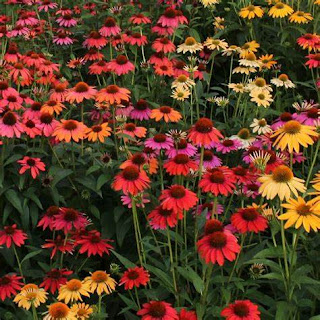
New research is being done all the time with cultivated varieties. One such garden that does trials on coneflowers and many other perennials is Mt Cuba Center. This garden is a botanical garden that studies native plants and plant conservation.

Coneflowers are native to central and eastern United States. Coneflower or Echinacea is a clump-forming herbaceous perennial. Echinacea purpurea produces roots that are more fibrous while other species produce roots that are taproots. This allows them to grow in areas that experience drought and in areas that have heavy competition from other plant's roots. All coneflowers require well-drained soils. The fibrous root system of Echinacea purpurea makes it an ideal plant for many garden sites that have a perennial mix.

Some of the nine species Mt Cuba Center studied grow here in Colorado. The observation of these plants was over a two-year period. Both the performance and visitation of various pollinators was recorded. No fungicides were used during the two-year period. Supplemental water was provided in the first season only to allow the plant's roots to become established.

Of all the Echinacea purpurea species trialed at Mt Cuba Center, the cultivated varieties that performed the best were Echinacea purpurea 'Pica Bella' and Echinacea purpurea 'Fragrant Angel'. Why were they chosen? Their overall habits were sturdy, semi-compact that resisted flopping. There was no need of staking.

Echinacea purpurea 'Pica Bella' is a cultivated variety that most resembles the straight species, Echinacea purpurea in its floral display. This variety also ranked ver high in the number and types of pollinators that were found on the prominent orange cones during the late June to mid-July bloom time. Among the types of pollinators were butterflies, bees, and wasps. The plant will reach a height of only two feet compared to the four feet of straight species. 

                                     Photo credit: Missouri Botanic Garden - Pica Bella


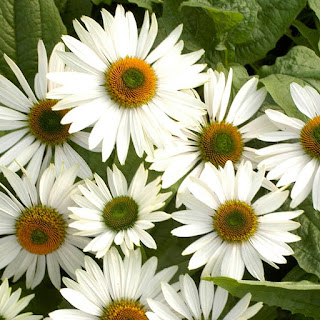
Echinacea purpurea 'Fragrant Angel' is the highest rated of all the cultivated varieties of a white flowering Echinacea. The blossoms are around four and a half inches wide that flower from July into August. This plant is also ranked very high for attracting pollinators such as bees, wasps, and butterflies.

                                            Photo credit: White Flower Farm - Fragrant Angel


Overall, Echinacea are short-lived plants unless they are started from seed. They also have an incurable systemic disease called Aster yellows. It is a pathogen called a phytoplasma, a microorganism that is spread from plant to plant by leafhopper insects. The only way to reduce the spread of the disease is to get rid of the infected plants. 

The other issue with Echinacea is eriophyid mites which can cause unusal growth in the floral cones. In this case the removal of the floral cone can help to control the mites. The symptoms for eriophyid mites are localized infection with the lack of green leafy growth originating from the flowers.

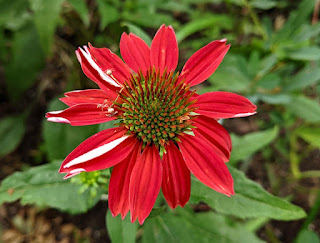
In Sedgwick County Extension, we started a trial garden of Echinacea in 2021. We will see which ones overwintered and how prolific and disease free they are in 2022. The cultivated varieties we chose were based on local availability in the nurseries. These were the following Echinacea: 

  • 'Cheyenne Spirit (Echinacea hybrida)
  • 'Prairie Giant'
  • 'Kim's Knee High'
  • 'Solar Flare'
    
Photo credit: Missouri Botanic Garden - Prairie Giant


We wished we could have purchased Echinacea 'TNECHKR' and Echinacea paradoxa. According to Mt Cuba Center they were very prolific with flowers and had the greatest garden adaptablility. Echinacea paradoxa, a yellow flowering coneflower also produced vigorous, disease-free plants. Who doesn't want that for their gardens.

                                 Photo credit: garden.virtualindustry.org-Paradoxa


Photo credit: reddit - Solar Flare


Monday, January 10, 2022

“Top Performer” Perennials” from the 2021 Colorado State University Flower Trials

Posted by: Dr. Jim Klett, Department of Horticulture and Landscape Architecture, Colorado State University

 In 2021, Colorado State University continued its three year herbaceous perennial trial and chose eight perennials as the “Top Performers” from 126 that were planted in 2019. To become a CSU ‘Top Performer’ it has to have great survival percentages after two winters and three growing seasons and scored excellent throughout the three growing seasons. A sub-committee if the CSU Annual Trial Garden Advisory Committee evaluated twelve of the top performing perennials in November of 2021 by examining photos of these plants taken every two weeks during the three year growing seasons. A majority favorable vote from the committee is needed for a perennial to become a CSU ‘Top Performer’.

 Therefore perennials that get this description have proven to be adaptable for the Front Range of Colorado. The following eight plants have been awarded this category for 2021 after three years of extensive trialing.

 A complete report on the perennials in the trial can be viewed at www.flowertrials.colostate.edu under the Perennial Trials menu tab.


Achillea ‘Firefly Sunshine’

(Achillea x hybrida) from Walters Gardens, Inc. /Proven Winners®

Vibrant yellow flowers provided a lot of color and with a long-lasting bloom. Dark green foliage also made the flower color stand out. It had superior qualities with a more compact growth habit that did not lodge despite overhead watering and had excellent winter survival. It was also noted that it did not spread around the garden which is a definite plus.


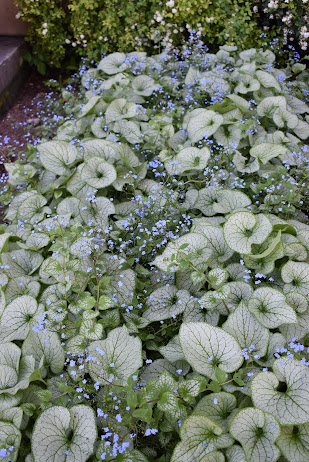
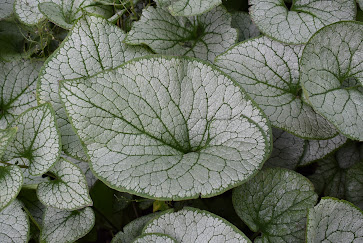
Brunnera ALCHEMY™ Silver

(Brunnera macrophylla) from Terra Nova Nurseries

This great plant can brighten up a shady area with a constant display of beautiful silver foliage. Plants are vigorous and are covered by a delicate cloud of light blue flowers from about May into June. Leaves are relatively thick and stands up well with strong stems to create a very attractive and uniform growth habit. 


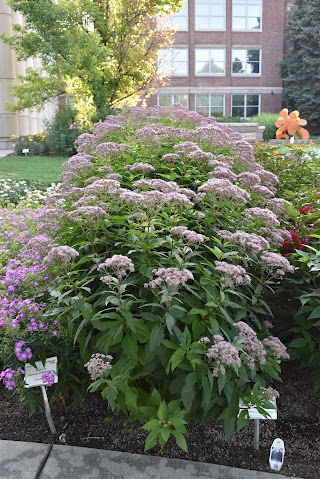
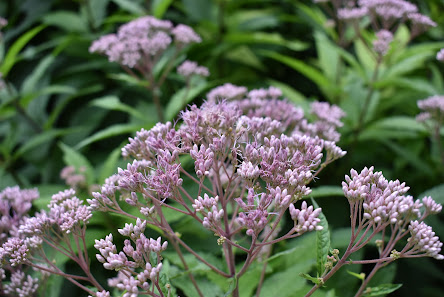
Eupatorium Euphoria™ Ruby

(Eupatorium purpureum 'FLOREUPRE1’PP31,668) from Darwin Perennials®

Shorter and more compact than the species, this is a nice medium size plant for the modern landscape. This was a unanimous choice for the “Top Performer” award with dependable light ruby/lilac-colored flowers that combines well with dark leaves and stems. It was noted to be an excellent pollinator plant.


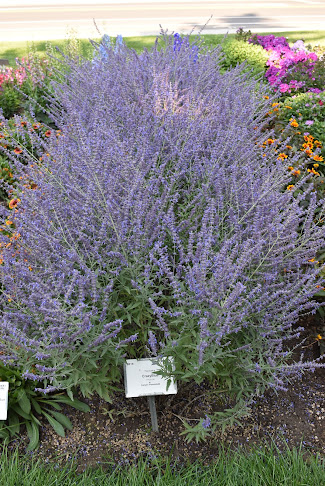
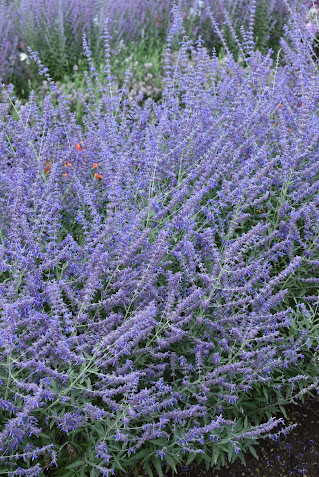
Perovskia CrazyBlue

(Perovskia atriplicifolia 'CrazyBlue' PP #25,639) from Darwin Perennials®

Plants were noted to have superior flowering and growth habit. The flowers have a long lasting bloom period and the violet-blue flowers last longer than other Perovskia. Uniform plants had interlacing branching and sturdy stems that kept it from lodging and maintained an attractive appearance all season. It is a mid-sized plant about 3-4 feet in height.


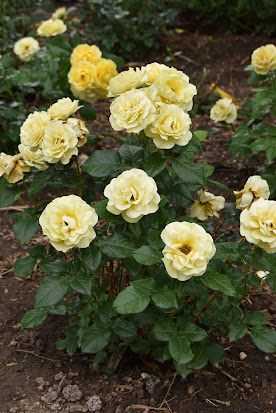
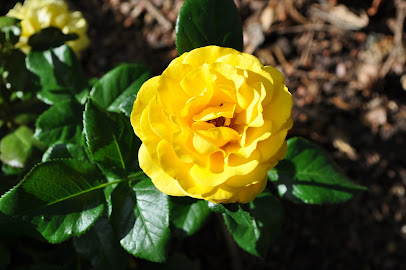
Rosa Sunbeam Veranda®

(Rosa x ‘ Korfloci52’ PP23,314) from Star® Roses and Plants

Glossy, dark green foliage made the bright yellow flower color even more stunning. Blooming started in June and lasted well into September. The compact size makes this a great choice for smaller gardens spaces. Plants had excellent winter hardiness.


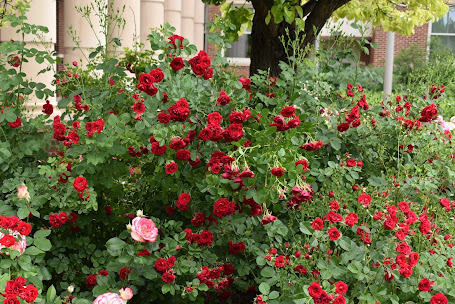
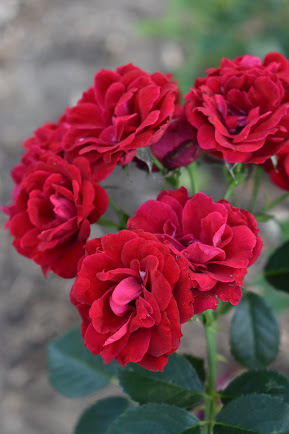
Rosa Cherry Frost™

(Rosa x ‘Overedclimb’PP31,286) from Star® Roses and Plants

 Abundant bright red flowers and good disease resistance make this a good climbing rose for Colorado. Clusters of small flowers kept repeating throughout the growing season in flushes for long lasting color. It had excellent winter survival.


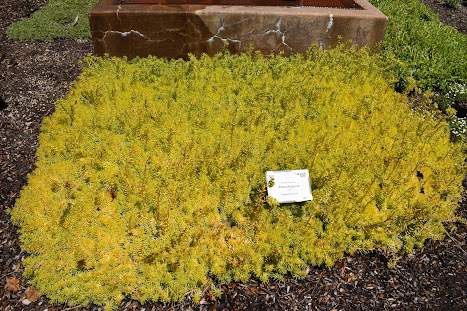
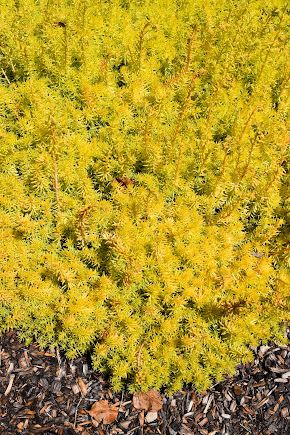
Sedum Prima Angelina

(Sedum rupestre) from Darwin Perennials®

Great neon yellow foliage makes this an excellent foliage plant in the summer and it also is quite showy in the winter with a nice shade of red. The spreading growth habit is very uniform and a great choice with rock gardens or combined with other Sedums for additional color contrast. Prima Angelina is superior to the straight Angelina with better branching and growth habit while also being less brittle.


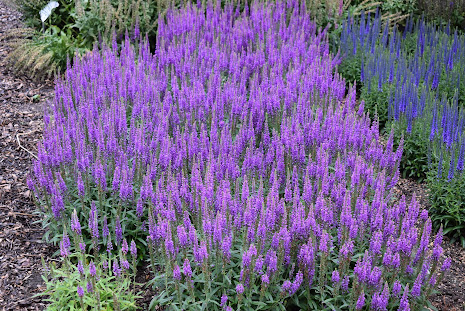
Veronica Moody Blues® Mauve Improved

(Veronica spicata) from Darwin Perennials®

Impressive vibrant, mauve colored blooms covered the plants at peak and repeated later in the season. Well branched plants were compact and very uniform with 100% winter survival. It has the added bonus of being a good bloomer the first year in the garden.


Tuesday, January 4, 2022

Evergreen Trees for Dry Sites

by Amy Lentz, CSU Extension Horticulture Agent- Weld County


Even with recent snowfalls, many of us are still in some sort of drought in Colorado. It’s been unseasonably dry over the past fall and winter so far and our trees could suffer if they don't get moisture during these dry winter months. We've talked before about the importance of winter watering, but I also wanted to take a moment to cover just a few evergreen trees that can better withstand drier conditions, whether you create those conditions through xeriscaping or you just want to choose the right evergreen tree for your dry location.


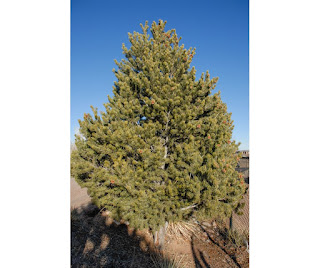
Pinyon pine (Pinus edulis)

Pinyon pine tree. Photo by Colorado Springs Utilities Xeriscaping.

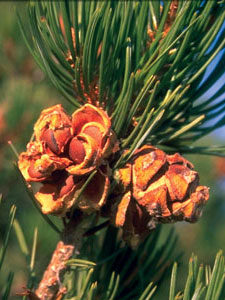
This is a great option for those living along the Front Range and lower elevations and if you are dealing with a steep slope where water runs off frequently. However, they don’t like to be wet, so placing a Pinyon pine in the middle of your lawn where it gets watered three times a week is not ideal and the tree will likely suffer. It’s a smaller evergreen tree with two needles per bundle and attractive smaller cones. These cones are where we get pine nuts!

Pinyon pine cones. Photo by Colorado State Forest Service - Colorado State University.


Bristlecone pine (Pinus aristata)


Bristlecone pine tree. Photo by Oregon State University.


Bristlecone pine is a unique tree with a smaller mature height of around 20 feet tall with short, dark green needles that have tiny white resin dots on them (and often mistaken for bugs). Once you see past the dots, you will notice that this tree has a nice form and holds its needles for several years. This tree also grows very slowly, so you can even use it on your front porch in large containers until you are ready to plant it in the ground.


Bristlecone pine needles. Photo by Oregon State University.


Rocky Mountain juniper (Juniperus scopulorum)


Rocky Mountain Juniper Trees. Photos by Oregon State University.

This is one tough tree! Rocky Mountain junipers are often utilized in the worst conditions, like a windbreak on the Northern plains where the wind never stops. They are pyramidal in shape and small in mature height, reaching around 15 feet, depending on what type you choose. The overall color of these trees can range from green to blue, again depending on the cultivar. Look to your local nurseries to find specific cultivars such as 'Wichita Blue', 'Woodward' or 'Cologreen'.

The list of good evergreen trees for dry sites doesn’t stop with this blog, there are plenty from which you can choose. For a more complete list of all evergreen trees for Colorado landscapes (including those or more moist sites), check out our CSU Fact Sheet #7.403 - Evergreen Trees.


Thursday, December 30, 2021

Colorado Golf is a BIG DEAL

 Posted by: Alison O'Connor, Larimer County Extension

Yes, I'm back, blogging again about golf. And maybe this is the post where you'll find appreciation for this sport that provides so much entertainment and so much frustration (often in the same round! Sometimes on the same hole!), even though you may not play. The Colorado Golf Coalition released its 2021 Colorado Golf Economic and Environmental Impact Report, a report that hadn't been conducted in 19 years. Based on data from 2019, the 76 page report is chock-full of golf facts, impacts, and information about how the industry benefits Colorado.

A gorgeous view at the Boulder County Club (photo by Alison O'Connor)
Did you know that of the approximately 260 golf courses in Colorado, 75% of them are publicly accessible? That means you could play a round at the Broadmoor (treat yo'self!), soak up the scenery at Mariana Butte in Loveland, or play a round with a caddie at CommonGround. Colorado also has some incredible private courses that would knock your ankle socks off. Like Ballyneal in Holyoke, which is ranked #44 on Golf Digest's list of top 100 courses in America. Located in a tiny town of 2,400 people, Ballyneal is links golf at its finest.

And while golf courses are often chastised for being water hogs, all the courses in Colorado account for less than 1% of the total water used in the state. And superintendents are finding ways to water more efficiently. According to the report, "To help put things into perspective, if Colorado’s total annual water usage equaled your typical 16.9-ounce bottled drink, the amount used by Colorado golf would be less than one teaspoonful. And more than a quarter of that is reclaimed water." The vast majority of all superintendents (97%) are also using more than three water-saving techniques and have extensive water management plans. 

Golf courses also promote wildlife, pollinators, and provide so many environmental benefits (abating the heat island effect, mitigating runoff, sequestering carbon). Of the 33,061 total acreage of golf courses, about one-third is designated wetlands, water areas, and native rough. Several golf courses in Colorado are also Audubon Cooperative Sanctuary Certified, taking extra steps to protect land and environment through rigorous management plans.

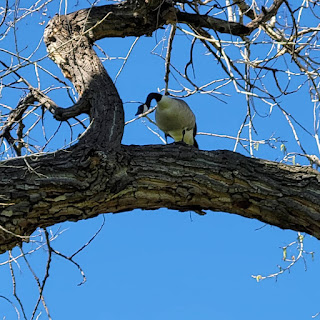
Ok, maybe not the most exciting wildlife, but how often do you see a Canada goose perched in a tree? (photo by Alison O'Connor)
If you were one of the many who started playing (or reignited a passion for) golf during Covid, you weren't alone. Golf is essentially the perfect social distancing activity. Walking 18 holes can provide you with over 10,000 steps (more if you stray from the fairway). The number of golf rounds in Colorado increased approximately 20% in the last couple of years. (For those who play frequently, you quickly found out how hard it was to book a round on a weekend at your local muni!) Colorado golf is a $1.3 billion (yes, with a B!) industry and accounts for nearly 20,000 jobs. 

So if you're not one of the 487,300 golfers in Colorado, maybe you could put it on your list of things to try in 2022? I'll tee it up with you anytime! Full disclosure, I'm a dewsweeper (morning golfer)!

Early morning golf at Collindale Golf Course in Fort Collins (photo by Alison O'Connor)

Monday, December 27, 2021

Harison's Yellow Rose

Posted by: Linda Langelo, Golden Plains Area Extension

Driving around our small rural towns you will notice a yellow shrub rose. This yellow shrub rose has many names such as Pioneer Rose, Oregon Trail Rose, the Yellow Rose of Texas, Yellow Hogg's Rose, and Yellow Sweet Brier. Some of the locals here have called it Traveler's Rose or Settler's rose who have had the rose on their farm or homestead through the decades. And that's just a few of its names, but a rose by any other name would smell as sweet, right? Its real name is Harison’s Yellow rose.
Harison's Yellow rose
Harison's Yellow rose (photo by Linda Langelo)
This was the first rose of yellow color in this country. This rose has traveled the country from east to west and back again. In the 1800s Richard and George Harison were amateur rosarians and kept a rose garden at their home in Manhattan on their estate Mount Sinai in a semirural area. Today Eighth and Ninth Avenue between 30th and 31st streets are now what was once their garden. The Harison brothers kept Persian Yellow (Rosa foetida) and Scotch Briar (Rosa spinosissima) in their garden. The parentage is still uncertain, but most agree that this must have been a chance hybridization between the Persian Yellow and Scotch Briar growing in Harison's garden.

After being discovered in Manhattan it was to be given to several nurserymen. Two of the nurserymen were Thomas Hogg and Williams Nursery. Some accounts say it was marketed in 1830 while others say it went on sale in 1835 at the Prince Nursery in Fleming, New York called 'Harison's Yellow'.

As the pioneers came west some of the pioneer women sewed the roots deep into their hems of their linsey-woolsey skirts. As they walked through the prairie grasses, the dew would moisten their skirts and keep the roots alive. More specifically, it came to Texas from the Prince Nursery by way of Emily D. West, a freeborn African American who contracted with the entrepreneur James Morgan to work as a servant in the town of New Washington. When the revolution for Texan independence from Mexico engulfed New Washington, Emily West became a hero. On April 21, 1836, at Santa Ana Camp Emily distracted the revolutionary leader Sam Houston long enough to give her countrymen time to stage a surprise attack. After 1837, she went back to New York and was never heard from again except in song and lyrics from a folk tune titled, “The Yellow Rose of Texas”. Emily, the maid of Morgan’s Point was of mixed race, a mulatto. With her light complexion she was known colloquially as “yellow”. She was memorialized as “the sweetest little rosebud, that Texas ever knew.”

Texans of the Knights of the Yellow Rose use a yellow rose to pin to their lapels when they convene every April on the site of Santa Ana camp and pay tribute to Emily West. The Dallas Area Historical Rose Society’s newsletter, The Yellow Rose, annually features a yellow rose on the cover. The Harison’s Yellow rose has been used among other yellow roses.
Harison's Yellow rose in the author's landscape
Harison's Yellow rose in my landscape (photo by Linda Langelo)
Today this rose is found in many mountain and prairie communities across Colorado growing best in zone 3. This rose grows in cool, dry weather. It has sharp thorns and forms suckers on its own roots. The best part is that it is hardy. It tolerates full sun to part shade, drought, poor soils, and pests. It is said it takes more than one attempt to get this established. I have not found that to be so. My neighbor gave me permission to take one root and shoot from my neighbor's yard, and it is 5 feet tall and 5 feet wide three years later. Truly this plant thrives on neglect.