CO-Horts

CO-Horts Blog

Showing posts with label Amy Lentz. Show all posts

Tuesday, October 11, 2022

Creative Containers for Fall


By: Amy Lentz - Home Horticulture Educator - CSU Extension, Boulder County

It’s official, fall is finally here and cooler temperatures are ahead! As your summer annuals are beginning to look tired or may have stopped blooming altogether, now is the perfect time to revamp your flower containers.

Chrysanthemums, or more commonly just called mums, are probably the most common plant we think this time of year. There are two main types of mums, those sold inside of a florist or grocery that are not cold-tolerant (not hardy) and those that are sold seasonally outdoors which are cold-tolerant to our area (hardy mums). You will want to choose the ‘hardy’ type so that they can withstand the lower temperatures and can even handle a light frost. Choose plants with tight, unopened buds for longevity of the blooms. If we have another mild winter, you can plant your mums in the ground at the end of fall and there’s a slight chance it will come back again next year if they are the hardy type. Mums come in a wide range of colors including orange, red, yellow, purple, white and even burgundy so you can choose your favorite and mix them with other seasonal plants to create a festive display.

Chrysanthemums make a nice addition to your fall display!

When creating your fall containers, you can follow the classic “filler, spiller, thriller” method to get both height and fullness to your arrangement.

Save money by reusing annuals from your summer containers such as snapdragons, dusty miller, and marigolds if they are still holding up well. Other fall annuals to add to your containers include fall aster, ornamental cabbage, pansies, violas and even Swiss chard or kale (which are both tasty, too!). You might also find good deals on perennials this time of year which can also be added to your containers to add interest. Yarrow, butterfly bush, coneflower, black-eyed susan, and blanket flowers all have neat seed heads that can be interesting even after their petals are gone. If you want to get really creative, you can work in some succulents or small ornamental grasses to make it more unique. Tie it all together by displaying with pumpkins, gourds, and attractive branches from red-twig dogwoods, hawthorns or evergreens.

Once you have gathered your plants and are ready to put the container together, follow these general guidelines to help your containers last until the end of the season:

1.       You can use a number of different container types including plastic, glazed ceramic, terra cotta, wood crates, etc. Each will differ in their watering requirements and all should have at least one drainage hole at the bottom.

2.       Refresh the potting media by loosening it, adding 50% new mix and removing any old plant roots from the container.

3.       Be sure to break up any rootbound plants by gently teasing/pulling the root system apart with your fingers before planting. Even though it’s cooler, the plants will still grow but you can use a bit tighter spacing since the season is short.

4.       Add slow-release fertilizer at planting and water the container thoroughly once all plants are in place.

5.       If you are using perennials and want to overwinter them, you can plant them in the ground by late October and mulch well. Or you can simply bring the containers into an unheated garage or cool, dark space. Remember to water occasionally throughout the winter.


Example of a fall container using ‘Mesa Yellow’ blanket flower, burgundy and pink mums, orange marigolds, ornamental kale and a vining cold-hardy succulent. 

Containers are a fun and easy way to decorate for fall and make the most out of your space for the full growing season! For more information on fall gardening, visit extension.colostate.edu or contact your local CSU Extension Office. 

Friday, July 8, 2022

‘Grow & Give’ from your garden this summer

 By Amy Lentz, Colorado State University Extension - Boulder County

Are you growing a garden in your backyard or have a few containers of tomatoes on your patio? Do you know what you will do with any extra veggies you might grow this summer? Colorado State University Extension has a solution for your overabundant garden and can help you make the most out of your harvest – it’s called Grow & Give! Through the Grow & Give program, you can donate those extra zucchinis, tomatoes and beans to a local food pantry or a neighbor in need and make a positive impact on others.

Master Gardeners work in the ‘Food Pantry Garden’ at the Boulder County Fairgrounds Community Garden which grows solely for donations through the Grow & Give program. Photo: Amy Lentz

The Grow & Give program was created in the spring of 2020 as ‘a modern victory garden project’ to help Coloradans learn to grow food, share their harvest, and keep it in their local communities. Back then, you might remember people flocking to garden centers across the state to empty the shelves and buy up all the seed packets to start their new hobby of backyard gardening. But growing food isn’t necessarily a cake walk and CSU Extension saw the need to fill in the gaps. They saw a need to teach people how to garden from starting with seeds to harvesting and storage. In addition, Grow & Give collected information from local donations centers across the state and created an interactive map to help participants get their extra produce to donations centers.

In its pilot year, the goal of the program was to provide an outlet for learning about home food gardening while also making a difference in local communities during the global pandemic. In 2020, Grow & Give registered over 500 home and community gardens across the state and saw over 1,800 donations for a total of 47,000+ pounds of nutritious, fresh home-grown produce. But it didn’t stop as the pandemic has slowed…in fact, it’s grown! Last year, Grow & Give registered an additional 200 gardens and donations topped 55,000 pounds. This summer is no different as we continue to deal with food insecurity in our communities due to supply chain disruptions, inflation, and inequities in community services. Grow & Give continues to be there to help.

An example of one of my Grow & Give donations from 2021.
Photo: Amy Lentz

One of the unique aspects of the Grow & Give program is that it not only links you to produce donation sites, but it also teaches you how to grow fruits and vegetables specifically in Colorado’s unique climate through resources on its website. From the plains to the mountains, there are a vast number of articles, fact sheets and videos from raised bed gardening to how to grow tomatoes in buckets. You can learn about kohlrabi, peppers, cabbage, lettuce, strawberries, herbs and practically any other fruit or vegetable you can grow in Colorado. Not sure how to get started or deal with pests? This is also covered in the resources on the Grow & Give website – growandgivecolorado.org.

An example of the resources offered on the Grow & Give website - vegetables in containers! 

Are you ready to join the collective effort across the state to help with food insecurity at a hyper local level through the Grow & Give program? It’s easy! All you have to do is register your backyard garden or community garden plot…then when you have extra produce, report your donation through the website. You’ll get a bi-weekly emailed newsletter with gardening tips and it’s totally free to join. To learn more, contact your county’s CSU Extension office or visit growandgivecolorado.org.

Wednesday, April 6, 2022

Spring Frosts and Fruit Tree Buds


By Amy Lentz, Boulder County CSU Extension

One can grow several different types of fruit trees in Colorado with some performing better than others depending on where and at what elevation you live. Along the Front Range, apples and cherries used to be staple industries prior to the 1950’s. A few rough weather years along with changing market forces moved the industries to other states, but these types of fruit trees along with pears and plums can be quite fruitful (pardon the pun) along the Front Range. Other types of fruit trees will struggle in this region to produce a crop, whereas if you are on the Western Slope, several different types of fruit trees will give you a dependable fruit crop due to the benefit of warmer winds…perfect for growing those coveted peaches.

A lot of the potential to get a decent harvest from a fruit tree in Colorado boils down to phenology. What’s that, you ask? Phenology is a branch of science dealing with the relationship between climate and periodic biological phenomena (definition from Merriam-Webster) such as bird migrations and, in this case, flowering patterns of plants. In more simple terms, this is often referred to as bloom stage or growth stage. Fruit trees will go through various bloom stages as they wake up each spring. For example, apple trees have nine stages of blooms from dormant to fruit set as seen in this pictorial chart from Cornell University:

Apple Phenology Chart - Cornell University

Back to why it’s not easy to have a productive fruit tree in Colorado…springtime frosts! It’s safe to say that you never know when that last spring frost will come in Colorado. And when it does, how low will it go? This is the key to whether or not you will get a decent fruit crop from year to year – it’s the combination of the low temperatures experienced in the spring and the stage of bloom at that time. For example, if your leaves and/or flowers are just starting to emerge (at the ‘green tip’ stage of development), your tree’s flower buds can take some pretty low temperatures and can easily survive a light frost. However, if you tree is in full bloom, you will lose many of those flowers if the temperatures dip a just a few degrees below freezing. The following chart shows the various bloom stages for tart and sweet cherry and peaches:

% Bloom Loss vs. Temperature vs. Bloom Stage - Utah State University

Notice for tart cherries that even at temperatures down to 15° F, only 10% of the blooms will be damaged or killed if they are just swollen and have not broken through yet. Conversely, with that same tree in full bloom, you will see around 90% of the blooms (and future fruit) damaged or killed if the temperature gets down to just 25° F. The relationship is similar for peaches and other fruit trees, as well. Simply put, the further along in bloom, the more susceptible the buds are to being killed by a spring frost.

Undamaged peach flower bud compared to damaged bud after exposure to very low temperatures (-15°F). Photos: Amy Lentz

Throw in crazy Colorado weather and it’s a fool’s bet! The timing of these stages will vary from year to year, making it hard to predict when your tree will be in full bloom. The following photos were taken in the Fort Collins area in 2017 for an apple tree. The dates of each stage of flower are marked above each picture taken of the same branch over time. Just one year later in 2018, the same tree was more than two weeks later in its timing for each bloom stage.


Pink Stage occurred on April 12, 2017. In 2018, the same stage occurred about 16 days later, showing up on April 28th. Photos: Amy Lentz

There are not many options to outsmart Mother Nature and prevent your fruit tree from receiving some damage during a spring frost and some trees will fare better than others. Apricots are usually the first to bloom, followed by peaches, cherries, plums, pears and apples will usually be last. Here is one tip if you haven’t yet planted your tree…place it on the north or northeast side of a structure or house; close enough that it’s shaded in the winter and far enough that it’s in full sun later in the summer when the sun is higher in the sky. This can provide more consistent winter temperatures, hopefully keeping the tree dormant for just a bit longer and delaying flower development. Even a week of two can make all the difference!


Tuesday, January 4, 2022

Evergreen Trees for Dry Sites

by Amy Lentz, CSU Extension Horticulture Agent- Weld County


Even with recent snowfalls, many of us are still in some sort of drought in Colorado. It’s been unseasonably dry over the past fall and winter so far and our trees could suffer if they don't get moisture during these dry winter months. We've talked before about the importance of winter watering, but I also wanted to take a moment to cover just a few evergreen trees that can better withstand drier conditions, whether you create those conditions through xeriscaping or you just want to choose the right evergreen tree for your dry location.


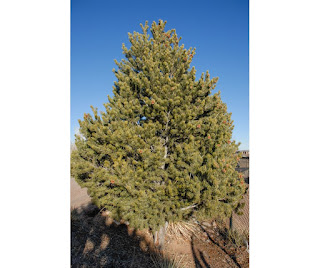
Pinyon pine (Pinus edulis)

Pinyon pine tree. Photo by Colorado Springs Utilities Xeriscaping.

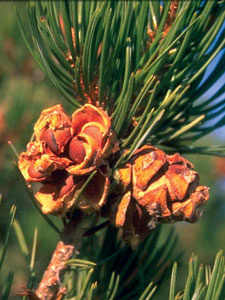
This is a great option for those living along the Front Range and lower elevations and if you are dealing with a steep slope where water runs off frequently. However, they don’t like to be wet, so placing a Pinyon pine in the middle of your lawn where it gets watered three times a week is not ideal and the tree will likely suffer. It’s a smaller evergreen tree with two needles per bundle and attractive smaller cones. These cones are where we get pine nuts!

Pinyon pine cones. Photo by Colorado State Forest Service - Colorado State University.


Bristlecone pine (Pinus aristata)


Bristlecone pine tree. Photo by Oregon State University.


Bristlecone pine is a unique tree with a smaller mature height of around 20 feet tall with short, dark green needles that have tiny white resin dots on them (and often mistaken for bugs). Once you see past the dots, you will notice that this tree has a nice form and holds its needles for several years. This tree also grows very slowly, so you can even use it on your front porch in large containers until you are ready to plant it in the ground.


Bristlecone pine needles. Photo by Oregon State University.


Rocky Mountain juniper (Juniperus scopulorum)


Rocky Mountain Juniper Trees. Photos by Oregon State University.

This is one tough tree! Rocky Mountain junipers are often utilized in the worst conditions, like a windbreak on the Northern plains where the wind never stops. They are pyramidal in shape and small in mature height, reaching around 15 feet, depending on what type you choose. The overall color of these trees can range from green to blue, again depending on the cultivar. Look to your local nurseries to find specific cultivars such as 'Wichita Blue', 'Woodward' or 'Cologreen'.

The list of good evergreen trees for dry sites doesn’t stop with this blog, there are plenty from which you can choose. For a more complete list of all evergreen trees for Colorado landscapes (including those or more moist sites), check out our CSU Fact Sheet #7.403 - Evergreen Trees.


Monday, October 25, 2021

CSU Extension is Here to Help!


by Amy Lentz, CSU Horticulture Extension Agent, Weld County


CSU Extension has a TON of resources to help you with a variety of needs when it comes to anything ‘horticulture’ and sometimes it can be a bit overwhelming to know where to look. I thought it would be a nice touch to our CO-Horts Blog series to have an instructional article on how to utilize these many resources that your CSU Extension experts have created for you! You can be sure that the information you get from CSU Extension is based on sound research and good practices, even if it's in a fun style like the current blog site you are visiting.

So, here you go…this is a summary of the different types of resources you might want to check out for more information on anything you can think of about gardening, landscaping, lawns, trees, flowers, vegetables, fruit and so much more! Links are embedded in each summary below in case you want to visit these sites and bookmark them for future use:


Resources from CSU’s Planttalk website are brief articles to introduce you to a wide range of gardening
topics. The subject material is focused on the beginner and offers other resources for further researching. The Planttalk website is also home to a full library of short gardening tutorial videos for those that prefer visual learning. Find these resources, along with a form to ask your question directly to Extension experts, on the Planttalk website.


CSU
 Fact Sheets are scientifically written and detailed articles that often include growing and treatment recommendations for everything from insect issues to recommended trees and shrub lists. Fact Sheets are peer reviewed and written by CSU Extension specialists, agents and other experts. These are great if you have an issue for which you need research-based advice. Fact Sheets can be found on the main CSU Extension Website under Publications.


CMG GardenNotes
 are very detailed chapter-style resources that are great for those seeking textbook style learning. These are utilized during training for Master Gardener volunteers and others at our annual Green School. You can find out more about Green School and access the complete set of CMG GardenNotes on the Colorado Master Gardener website.


Grow & Give is a program recently created by CSU Extension that teaches you how to grow fruits and vegetables and connects you with local donation centers to donate your excess bounty. Visit the vast resources on the Grow & Give website.


The CO-Horts Gardening and Colorado Mountain Gardener blog postings are more casual and fun resources where agents and Master Gardeners across Colorado write about random topics surrounding horticulture. You can subscribe to these blogs to receive the articles right into your email inbox or you can just read online. 


The CO-Horts blog website also offers a list of recorded Gardening Webinars that have been taught across the state by CSU Extension agents.  


Finally, probably the best part about CSU Extension is that you can contact your Local CSU Extension Office and Colorado Master Gardener Volunteers to get personalized help with your gardening questions! CSU Extension offices also cover many other topics that are useful to Coloradoans.


Monday, May 10, 2021

Aspen Alternatives for the Front Range

By Amy Lentz, Weld County Extension Horticulture Agent

It's tree planting season which means there are choices to be made in yards all across the state. But which tree should you choose?

Today's tree-in-question - the aspen. So many of us want one in our yard to give us that 'Colorado' feeling. From the beautiful white bark to the perfectly shaped and uniform green leaves, or maybe it's the fall color or rustling sound that you just have to have! Before you go out and buy an aspen to plant in your home landscape, I urge you to reconsider if you live along the Front Range or Eastern Plains. These native trees are only native to the higher elevations of Colorado, the mountains and foothills.

Aspen fall color in mountains

Aspens have a few needs that just can't be met down at lower elevations. For one, the soil is much different than that of the higher elevations - it's higher in clay content, more alkaline and drier. The temperatures get much hotter in the summer at lower elevations than what the aspens prefer which can lead to stress. Once an aspen tree is stressed, it can invite other insect and disease problems like oyster shell scale, Marssonina leaf spot or cytospora canker. See PlantTalk Colorado - Aspen Trees (#1701) for more information.

Finally, aspens want to reproduce via suckers and create groves and many home landscapes are just not big enough to accommodate a grove of aspen trees. If you plant an aspen in a small yard, you've probably just planted an aspen for all of your neighbors, too!

Photo: Amy Lentz - Aspen trees in Rocky Mountain National Park. 


So, instead of choosing an aspen tree for your Front Range yard, here are a few interesting alternatives. They won't be exactly the same, but they have similar qualities with much less caution required. 


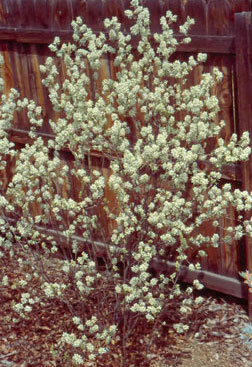
1. Serviceberry

Serviceberry trees are great for smaller landscapes. They can be purchased in multi-stem form, giving them that 'grove' look without the suckering. They also offer a few things that aspens don't - spring flowers, summer edible fruits and nice fall color. The 'Standing Ovation' cultivar is a taller form, giving it more of that aspen look, whereas the 'Autumn Brilliance' has an intense orange-red fall color.

Photo: PlantTalk Colorado 1213 - Serviceberry


2. Tatarian Maple

Tatarian maple is another tree that can be bought as single or multi-stemmed. The 'Hot Wings' type has guaranteed bright-red summer seed pods creating the appearance of flowering. This tree is better suited to the harsher conditions and low-water or xeric settings once established.

Photo: Adams County Extension Tour the Xeric Garden @ Riverdale Regional Park


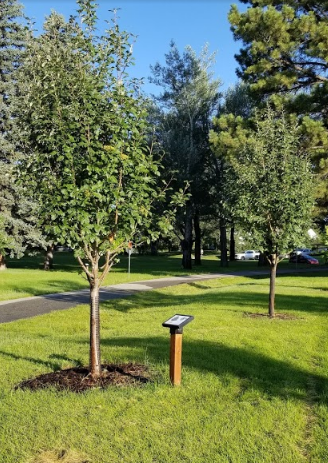
3. Redbud

If you like the smooth bark of the aspen, the redbud has a similar appearance in its younger bark but with a more grayish tone. The leaves are larger, but also have that similar heart shape. The redbud also offers a nice display of early spring lavender blooms in most years. Plant this tree in a more protected location from wind and intense sunlight.

Photo: Amy Lentz, taken outside the Boulder County Clerk & Recorder Offices in a very protected northeast facing corner


4. Oakleaf Mountain Ash

If you want something 'mountainy', the oakleaf mountain ash has 'mountain' in it's name! It has low to moderate water needs and has a uniquely shaped leaf, pretty flowers, red berries and nice orange-red fall color. It's not a true ash, so it is not under threat by the Emerald Ash Borer. In fact, it is not known to have any serious insect or disease issues. 

Photo: City of Sheridan, WY - Arboretum


5. Columnar and Fastigiate Trees

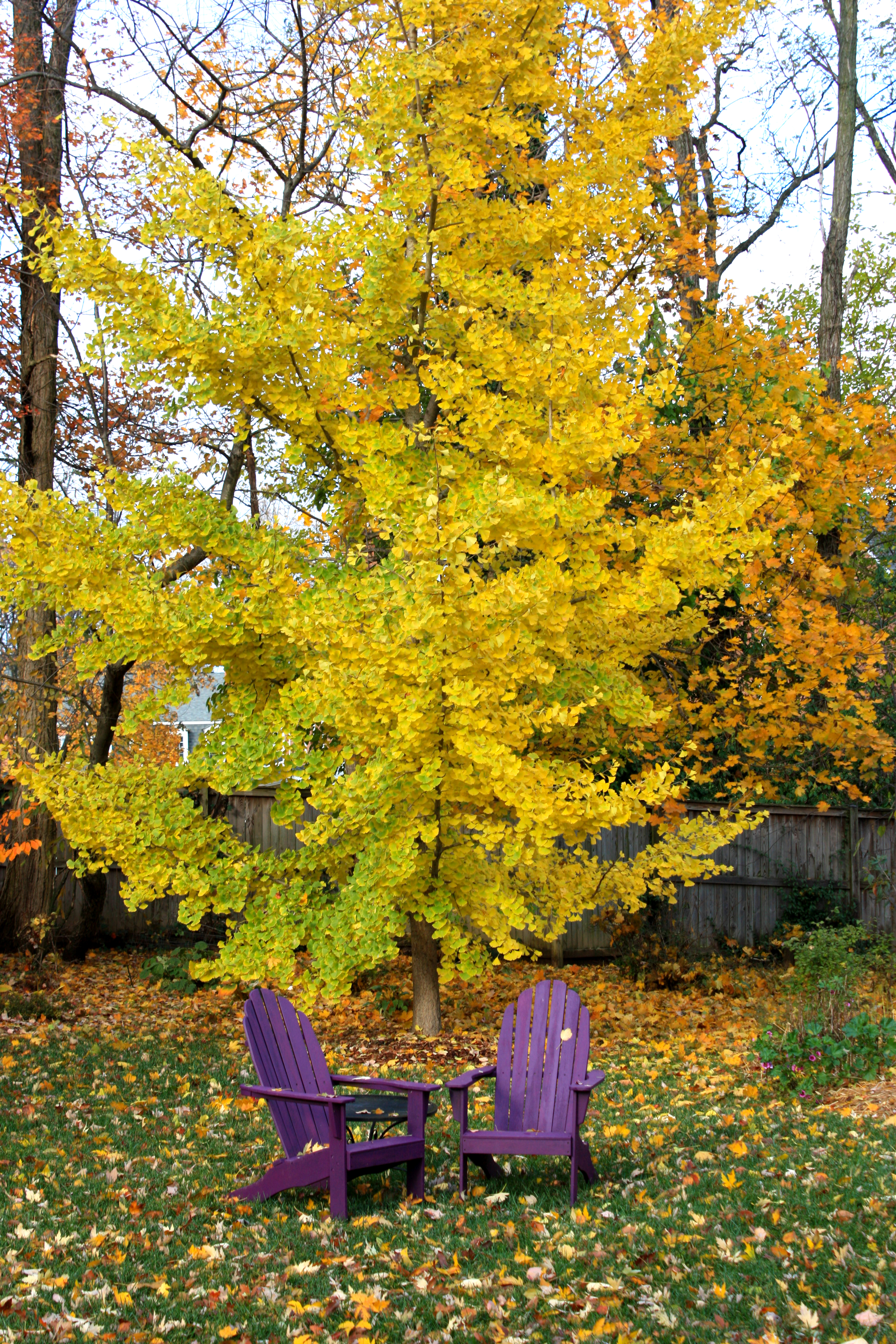
So many to choose from! These types of trees are more narrow than wide, making them good for tighter spaces where you might commonly want to plant aspen trees. There are a lot of deciduous trees listed on our CSU Fact Sheet. A couple to consider might be the 'Princeton Sentry' ginkgo or the 'Prairie Sentinel' hackberry. 

Photo: Wikimedia Commons - 'Princeton Sentry' ginkgo


Monday, December 21, 2020

Caring for Popular Holiday Houseplants

 by Amy Lentz, Weld County Horticulture Extension Agent

Earlier this month, I had the pleasure of sitting in on a fantastic webinar about caring for holiday plants by one of our Larimer County Colorado Master Gardeners, Susan Bonsall. Her class was so informative that I thought I would highlight some of these holiday plants in this week’s blog post. If you want to dive deeper into Susan’s 1-hour webinar, a recording can be found HERE. (Thanks Susan!)

Many of you may be receiving a holiday themed and decorated plant as a gift this holiday season, or maybe you decide to buy yourself one to dress up your home. But don’t be fooled, even though most of these plants are sold and promoted this time of year, they are not made for outdoor temperatures or winter landscapes. Most of these are tropical in nature and are to be grown as houseplants indoors. So, let’s talk about a few of the most commonly received holiday houseplants! 

*Be sure to check out all of the linked text throughout this article for more information and growing instructions.


Poinsettias

I could go on for days about poinsettias. In fact, I’ve written a blog post in the past about the interesting history of the poinsettia and how it became the quintessential holiday plant. Poinsettias are not commonly kept very long after the holidays are over, but if you do want to keep your poinsettia going past the holidays, you can keep it indoors in a high light area until the summer then move it outside. Water it thoroughly when dry and allow the pot to drain completely. For more tips on caring for poinsettias, see the following fact sheet from CSU Extension.

Poinsettias in a Greenhouse - Photo: Amy Lentz

Christmas, Thanksgiving and Easter Cactus

That’s right, there are actually 3 main types of holiday cactus and the difference is shown in the leaves and when they each bloom. These popular holiday plants are short-day plants that require several weeks of days with less than 12 hours of light in order to bloom, with the Easter cactus requiring the most number of weeks. If you are unsure of which type you have, try comparing the leaf segments to the chart below from Iowa State UniversityExtension:

I'm guessing Thanksgiving cactus. 
Photo: Amy Lentz

For more information on how to care for your holiday cactus, visit this PlantTalk article.


Amaryllis

I LOVE the amaryllis! These popular houseplants have beautiful trumpet-shaped blooms atop a tall stalk with long, thick grass-like leaves. They are truly stunning when they bloom! They come in a variety of colors from red to pink to white - and all shades in between. 

The bulbs prefer to be planted in a container that is 1 inch larger in diameter than the bulb and deep enough to support its long root system. They also like to be planted shallow with half of the bulb above the surface of the planting medium. And, because these plants bloom better when pot-bound, you only have to repot them every 3-4 years.

My amaryllis blooms when it wants to
and surprises me every time.
Photo: Amy Lentz

 For more tips on growing Amaryllis, see the following PlantTalk article.


Paperwhites

Paperwhites (Narcissus tazetta) are an easy plant to force indoors by planting the bulbs in a container of rocks. They are a tropical bulb that take about 6 weeks to grow and bloom. They will show off their blooms for a few weeks, but then do not rebloom and can be disposed after blooming. To help keep your paperwhites on the shorter side, you can follow Cornell University’s research guidance and give them a little hard liquor mixed with water (4% solution)! 


The above video from PlantTalk and Tagawa Gardens has more tips on how to grow Paperwhites and Amaryllis.


 Norfolk Island Pine

This time of year, these popular gifted plants are adorned with lots of holiday decorations to look like a miniature live Christmas tree. And even though they are dressed up as cute little pine trees, they are not true pines at all. They are actually large tropical houseplants that would not survive out in the cold!

Photo: Costa Farms/Amazon


When caring for these tree-like houseplants, make sure to give them a large container to support the top growth that can be anywhere from 2 to 20 feet in a home setting. These plants can actually reach heights of 200 feet in their native habitat in Australia and New Zealand! They prefer a mild room temperature of 60-72 degrees and at least two hours of bright but indirect sunlight. Click on this link to CSU's PlantTalk article for more information about growing a Norfolk Island pine in your home.

Hopefully these tips and links will help you to keep your holiday plant going strong for years to come!


Thursday, October 15, 2020

Grow & Give: Community Garden Makes a Big Impact

 By Amy Lentz, CSU - Weld County Horticulture Agent


With the unique situation of the global pandemic that began back in March, many CSU Extension staff shifted gears to create the Grow & GiveTM program. This program took the idea of the victory garden and modernized it for 2020 by creating a comprehensive, statewide horticulture initiative focused on helping people grow a food garden and donate the produce locally to address food insecurity. The program registered almost 600 gardens across 37 counties in Colorado, with participation from individuals, Master Gardeners and community-run gardens. 


During the Grow & GiveTM program’s pilot year, there have been over 1600 reported donations across the state, totaling more than 40,000 pounds of produce! In addition to all of the amazing donations that were spurred by the program, the organizing team created several new resources for participants to help them with their ‘growing and giving’ questions and needs. To learn more about the Grow & GiveTM program, visit growandgivecolorado.org.  


One particular garden in my home county deserves some serious recognition for their past and present involvement in growing food for donations and their participation in this year's Grow & GiveTM program. The Treasure Island Demonstration Garden donated over 5,580 pounds of produce over the past few months, all donated locally! Although this wasn't their first year growing food for donation (they've been doing that for over 10 years), it was the first year they had to do it while dealing with restrictions due to the pandemic.


Treasure Island Demonstration Garden, conveniently located along the Poudre River Trail in Windsor, is visited by thousands of pedestrians and cyclists each year as they pass by the long garden area. The garden started 13 years ago as a side project for a small group of Weld County Colorado Master Gardeners. In their first year, they grew lots of pumpkins to get the garden up and running. Since then, the garden has grown to be an attractive and educational landmark of the town.


Today, Treasure Island is home to several garden sections including a very large vegetable garden, kitchen garden, dahlia garden, ornamental grass garden, memorial rose garden, a crevice garden and several mixed perennial gardens. 


The vegetable garden has really been thriving this year, with an abundance of crops such as cabbage, broccoli, zucchini, summer squash, onions, and tomatoes and peppers of all kinds! All of the fresh produce is donated to the Windsor Food Pantry for distribution throughout the area to those in need.


We are so proud of Windsor's volunteers at the Treasure Island Demonstration Garden and their continued efforts to help their local community! The Treasure Island Demonstration Garden is located at 1560 7th St. in Windsor, Colorado.


Wednesday, March 11, 2020

The Basics of Fruit Tree Pruning

By Amy Lentz – Weld County CSU Extension

The season for pruning fruit trees has been in full swing lately. My colleagues and I have been busy teaching classes, talking with the public and helping growers “get their fruit tree pruning on”. It can be an intimidating task for some - "What if I prune out too much?" or "What types of cuts should I make?" With a little extra patience, basic research and confidence, you can do it...I promise.


Weld CMG's helping teach residents of a community.
Larimer CMG's learning to prune.


Here are some questions and answers that might help you get started (or finished) with your pruning needs.


1. Are fruit trees different than shade trees?

Yes! Fruit trees are pruned differently than shade trees. With fruit trees, you are growing a crop, maybe even for monetary gain. Therefore, you will be manipulating the tree’s growth more than you would when pruning shade trees. The three D’s (disease, damage and dead wood) still apply, but you will also be making cuts for other reasons, such as to increase fruit production or to fill an empty space with more branches. When trying to decide what to prune and what to not prune, look for strong branches with wide branch angles, which are more capable of holding a heavy load. You want to keep those! It's better to remove branches that have a very narrow, or weak, branch angle. Also, you would not be pruning your shade trees as often or as heavily as you would fruit tree! 

2. How should I prune a young tree vs. an older tree?

Young  fruit trees are much more forgiving than older fruit trees, so go lightly if you are pruning an older tree that needs a good deal of thinning. Spread out your pruning cuts to open up the canopy by pruning it lightly over several years. You can prune your young trees (say up to 5 years old or so) a little harder - and they are easier to train when they are young. So start with young trees if possible. Here is an example of how to train a tree over 5 growing seasons from a one year old whip (spreaders were added after the 4th spring):


3.  How do I know where the fruit will be?

Most fruit trees often bloom on old wood. Apples and pears, for example, grow on spurs which can begin developing after 2 years and last a long time, up to 20 years. Plums and cherries also have fruiting buds that occur on old wood, at least 2 years old, either on spurs or along the stems. Peaches, on the other hand, are developing fruit buds on last years growth, so annual pruning to encourage new growth is important for peaches. It's important to know the difference between fruiting buds and vegetative buds. You will be removing some fruiting wood during the regular pruning process, but you don’t want to inadvertently prune off all those little spurs, which will lead to fruit during the upcoming season.

Photos from University of Maine Cooperative Extension: https://extension.umaine.edu/fruit/growing-fruit-trees-in-maine/pruning/
4.. When is the best time to prune my fruit trees?

With the warmth of spring happening more often lately, it’s time to get outside and finish up those pruning jobs if you haven’t already. The best time to prune is in late winter or early spring when the trees are still dormant (which is hard to judge in Colorado!). Either way, you want to stop pruning when the buds first begin to swell and break. It’s best to prune older trees first to make sure they have enough time to heal before spring and leave the younger trees until later in the pruning season. 

Another reason we prune when the trees are dormant is to reduce the spread of diseases like fire blight, that affects those fruit trees in the Rose Family, such as apples and pears. This particular disease can easily be identified and pruned out in the winter. 

For more information on Fireblight, see the following fact sheet from CSU: https://extension.colostate.edu/topic-areas/yard-garden/fire-blight-2-907/
Another good source of information on fireblight, more for the commercial orchard, can be found here from Washington State University: http://treefruit.wsu.edu/crop-protection/disease-management/fire-blight/

5. What are my goals and objectives when pruning fruit trees? 

Approx. 5 year old cherry trees after pruning to thin the canopy.
Your main goal when pruning fruit trees is to open up the canopy of the tree to allow increased light penetration and increased air movement in the center of the canopy, where fruit spurs are located. 

You want to encourage outward growth on the tree to get branches to grow into open space. This is done by pruning to an outward facing branch or bud. Along with the three D’s (diseased, dead or damaged), look for crossing branches, branches that are shading or crowding one another and branches pointing back toward the tree. Don’t remove more than 25% a single pruning season, less for older trees so you don’t stress the tree too much. This will help with fruit development, as well as, decreasing the prevalence of insects and disease. 

To do this, remove crowded branches by making reduction or thinning cuts back to branches that are facing outward, away from the trunk. Reserve heading cuts (where you cut back to a small bud) for only those branches where you want to encourage new growth, such as lower branches or young branches. As you remove some of the twigs and branches to allow for more space in the tree, you will also, in effect, be reducing the number of fruit buds on the tree as you remove wood, so you will also be increasing the energy allotted to the fruit buds that remain – creating larger fruits that have ample sun and lots of space around them. This is the goal of growing fruit trees!

Finally...How can I build my confidence to prune my fruit tree?

Pruning fruit trees takes time, patience and a little critical thinking. A hands-on approach helps a great deal to make these concepts sink in. Definitely look beyond this blog because there is a lot more information than what I could provide here. When doing your research, be sure to look toward education- or research-based information and watch videos to help you make sound decisions when pruning. You can always remove a branch…but you can’t put it back on! Take your time, think about the branches you want to remove and what you want to keep. You can do it!

For more information on pruning fruit trees, check out the following sources from Colorado State and other universities:

Cornell Cooperative Extension - Pruning Apple Trees
http://chemung.cce.cornell.edu/resources/pruning-apple-trees

CSU Fact Sheet - Training and Pruning Fruit Trees 

Utah State - Pruning Fruit Trees: Clip with Confidence!

Educational Video Series from Montana State