CO-Horts

CO-Horts Blog

Showing posts with label pocket gophers. Show all posts

Thursday, May 4, 2023

Rabbits, voles, and gophers...OH MY!

Posted by: Todd Hagenbuch, CSU Extension, Routt County
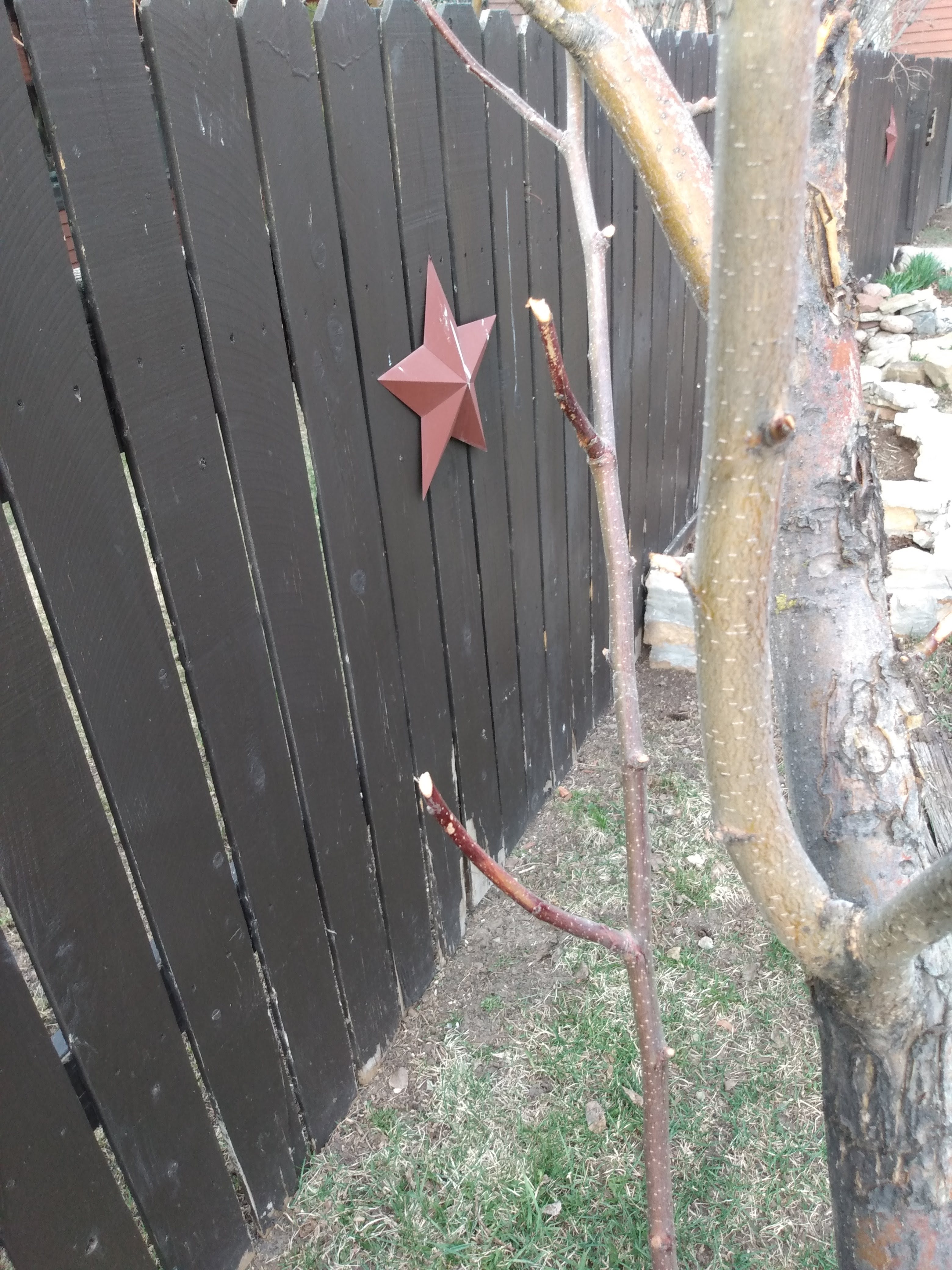
Classic rabbit 'trimming'
of smaller branches

While many of you reading this blog have been watching the daffodils and crocuses bloom for a few weeks, those of us in the higher elevations are just seeing the ground as it becomes uncovered by rapidly melting snow. As the snow recedes, what’s becoming evident is that, at least in Routt County, several types of varmints had a hay-day under the snow and treated our yards as an all-you-can-eat buffet. I’ve gotten many calls in the past two weeks with folks wondering what creature has caused the damage they’re seeing in their yards, pastures, and hay meadows. I also find that people often blame the wrong critter, or have had multiple species wreaking havoc.

Vole damage at the bottom,
rabbit damage above

The first thing we’ve seen as the snow levels dropped is that rabbits dined on several things, especially fruit trees. Lots of folks talked this winter about the number of jackrabbits in the area this year, and mentioned the damage they were seeing to local haystacks. We see now that they were taking advantage of town plants, too, with branches being trimmed and trunks being scalped at varying levels according to the snow level when they came by. I’ve seen several crabapple and apple trees that look to be a total loss due to the rabbit damage they’ve sustained.

As the snow pulled away from the bases of trees, shrubs, and herbaceous perennials, vole damage has come into full view. Have you seen girdling around the bottom of trees, along the soil line? Vole damage. Gnawing marks on the stems of small bushes? Vole damage. Perennial plants that had unexplained chewing at the base? Yep, probably voles!  

Vole damage on lilacs
I had the pleasure of visiting a home that had vole damage on their lilacs and also their fruit trees (see
photos). They still had some small piles of snow near the trees which looked like Swiss cheese, with holes into and out, right in-line with the classic vole ‘runways’ that appeared around the lawn. In fact, as we sat and were looking at the bushes, the little beasties popped their heads out and ran from pile to pile! Little tufts of grass where they’ve disturbed the surface and small holes are other telltale signs that voles enjoyed the warmth and protection of a blanket of snow while feasting on our plants.
Vole damage on apple

The other varmint that had a regular rager under the snow was the pocket gopher. While they live under the soil and dine on roots, the soil they dig out for their subterranean feasts was neatly packed away in tunnels under the snow in long, curing, snake-like piles that are called eskers. People expect to kick at the eskers and find holes or tunnels underneath, but what they don’t realize is that the hole the pocket gopher actually took the soil from is near one end or the other of the esker.

Vole runways in a pasture
Wondering what critter has been decimating your garden? If the explanations here don’t help, check out CSU Fact Sheet 6.521, Burrowing Animals: Determining species by burrows and damage. If you do know which one is to blame and want to know what you can do about it, check out Fact Sheet 6.507 Managing Voles in Colorado, or Fact Sheet 6.515 Managing Pocket Gophers. And don’t forget this next fall to prepare your plants for more damage by protecting them before it snows, too, because these little buggers are looking forward to eating at your place again next winter.
Pocket gopher eskers
in a pasture; courtesy of
Millie Delaney

Monday, June 5, 2017

The Quiet, Solitary


The Quiet, Solitary Pocket Gopher

By Linda Langelo, CSU Horticulture Program Associate


According to G.W. Witmer and R.M. Engeman of the USDA, Animal and Plant Health Inspection Service, pocket gophers are efficient "digging machines".  They spend the majority of their lives as a subterranean rodent quietly living its life in a closed burrow system until mating season, rearing their young or biting into buried cables while seeking roots as their main food source.  Without communication cables or electrical cables where would be?  In the same silence that pocket gophers enjoy before they conflicted with our world.  Since we live among lots of wildlife, it helps to be aware of the wildlife around us and their life cycles.


The damage a pocket gopher can do extends way beyond communication or electrical cables as if that were not enough.  Here is a brief list of some of the types of damage they can do: 

  1. Pocket gophers are one of the most serious pests and threat to reforestation in North America according to Engeman and Witmer (2000).
  2. In rangeland, their preferred diet is annual forbs or wildflowers and annual grasses.
  3. Root gnawing and basal girdling according to Sullivan and Hogue (1987) damage fruit trees such as apple, cherry, and pear trees in the Pacific Northwest.
  4. In Nebraska yields declined in alfalfa as an economic loss of around $10 million per year.  Other crops that suffered economic loss were alfalfa hay, late successional perennial grasses and clovers.
  5. Increases in invasive plant establishment and dispersal.


Photo Credit: Orlando Pest Control Solutions

I am sure that before our world became so civilized, populated and with so much dependence on technology the pocket gopher still continued to do damage, but was not so intrusive.   There are solutions to lessening the conflict of pocket gophers in our world.  One of those is burying those communication and electrical cables deeper than a foot since most of the damage occurs 10-30 centimeters within the rooting zone.  Their tunnels can cause irrigation loss and erosion according to UC Davis. 

Other solutions for managing pocket gophers as follows:

  1. use less palatable species of plants
  2. crop rotation
  3. alteration of planting and harvesting dates
  4. flood irrigation
  5. using barriers made of small mesh wire or plastic tubes for trees
  6. selective removal of forbs/flowers with herbicide 2,4-D has reduced gopher densities
  7. encouragement of natural predation
According to UC Davis, the biological options of natural predators are as follows:

  1. Snakes
  2. Owls -depends on environmental sites
  3. Weasals
  4. Badgers
  5. Foxes

To leave you on a positive note with pocket gophers; here are some good facts from outwitcritters.com:

  1. Pocket gophers bring two and a quarter tons of soil to the surface each year.
  2. Some species are excellent swimmers.
  3. The Plains Pocket Gopher is agile.   (Just a side note: And maybe that is how they got into the tunnel that houses our phone and internet which has dropped our service in Sedgwick and Phillips County over the last 2 weeks.)  


Monday, July 6, 2015

Who dunnit? Voles or Pocket Gophers?


By Irene Shonle, CSU Extension in Gilpin County

There are many burrowing animals in Colorado that can cause damage to lawns, gardens, and pastures. The first step to resolving the problem is to figure out which animal (or animals) caused the damage.
The main four types of burrowing animals are voles (8 species), pocket gophers (4 species), prairie dogs, and Wyoming ground squirrel.   Moles are rarely found in Colorado, and only in the very eastern plains.  If you are outside that area, the species causing damage is one of the other four.
  In this post, I'll just be discussing the difference between voles and pocket gophers, since these are the critters I most often deal with in the mountains.


Voles
This year has been a very bad year for voles.
Voles cause several types of damage.  They gnaw on bark of trees and shrubs, sometimes girdling it entirely and causing the death of trees. Most damage occurs in the winter when voles move through their grass runways under the protection of snow. The greatest damage seems to coincide with years of heavy snowfall.
Vole damage to trees and shrubs is characterized by girdling and patches of irregular patterns of gnaw marks about 1/16 to 1/8-inch wide. Gnawed stems may have a pointed tip.
Other signs of damage by voles include: 1- to 2-inch-wide runways through matted grass with open 1-2 inch holes and spongy soil from burrowing activity. 
It is common to see voles, as they are active all year round, and are frequently above ground.

Vole damage on lilac. Notice small, irregular tooth marks, all under what was the snow line.


Vole trails in lawn after snow melted in spring
Add caption

Vole hole and trail in clay soil

Vole hole and trail in snow.  Note the oval-shaped OPEN hole

Examples of vole holes.  
They will often burrow near a rock, but not always.


Pocket gophers
Pocket gophers rarely appear above ground, spending most of their lives in burrows.  Prairie dogs and Wyoming ground squirrels, on the other hand, are frequently seen above ground.
The mounds that pocket gophers create are fan-shaped to round and usually have closed entrances, unlike prairie dogs and Wyoming ground squirrels. 
The main signs of damage from pocket gophers include mounds of soil (with no apparent hole), eskers (solid tubes of soil) above ground when the snow melts in the spring, and suddenly wilting plants (due to root damage).   If you walk across an area inhabited by pocket gophers, your foot will frequently break through into their tunnels.  The tunnels are usually 2.5-3.5” in diameter, and are usually found in the top 4-18” of soil.

An example of an esker - these solid soil tubes are only seen as the snow melts, and are a result of burrowing activity in the snow.


Fan-shaped mound with closed hole is typical of pocket gophers in the summer


 Now that you have a good idea of who dunnit, please refer to the following fact sheets for help with dealing with them:  6.507 Managing Voles in Colorado, 6.515 Managing Pocket Gophers.