CO-Horts

CO-Horts Blog

Showing posts with label Jeffco Plant Diagnostic Clinic. Show all posts

Monday, November 28, 2022

Plant and Insect Diagnostics: Always Something New to Learn

Post by: Lisa Mason, Arapahoe County Extension

My colleagues and I hosted a plant and insect diagnostic workshop in October, a collaboration with CSU Extension and the Plant Diagnostic Clinic at the CSU Spur campus in Denver. About 45 Extension staff and Master Gardener volunteers gathered to build relationships, and learn more about plant pathology and insects. Even though I taught a portion of the workshop, I am always humbled to remember the more I learn, the more I realize I don’t know. For instance, I learned that we have a weedy species of bluegrass (Poa trivialis, rough bluegrass) that can be fairly common in lawns. When the weather heats up, this type of bluegrass goes dormant. The grass turns a slightly purple color before turning brown. This is a great reminder that it is so important to know the plant identification before solving the problem. Brown spots in lawns often are caused by gaps in the irrigation systems, but it’s worth identifying the grass species to see if it could be rough bluegrass. The solutions for irrigation gaps and removing a weedy species in the lawn are entirely different. Overall, the biggest take-home message from the workshop was a reminder to understand the big picture of the plant in the landscape before making any judgements or diagnoses.

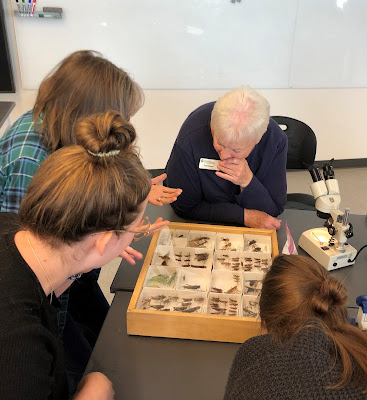
Diagnostic workshop participants examine insects in the Orthoptera order (grasshoppers, crickets, and katydids). Credit: Lisa Mason
What exactly are plant and insect diagnostics?

Extension offices around the state receive a broad spectrum of questions at the Extension office varying in topic, need, and complexity. Some examples of common questions include: How do I get a soil test? Is emerald ash borer in my county? What plants do you recommend for low-water/xeriscape garden? Why do I have brown spots in my lawn? Which disease does my tomato plant have? Why is my tree struggling? Are insects harming my plant?

Plant and insect diagnostics differ from many other questions because the plant needs a diagnosis which requires understanding environmental context clues in addition to the signs and symptoms present on the plant. While this might sound easy, the process of diagnosing a plant issue can be very complicated! Consider when you go to the doctor for a medical diagnosis for a persistent fever. A wide variety of bacterial and viral infections, and other ailments could cause a fever. A doctor will ask you questions to understand the bigger picture and look for clues. Depending on the answers, the doctor may choose to run some tests. Test results will further inform a diagnosis. Plant diagnostics is similar. Perhaps you have a plant with brown leaves. Those brown leaves could be a symptom from a number of environmental factors like drought stress or root damage. Perhaps a bacterial, viral, or fungal pathogen is causing brown-colored leaves. In some cases, maybe insects could be causing the damage to the plant.
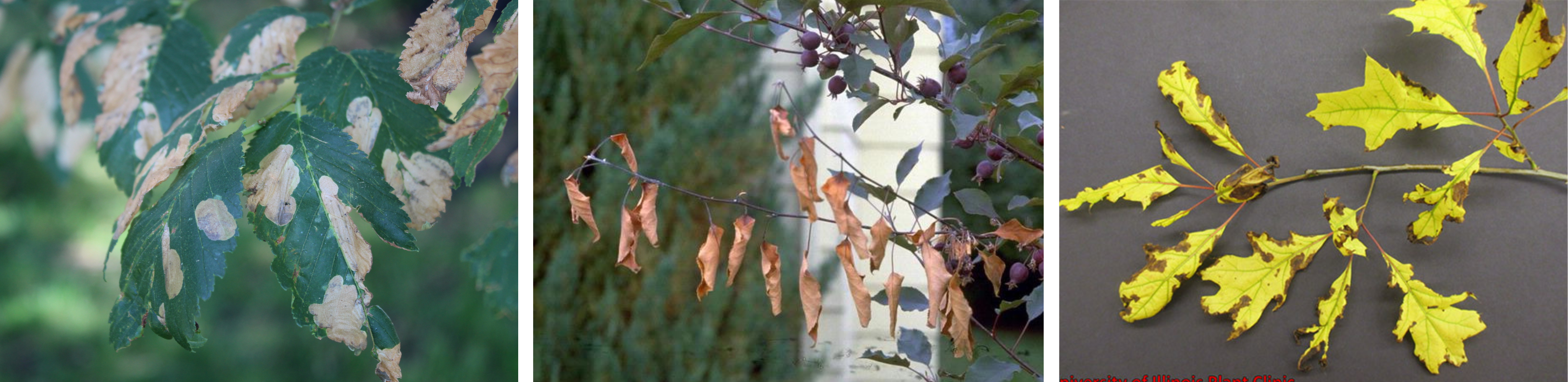
Three different causes of “brown leaves.” Left: Elm leafminer, a sawfly that feeds within elm leaves creating brown patches. Center: fire blight, a contagious bacterial disease affecting plants in the Rosaceae family. Right: Severe iron chlorosis, an abotic or environmental condition where the plant can’t uptake iron from the soil. Photos: Lisa Mason, William Jacobi, CSU, Bugwood.org, and University of Illinois Plant Clinic.

When you submit a plant or insect sample for diagnosis, be prepared to answer questions! Here are some of the most common questions you’ll be asked after you submit a plant sample:

  1. What do you need answered?
    • Identification
    • Diagnosis and management recommendations
    • Identification and control advice
    • Other
  2. Do you have photos of the plant? Please submit photos up close of the damage and also far away from the plant to see the entire plant in the landscape?
  3. Do you know the identification of the plant?
  4. Where is the plant growing? (e.g. raised bed, next to the house, in the lawn, etc.)
  5. How much water does the plant receive? How is the plant watered?
  6. Do you apply any products (fertilizer, pesticides, etc.) to the plant? What products and how often?
  7. Describe the issues and any observations you’ve noticed.
  8. What part of the plant is affected? (e.g. leaves, trunk, branches, fruit, etc.)
  9. When did you first notice the issue? Are nearby plants affected?
  10. Has anything changed in the environment recently?

A Master Gardener, CSU Extension staff, or Plant Clinic staff will likely have additional questions depending on if the plant sample is a tree, lawn, vegetable, other plant, or insect. All these questions help inform the next steps for diagnosis and management recommendations.

Where do I submit my plant sample?

You have options! CSU Extension and the Plant Diagnostic Clinic partner together to ensure you get an accurate identification and/or diagnosis. When you have a question, or when you bring in a plant or insect sample to your local county Extension office, we make sure to find the right expert to identify and/or diagnose the issue. Depending on the nature of your question or sample, your question may be answered by Master Gardeners, Extension staff or specialists, or experts at the CSU Plant Diagnostic Clinic. Please note some local counties may have a fee and the CSU Plant Diagnostic Clinic has sample fee. Ask your local county office if there is a fee. Click here for the CSU Plant Diagnostic Clinic fees.

Learn more about plant and insects

Land grant universities like Colorado State University have a long history working on plant diagnostics (Iles et al., 2021). If you are interested in learning more about nationwide plant diagnostic efforts, check out the National Plant Diagnostic Network.

Challenges with plants can often be avoided with the right care practices. Learn more by taking classes through CSU Extension on variety of topics related to plants, insects, gardening, and more! Check your local county office, the free webinars on the CO-Horts Blog, or Green School which includes the Colorado Master Gardener program.

What is CSU Spur?

Have you heard of the brand new CSU Spur campus? If not, you’ll want to learn more! Spur is a brand new campus located within the National Western Center in Denver. This campus is open to the public and is worth the visit to see the state-of-the-art research and education facility from art installations, to veterinary care, equine therapy, and more.

The CSU Plant Diagnostic Clinic is now open at Spur! This is the Colorado state lab in the National Plant Diagnostic Network. They offer services such as plant disease diagnosis, insect identification, plant identification, and recommendations.

The Soil, Water, and Plant Testing Laboratory will also be opening at the Spur campus. Stay tuned for their opening date. 

Thursday, September 1, 2022

Test, Don't Guess!!!


Welcome back to another edition of: “Who Wants to be a Plant Diagnostician?” with your hosts, the Jefferson County Plant Diagnostic Clinic. This week, we wanted to focus on the mantra, “Test, Don’t Guess!”, as it applies to plant diagnostics. In the world of plants, there are many pathologies that present similarly, so it’s critical to thoroughly evaluate the problem at hand and the possible causes in order to best create a management plan. Below, we’ve put together a few examples of some lookalikes that have recently come into our clinic…

Test, Don’t Guess!

***

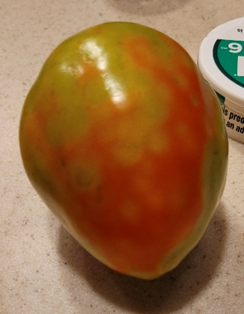
When you hear the words “spots” and “tomatoes” in the same sentence, you may automatically assume tomato spotted wilt virus (TSWV), a virus vectored by adult thrips. And in some cases, you may be correct. For example, we received a recent inquiry regarding tomatoes presenting with chlorotic rings (shown below), a classic indicator of TSWV:


Tomatoes believed to have tomato spotted wilt virus (TSWV).

However, this assumption does not always hold up. In another recent tomato inquiry, we received photos of tomatoes that also have yellow spots (shown below); these spots, we think, are caused by stink bug feeding. Stink bugs typically feed on green fruit and produce dark pinpricks, surrounded by white tissue. However, as the fruit ripens, these damaged areas turn yellow.


Tomatoes with spots believed to be from stinkbug feeding. 

We say “we believe” the first example of tomatoes has TSWV and the second example was fed on by stink bugs because we haven’t received physical samples to the clinic yet. These are our initial suspicions and, to confirm, we need to TEST! To differentiate between TSWV and stink bug feeding, we would first evaluate the plant for other symptoms. TSWV may result in bronzing leaves, leaves with small, dark spots, tip dieback, streaked terminal stems, or drooping leaves. Conversely, stink bug damage should be confined to the fruit itself. At the end of the day, symptoms may be variable for TSWV though, so, fortunately, we have a great tool at our clinic to rule-out TSWV: a TSWV antibody test! As TSWV and stink bugs have very different implications for management and the fate of the plants, TESTING, and not GUESSING, is key!

***

Switching over now to woody plants, we received an inquiry regarding spruce trees that were experiencing browning/purpling of needles (see below) and extensive interior needle drop. Due to the cultural characteristics of the affected trees (very mature, very closely-spaced together, located near greater exposure to temperature extremes and winds, etc.) and the purpling of the needles, we felt confident that the trees were experiencing a cycle of high competition for water, drought stress, and winter dessication. However, due to the browning of the needles, needle shedding, and dark banding observed on some needles (see second image below), there was concern regarding fungal colonization of the spruce (i.e. needle cast fungi).


Discoloration and dark bands found on spruce, likely due to water stress and winter desiccation.

Although needle cast diseases are rarely found in dry environments, we made sure to TEST, not GUESS! Roughly one week after plating a number of suspicious areas of needle discoloration onto growth media, we had several different-looking fungal growths on our plates! In examining these various fungal growths under the microscope, we found no evidence of needle cast fungi; rather, we saw several types of saprophytic fungi (see example below) that are typically found in our environment and would not cause damage to spruce. Better to be safe than sorry!

Hyphae of saprophytic fungi (consistent with Alternaria/Ulocladium).

***

Our last example of the day deals with another woody plant: the Austrian pine. We’ve had a handful of individuals bring samples into the clinic lately, all highly concerned about Pine Wilt/Pinewood Nematode (PWN). The trees generally present with needle discoloration and rapid dieback or death of the tree, which is consistent with PWN. Additionally, some of the samples reveal bluestain fungus in the wood (shown below), which is another indicator of PWN. However, none of these symptoms are conclusive of PWN, so we always have to...you guessed it...test, not guess!

Blue stain found on Austrian pine.

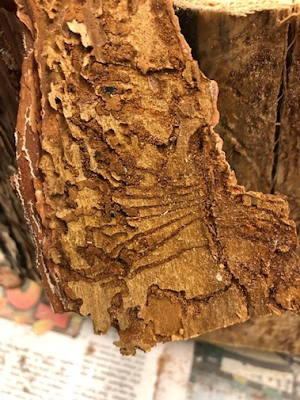
Further examination of the specific sample shown above revealed exit holes, galleries, and Ips pini beetles (see below). Egg galleries of Ips are usually Y- or H-shaped; upon hatching, larvae create smaller lateral galleries from the main gallery. Due to Ips tunneling, affected parts of the tree discolor and die, consistent with the symptoms of our samples. However, Ips typically attack already stressed and weakened trees, so while we have clear evidence of Ips, we can’t rule out PWN without a further test! 


Exit holes (top-right of top image) and galleries/frass (both images) made by Ips pini, found in Austrian pine.

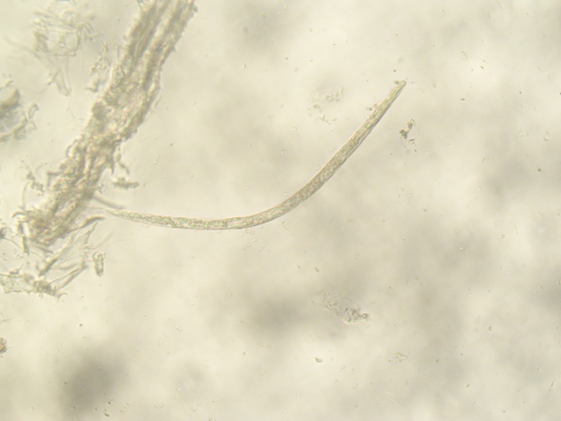
By running a PWN-specific test, we can extract and identify the nematodes responsible for Pine Wilt Disease, if present. Most of our samples came back negative for PWN; however, we did find a few nematodes in the sample (shown below)! BUT, they don’t have the same physical features as PWN…so, on to another test: we’re working through the identification of these nematodes to identify whether they are the Pine Wilt Nematode, Bursephalenchus xylophilus, or one of the many non-pathogenic nematodes that live in and around the tree.

Our unidentified nematode, approximately 300-350 microns in length.


This is an adult, male Pine Wilt Nematode; length approximately 1000 microns. Photo Credit: Pest and Diseases Image Library, Bugwood.org.

And that concludes today's edition of "Who Wants to be a Plant Diagnostician"! While I've most certainly overused this phrase throughout the course of this blogpost, I'm going to reiterate it one more time...TEST, DON'T GUESS!!!

Wednesday, July 6, 2022

The Grub that Got Away...

 Posted by Hania Oleszak and Mari Hackbarth, Jefferson County Extension


With summer finally in full swing, we’ve been wading knee-deep in plant and insect samples over at the Jefferson County Plant Diagnostic Clinic. With that in mind, we thought it would be fun to clue you in to some of the pests and diseases that we’ve been seeing lately. See if you can identify any of the following samples as we walk you through some of the key steps of our identification processes…

~~~~~~~~~~~~~~~~~~~~~~~~~~~~~~~

Our first culprit is a first to our clinic. With a piercing, sucking mouthpart originating from in front of its eyes and long, segmented antennae, this insect appears to fall under the Hemiptera order.


Bee Assassin Bug; photo credit: Whitney Cranshaw, Colorado State University

This sample came with a critical piece of information for its identification: the environment in which it was found. Specifically, this insect was found attacking a honey bee near a hive.


 In addition to the dorsal and ventral markings on the insect and the fact that the mouthpart had three segments, these clues all indicate that this insect is…drumroll please…a bee assassin (Apiomerus spp.)! There are three species of bee assassins within Colorado and they often hide and wait for their prey before ambushing them. While we all prize our bees and dislike anything that harms them, bee assassins have not been identified as a threat to our bees and are actually generalist predators, meaning they feed on a range of insects.

~~~~~~~~~~~~~~~~~~~~~~~~~~~~~~~

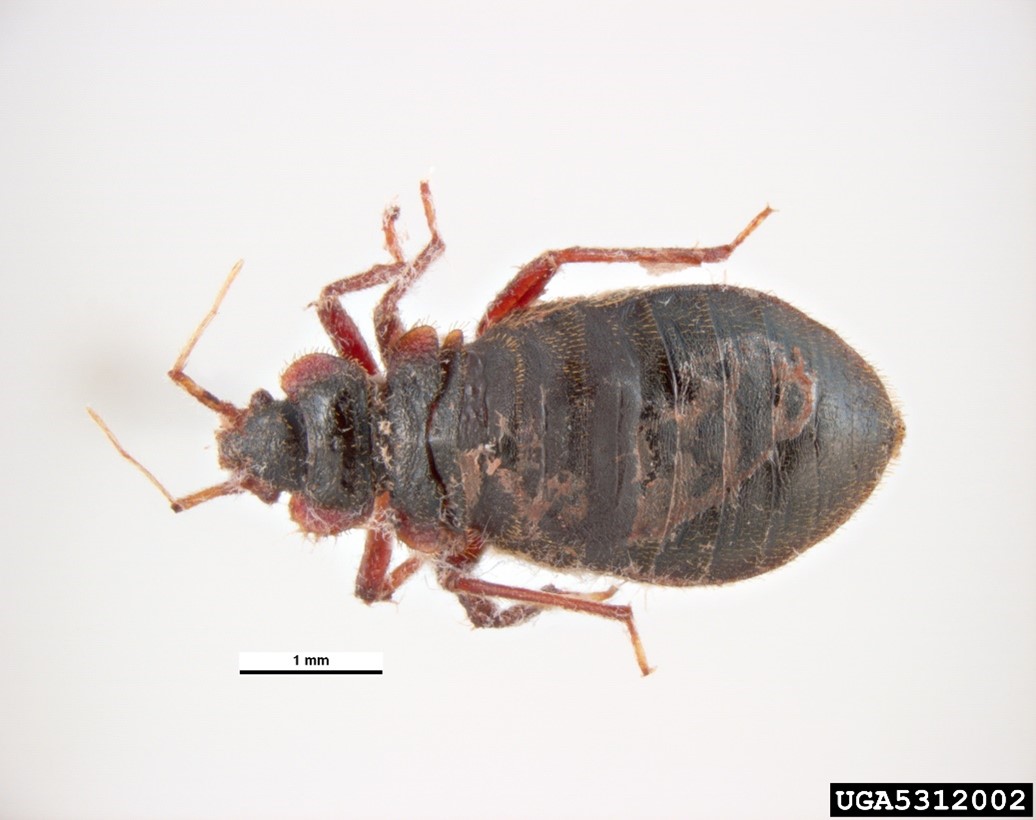
Our next culprit makes its way, unfortunately, into our clinic a handful of times a year. Like the bee assassin, this sample was also identified to the Hemiptera order, which is also the order referred to as “true bugs”.  Additionally, this sample was found in an assisted living facility bedroom…any ideas yet?


Bedbug, Cimex Lectularius dorsal view; photo credit Pest and Diseases Image Library,


Bedbug, Cimex Lectularius ventral view; photo credit  Gary Alpert, Harvard

Note: the piercing, sucking mouthpart originating from in front of the eyes and the long antennae broken into 4 segments.

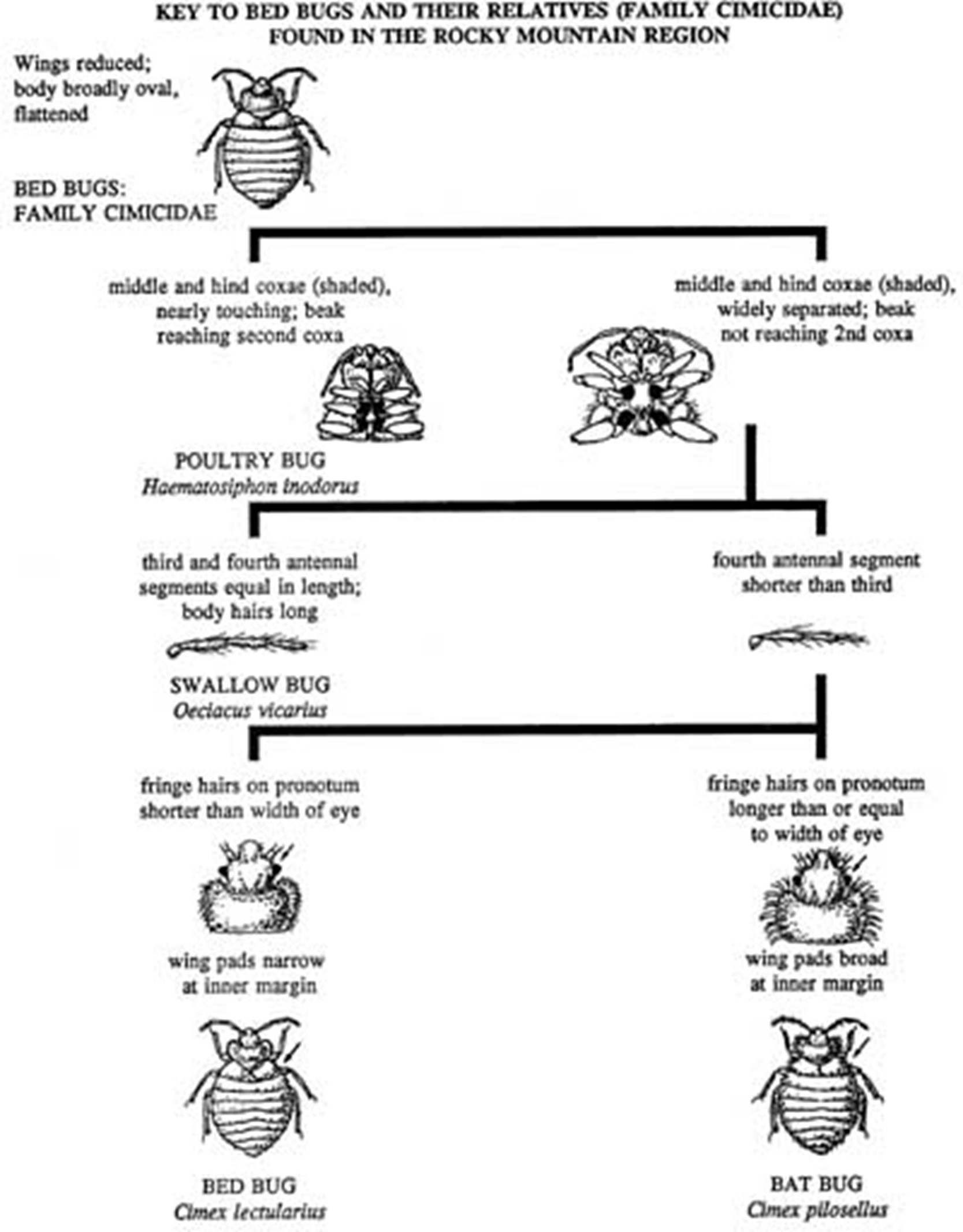
 Based on context and morphology, our insect appears to be either a bed bug or a bat bug (both belonging to the Cimicidae family). To differentiate the two, it’s important to observe the fringe hairs on the pronotum and the wing pads, as noted in the figure below.


 Bed Bug Identification Key; figure credit: CSU Extension


What’s the final verdict? It’s a bed bug (Cimex lectularius), ew! Bed bugs are bloodsucking insects, often feeding in the middle of the night. They do not transmit disease.  People often develop red, itchy swellings from bed bugs, but these bites alone are not enough to diagnose a bed bug problem.  Identification requires microscopic examination of the beak length, antennae and pronotal hairs.  Bed bug interceptors, basically traps that bed bugs can’t climb out of, can be placed underneath the bed post in order to monitor for bed bugs.

 ~~~~~~~~~~~~~~~~~~~~~~~~~~~~~~~

Next up, we have a raspberry plant that was brought in for management advice. This sample already had been diagnosed upon entering the plant clinic, but we won’t give you the answer that quickly! The key symptom in this diagnosis is that the shoot tips of the raspberries are wilting. Additionally, there are two rows of punctures along the stem, beneath the point of wilting.

Spoiler alert: these two rows of punctures are actually made by female Raspberry cane borers (Oberea perspicillata), surrounding the point at which eggs have been laid in the pith of the raspberry cane. Upon hatching, larvae burrow down through the pith, making it down about an inch or two from the punctures by the first winter, and eventually making it down to ground level. To control for the Raspberry cane borer, it’s best to prune the raspberry canes below the puncture marks, or as far down as there is evident damage to the pith of the cane.


Raspberry Wilting; photo credit: Mark Longstroth, MSU Extension


Raspberry Cane Borer Larva; photo credit: Alan T. Eaton

 ~~~~~~~~~~~~~~~~~~~~~~~~~~~~~~~

Next in our line-up is a crabapple tree with an array of symptoms that are quite telling and commonly seen in our clinic. Looking at the crabapple branch, we could see darkened, mummified fruit, as well as blackened and crooked shoot tips (which we refer to as shepherd’s crooking).


Shepherd’s crooking symptom of Fire blight; Photo credit Don Hershman, Bugwood.org

Upon further investigation in the lab, we could see under the microscope that there was bacterial streaming (i.e. the movement of bacteria out of the cut tissue) present in the fruit. Watch a youtube video of bacterial streaming HERE.  So cool!  This confirmed our suspicion that this crabapple tree has…Fire blight! Fire blight is a bacterial disease, caused by the bacteria Erwinia amylovora, that affects members of the rose family. The bacteria can be spread by insects, rain, or contaminated pruning tools, which is why rainy springs are conducive to the spread of Fire blight and why we recommend to disinfect pruning tools between every cut when working with plants of the rose family. Blossom blight (blackened, dead flower blooms) and oozing exudate from the tree or fruit are other tell-tale signs that your plant may have Fire blight. Unfortunately, there is no cure for Fire blight, so it’s best to prevent the spread of the disease and remove infected plant parts.

~~~~~~~~~~~~~~~~~~~~~~~~~~~~~~~

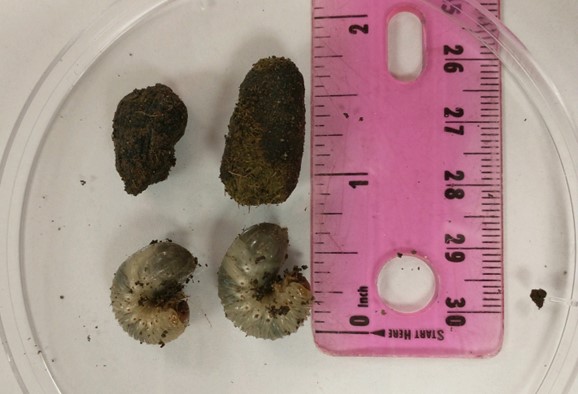
Last, but not least, is the grub that got away! Late one afternoon, we received a sample of a grub that was found in a mulch pile and placed it, along with some mulch, in a closed petri dish overnight. To our surprise, the grub was nowhere to be found the following morning – all that remained in the petri dish was mulch (see below).


Photo credit: Mari Hackbarth, Jeffco Plant Diagnostic Clinic

 Later that week, we received a sample of very similar-looking grubs. Upon morphological inspection (i.e. looking at the rastral pattern, or the arrangement of short hairs located above the anal slit of the abdomen), we were able to deduce that the grubs were likely bumble flower beetle larvae.


Rastral Pattern on Grub; photo credit: Mari Hackbarth, Jeffco Plant Diagnostic Clinic

Interestingly, bumble flower beetles form oval, earthen pupal cases as they mature into their adult forms and, looking more closely at second sample, we were even able to find some (see below)!


Bumble Flower Beetle Larvae and Pupae; photo credit: Mari Hackbarth, Jeffco Plant Diagnostic Clinic


Wait a minute!  If bumble flower beetles form pupae that look like big chunks of soil, and if our initial grub that got away looked very similar to the bumble flower beetle grubs…could our initial grub actually still be hiding in our petri dish in a pupa? What do you think?


References:

 Bee Assassin Bug:

Sunday, July 18, 2021

CSI: Jeffco

Mari Hackbarth, Jefferson County Plant Diagnostic Clinic

This summer, the Jeffco PlantDiagnostic Clinic in Golden has had a rash of strangely similar cases.  Here are descriptions of three plant crime scenes with eerily similar “MO’s”.  Can you solve them?

Crime Scene 1

Where:  Denver, Colorado; residential                                         When:  Late June 2021

Case Summary:  three plants submitted to find out what was infecting them.

Victim

Evidence

Possible Causes

Grape

  • New leaves distorted and thickened with strap-like edges
  • Fruit shrunken and shriveled
  • Older leaves appear normal
  • Lab results:  no insects, mites or pathogens observed.

Rose


  • Leaves distorted, fiddle-necked, strapping
  • Lab results:  no insects, mites or pathogens observed.

Boxwood


  • Leaves mottled with splotches of green to gray; appeared necrotic under 40X magnification
  • Lab results:  no insects, mites found.  No pathogens isolated from culture.

     Rose                                                            

                   Grape, 40X      


           Boxwood                                                     
                      Boxwood 40X
   

 Clues:

The homeowner reported in the cultural history of the samples that the damage pattern had been observed beginning in 2020.  The history also listed that a 3-in-1 (insect, mite, disease) pesticide had been applied in 2020 and 2021 to treat for mites, based on a recommendation from a local nursery.  The cultural history indicated that no herbicides had been applied in the yard.  With no leads on biotic (living) causes of the plant deformation, and no history of herbicide use, we evaluated the 3-in-1 pesticide.  It contained 3 active ingredients:  Imidacloprid (insecticide), Tau-Fluvalinate (miticide), and Tebuconazole (fungicide).  Of the three, Tebuconazole has been reported to cause phytotoxicity in some studies.  The grape Eutypa dieback is rare in Colorado.  Boxwood blight has not yet been detected in Colorado, so is very unlikely.

Verdict:  no verdict reached.  It’s possible that the phytotoxicity/deformation was caused by Tebuconazole, but it was just as likely due to herbicide drift or vaporization from a neighboring yard.  To prove the Tebuconazole was the culprit, the plants would have to be tested for the chemical, a pricey investment.

Crime Scene 2

Where:  Burns, WY; hobby ranch/farm surrounded by grassland                                         When:  Early July 2021

Case summary:  the clients worried because their tomato plants were not thriving.  Their plants were much smaller than the ‘sister’ plants that were growing in Greeley, CO at a family member’s farm.  They were concerned that they were over- or under-watering.

Victim

Evidence

Possible Causes

Tomato plants, various varieties


                      Burns, WY


                              Damaged tomato leaves on top, normal below    

 Clues

While walking the property, we found multiple other species of plants showing distortion and strapping of new growth:  grape, chokecherry, Blue-mist Spirea.

                           Leaf Strapping on Grape                                          
             
Vein Clearing on Grape

                     Chokecherry, normal leaves are 'entire'                            

 Blue Mist Spirea

The client had sprayed a 2,4-D-based broadleaf herbicide with a backpack sprayer on weeds in the grassland adjacent to the house, but felt that the herbicide had been sprayed within the temperature and wind-speed limits.  There are corn and wheat fields within 5 miles of the damage where herbicides may have been used.

Verdict: Sub-lethal Herbicide damage due to herbicide drift, likely from the local spraying, but drift from neighboring properties cannot be ruled out.

Crime Scene 3

Where:  Denver, CO Residence                       When:  Early July 2021

Case Summary:  a client submitted photos of tomatoes and grapes that showed leaf distortion, strapping, and vein clearing.  He wanted to know what disease was causing the problem.

Victim

Evidence

Possible Causes

Grape vine

  • New leaves distorted and thickened with strapping margins, some vein clearing
  • Older leaves appear normal

  • Eutypa dieback (fungus)
  • Grapevine fanleaf virus
  • Herbicide Injury

Tomato plants

  • Older leaves showed curling, distortion, twisting and strapping, and were slightly thickened. 
  • Newer leaves appeared normal. 
  • The were no blooms or fruit. 
  • There were no leaf spots, nor areas of scorch.


Grape 


                                                                                    Tomato

Clues:

During discussion the client reported using 'Weed B Gon' herbicide on lawn weeds, but not near the garden plants.  He also reported using lawn clippings as mulch for both the tomatoes and the grapes.

Verdict: Sub-lethal Herbicide damage very likely

The active ingredients in Weed B Gon are 2,4-D, Dicamba, and MCPP-P.  All three are growth regulator- type broadleaf herbicides that affect plant growth processes, such as cell division, protein production, and respiration.  At a high concentration, they kill the plant; at sub-lethal concentrations they cause plant distortion.  These herbicides can be carried by clippings, as well as compost made with treated plants.  When applied as mulch, they can leach into soil and be taken up through the roots of mulched plants, causing damage from the bottom up.  Grass clippings make great mulch for a vegetable garden, but not when the grass has been treated with growth regulator herbicides!


What is the common MO?   All three of these cases involve similar phytotoxic symptoms on multiple species/families of plants that are consistent with phenoxy- herbicide damage.  Most plant pests and diseases are pretty host specific, causing damage to only one kind of plant or to closely related plants.  Abiotic disorders such as herbicide damage typically cause problems across multiple kinds of plants.  The plant distortion in these three cases is typical of damage caused by the growth regulator herbicides, also known as the ‘phenoxy’ herbicides.  These herbicides can cause off-target damage due to drift, vaporization, overspray, and root uptake when not applied carefully. Grape and tomato plants are very sensitive to even small amounts of phenoxy herbicides -  the ‘canary in the coalmine’ for phenoxy herbicide damage.  

To avoid damage, always follow all label instructions exactly:  the label is the law!  Apply when wind is below the specified speed (drift), temperature is below the specified limit (vaporization), and equipment is working properly (overspray).  Take care not to transfer treated plant material to planting beds.

While Scenes 2 and 3 can be solved based on circumstantial evidence, Scene 1 will remain an ‘unsolved mystery’!


Want more info?  Check out these fact sheets!